
Review · BERLIN WALL TOURS
Berlin: The Wall and Cold War – a Private Walking Tour
Berlin’s Cold War story becomes clearest when you walk the old border itself. This two-hour private tour starts at Bernauer Strasse, where Wall remains, watchtowers, and an open-air documentation center help you picture a street split by concrete and armed guards.
I like the route’s strong sense of place and the fact that a private guide can adjust the pace and explain difficult history in plain language. I also like the finish at Checkpoint Charlie, after a stop at the Palace of Tears, rather than spending the whole tour at one memorial.
The main consideration is time. Two hours gives you a sharp introduction, not a full study of Berlin’s divided past. The viewing platform over the former death strip is available only if it is open, so that part cannot be guaranteed.
In This Review
- Key points to know before you book
- Why Bernauer Strasse is the right place to begin
- Following the former border through central Berlin
- The Palace of Tears and the human cost of crossing
- Looking across the former death strip
- Escape attempts and stories behind the concrete
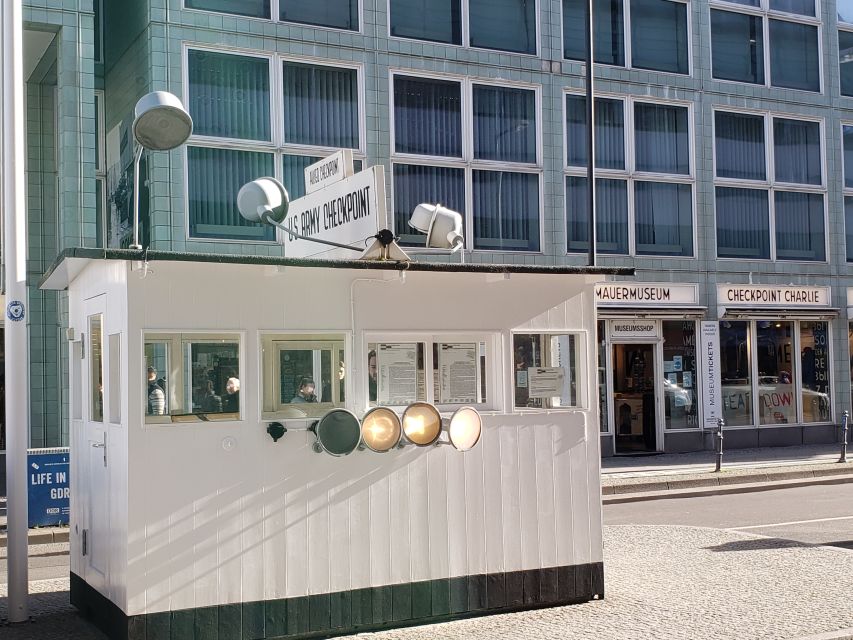
- Finishing at Checkpoint Charlie
- What the private format adds
- Is $22 good value for two hours?
- Who will get the most from this walk?
- Practical details that matter on the day
- Should you book Berlin: The Wall and Cold War?
- FAQ
- Where does the tour begin?
- Where does the tour finish?
- How long does the walking tour last?
- Is the tour private?
- Which languages are available?
- Does the tour include the Palace of Tears?
- Can I see the former death strip?
- Is the tour wheelchair accessible?
- Can I cancel the booking?
Key points to know before you book
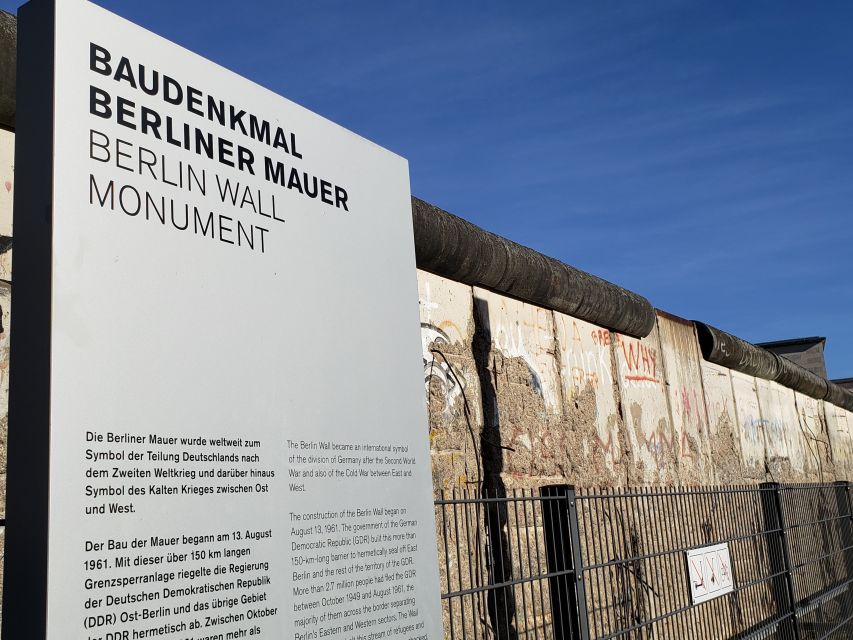
- Start at Bernauer Strasse: Begin beside one of Berlin’s most meaningful sections of preserved Wall and former border ground.
- Follow the former borderline: The route links several Cold War sites instead of treating them as isolated monuments.
- Hear personal stories: Guides explain daily life, escape attempts, and the building and fall of the Wall.
- Visit the Palace of Tears: See an original border crossing station where departures between East and West Berlin took place.
- End at Checkpoint Charlie: Finish at Berlin’s best-known former crossing point, in the center of the city.
- Private and bilingual: Tours are offered in English or German, with a private group and a wheelchair-accessible route.
Why Bernauer Strasse is the right place to begin
Meet your guide upstairs at the U Bernauer Strasse station exit marked Bernauer Strasse. Look for a sign with your name. This clear meeting point matters because the station has more than one exit, and starting at the right one saves valuable minutes on a short tour.
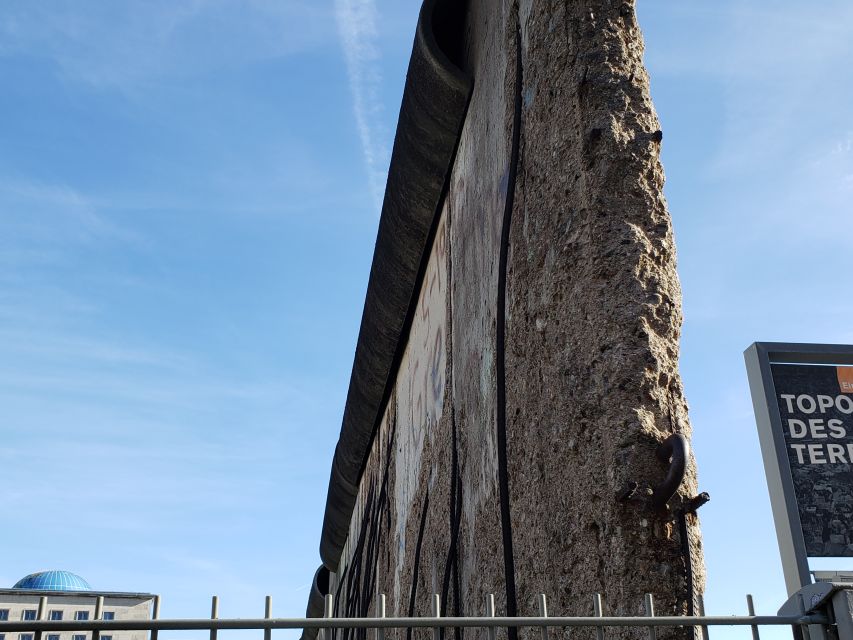
Bernauer Strasse gives you immediate context. The Wall did not simply cut through empty land. It divided homes, streets, families, and ordinary routines. At this open-air documentation area, you can see what remains of the former border zone and begin to understand how the barrier changed the shape of the city.
I find this a much better opening than starting with a general lecture in a museum room. You are standing beside the route itself, so the guide can point out where the Wall ran and explain how the neighborhood was affected. The setting gives the story weight without needing grand speeches.
The tour focuses on the construction and fall of the Berlin Wall, but the strongest material concerns daily life. You hear about what it meant to live in a divided city, how movement was controlled, and why escape attempts took such courage. Those details help you move past the familiar photographs of concrete slabs and barbed wire.
More of the Berlin Wall, end to end:
- Skip-the-Line: Berlin Wall Museum at Checkpoint Charlie
★ 4.1 · 2,041 reviews - Berlin: East Side Gallery Spree Cruise in a Solar Catamaran
★ 4.0 · 1,039 reviews - Cold War, Berlin Wall, Spies and the East Side Gallery
★ 5.0 · 1,024 reviews
Following the former border through central Berlin
From Bernauer Strasse, you follow the old borderline toward central Berlin. This walking route connects the places where the border once operated, so you get a sense of distance and progression. The Wall was not one single object. It was a system of barriers, checkpoints, patrol areas, and controlled spaces.
A private tour works well here because the guide can stop when a question comes up. If your group wants more detail about escape attempts, the guide can give that subject more time. If children are present, the story can be explained in simpler terms. One German and English booking also received praise for handling both languages for adults and children, which is useful for mixed-language families.
Guides Stephanie and Stefan are named among the people who have led this experience. Stephanie is known for friendly, authentic storytelling, while Stefan has been praised for explaining the Cold War and its meaning for a divided Berlin. The tour is offered in German or English, so confirm your preferred language when booking.
The walking itself is part of the lesson. You are not only looking at preserved fragments. You are moving through the city along a line that once separated two political systems. That makes the subject easier to grasp, especially if you know little about Berlin before arriving.
Still, keep your expectations sensible. The tour lasts two hours, and the route covers several locations. You will hear a well-shaped account, but you will not have time for every political detail, museum exhibit, or escape story connected to the Wall.
The Palace of Tears and the human cost of crossing
The tour includes a guided stop at the Tränenpalast, or Palace of Tears. This former border crossing station is one of the most affecting places on the route because it focuses on the emotional side of separation.
The name comes from the tearful farewells that took place there. Families and friends could be forced to part after a visit, and the crossing process made a private goodbye feel like a state-controlled procedure. The building helps you picture the practical mechanics of division: documents, inspections, queues, and uncertainty.
I like this stop because it balances the larger political story with ordinary human experience. Bernauer Strasse shows how the Wall reshaped a neighborhood. The Palace of Tears shows how border controls entered family life.
You should allow yourself time to listen here rather than rushing from one photo opportunity to the next. The stop is not just another former checkpoint. It helps explain why the Wall remained painful even for people who could technically cross it under limited conditions.
The precise amount of time spent inside may vary with the guide and the day’s conditions. The experience includes a guided tour of the Palace of Tears, but the supplied details do not promise a particular exhibit route or length of indoor time.
Looking across the former death strip
If the viewing platform is open, you can look over the former death strip. This is an important part of the tour because it shows the space between the main barriers, the zone intended to stop escape attempts.
From ground level, a Wall fragment can look like a simple piece of old concrete. A high viewpoint gives you a better sense of the layered border system and the open area that guards watched. It also helps explain why crossing was so dangerous.
The phrase death strip is stark, but the guide’s job is to put it in context rather than use it for shock value. You hear about the measures designed to prevent escapes and the risks taken by people who tried to get through. This is one of the places where a live guide adds much more than a plaque.
There is one clear limitation: the viewing platform is available only when open. Do not book the tour on the assumption that you will definitely reach the top. You will still see the former border area and hear about it if access is closed, but the view itself is conditional.
More Cold War Berlin:
- Berlin: Third Reich and Cold War 2 Hour Walking Tour
★ 4.9 · 6,830 reviews - Berlin’s Best: 2 Hour Walking Tour Third Reich and the Cold War
★ 5.0 · 5,486 reviews - Berlin: Cold War Walking Tour on Berlin Wall Route
★ 4.8 · 437 reviews - Berlin: Cold War Era History Guided Bike Tour
★ 4.8 · 413 reviews
Escape attempts and stories behind the concrete
The tour includes places connected with attempts to escape from East Berlin. These accounts give the route its human scale. Instead of hearing only about governments, treaties, and the Cold War rivalry, you learn how individuals responded to a border that cut through their city.
The guide explains where escapes were attempted and what made them difficult. The value here is not in collecting dramatic anecdotes. It is in understanding the choices and dangers faced by people living under a system that restricted movement.
I would pay close attention to the small details about daily routines. How did people cross legally? How did the Wall affect work, school, visits, and family contact? These questions are easier to remember when they are tied to a real street and a specific border station.
The tour also covers the Wall’s fall. That gives the walk a natural arc, from construction and division to the events that brought the barrier down. You should come away with a basic timeline and a clearer idea of why the Wall became such a powerful symbol of the Cold War.
Finishing at Checkpoint Charlie
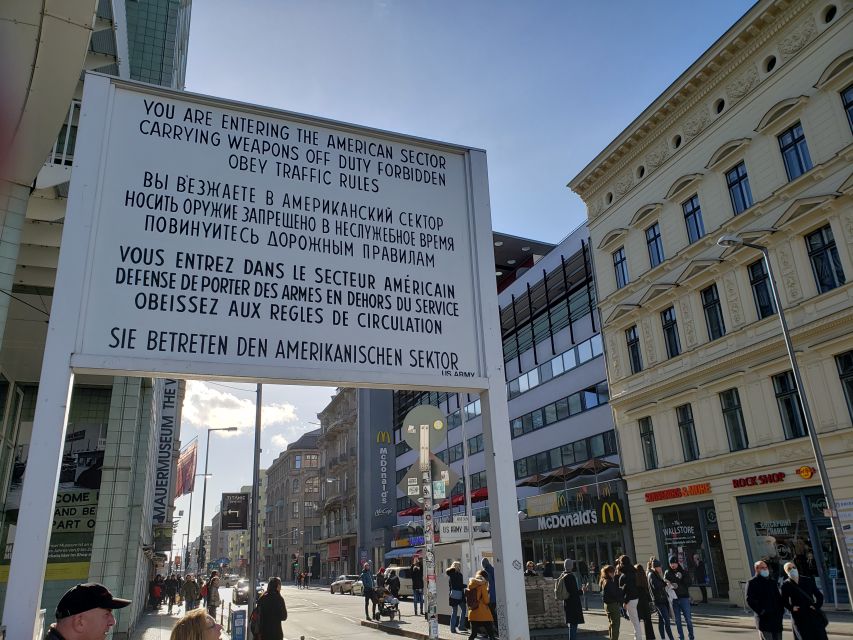
Checkpoint Charlie is the final stop. It was one of the best-known crossing points between East and West Berlin, and its name remains familiar even to people who have never visited the city.
Ending here works well. You begin with the physical remains and neighborhood impact at Bernauer Strasse, pass through the personal separation represented by the Palace of Tears, then finish at a major international border station. The sequence moves from local life to the wider political meaning of divided Berlin.
Checkpoint Charlie can feel more commercial and crowded than the quieter sections of the route. That is part of its character today, but it can also make the site feel less solemn. The private guide helps restore the historical setting by explaining what the checkpoint meant during the Cold War, rather than leaving you with a photo stop beside a famous sign.
The finish is convenient for continuing around central Berlin, though the activity does not include transportation afterward. You are responsible for making your own way from Checkpoint Charlie once the two-hour walk ends.
What the private format adds
A private group is the biggest practical advantage here. You do not have to follow the pace of a large party or wait through long explanations that do not suit your interests. You can ask direct questions and request more attention to escape attempts, family life, architecture, or political events.
This format is especially useful for families. Younger children may need the story broken into shorter sections, while adults may want more context. The German and English language option also suits groups with mixed language needs, based on the experience of one bilingual booking.
A private tour does not automatically mean a long, deeply academic discussion. The guide still has only two hours and a set route. Think of it as a focused introduction with room for conversation, not a private university seminar.
The activity is wheelchair accessible, which is an important practical point for visitors who need a step-free option. Since the route is a walking tour through city streets and former border sites, ask the provider about any current access issue if that matters for your group, especially regarding the viewing platform.
Is $22 good value for two hours?
At $22 per person, the tour is reasonably priced for a private experience. The value comes from the guide, not from entry to a long list of paid attractions. You are paying for a person who connects Bernauer Strasse, the Palace of Tears, the former death strip, escape sites, and Checkpoint Charlie into one understandable story.
For a solo visitor or a couple, $22 per person is an easy way to get structure and local explanation without committing to a full-day tour. For a family or small group, the private format becomes even more useful because the price buys attention for your own party rather than a seat in a large group.
You should compare it with your goals. If you want a quick, guided introduction to Berlin’s Wall history, the price is strong. If you want extensive time inside museums or a longer route through several neighborhoods, you may need to add separate visits after the walk.
The free cancellation option up to 24 hours before the start also reduces the risk of booking early, and reserve now, pay later keeps your cash available until closer to the tour. Those terms are useful in a city where weather and plans can change, but the key value remains the private guide and focused route.
Who will get the most from this walk?
I would choose this tour for a first visit to Berlin, especially if the Wall is high on your list but you do not yet know how the sites fit together. It also suits visitors with only a few hours available, since the route gives you a clear introduction without taking half a day.
Families can benefit from the direct storytelling and private pace. So can couples, older visitors, and anyone who prefers asking questions instead of reading a sign and moving on.
History specialists may find the two-hour format too brief. You will get the major themes and several meaningful places, but not every layer of Cold War politics or every surviving Wall site in Berlin. Pairing this walk with extra time at a museum would give you a fuller picture.
The tour is also a good fit if you want history tied to real streets. The route does not treat the Wall as a distant event. It shows how the border occupied public space and affected people who lived beside it.
Practical details that matter on the day
The meeting point is upstairs at the U Bernauer Strasse station exit marked Bernauer Strasse. Your guide will hold a sign with your name. If you are delayed or cannot find the guide, use the local partner’s phone number on your voucher.
The tour lasts two hours and is led live in German or English. It includes the guide and the private walking experience, but no transportation is listed. Wear shoes suitable for walking and leave enough time to reach the station exit before the start.
Check the viewing platform’s opening status if that view is especially important to you. The route still has value without it, but knowing in advance prevents disappointment.
Should you book Berlin: The Wall and Cold War?
Book it if you want a compact, personal introduction to Berlin’s divided past, with real border locations and a guide who can answer questions along the way. Bernauer Strasse, the Palace of Tears, the former death strip, and Checkpoint Charlie create a useful sequence, and $22 per person is fair for a private two-hour walk.
Skip it if you want a long museum visit, extensive political analysis, or a full-day Wall tour. For most first-time visitors, though, this is a practical way to understand why Berlin’s Wall history is about much more than a few surviving slabs of concrete.
FAQ
Where does the tour begin?
It begins at the underground station U Bernauer Straße. Meet the guide upstairs at the exit marked Bernauer Straße.
Where does the tour finish?
The tour finishes at Checkpoint Charlie, a former border crossing station in central Berlin.
How long does the walking tour last?
The experience lasts two hours.
Is the tour private?
Yes. It is offered as a private group walking tour.
Which languages are available?
The live guide is available in German or English.
Does the tour include the Palace of Tears?
Yes. The route includes a guided visit to the Palace of Tears, an original former border crossing station.
Can I see the former death strip?
You can view the former death strip from a viewing platform if the platform is open. Access is not guaranteed.
Is the tour wheelchair accessible?
Yes, the activity is listed as wheelchair accessible.
Can I cancel the booking?
You can cancel up to 24 hours in advance for a full refund. Reserve now and pay later is also available.
More Walking Tours in Berlin
- Discover Berlin Half-Day Walking Tour
★ 5.0 · 9,624 reviews - Berlin: Discover Berlin Walking Tour
★ 4.9 · 5,998 reviews - Berlin: Hidden Backyards Guided Walking Tour
★ 4.8 · 5,360 reviews - Third Reich Berlin: Hitler and WWII Walking Tour
★ 5.0 · 3,301 reviews
Just added around Berlin
- Berlin Highlights in One Day★ 5.0 · 3 reviews
- Private Berlin One Day Tour with a Local: See the City Unscripted★ 3.5 · 3 reviews
- Individual city tour Berlin for max. 8 persons★ 5.0 · 3 reviews
- Transfer from Berlin Schönefeld Airport (SXF) to Berlin city Hotels – ROUND TRIP★ 4.0 · 3 reviews
- Berlin: Museum Island Tour★ 5.0 · 3 reviews
- Private Analogue Photography Experience in Berlin★ 5.0 · 3 reviews
- Berlin: Local Food Tour in Secrets Hidden Gems★ 4.0 · 3 reviews
- Berlin & The Third Reich Private Guided Tour★ 5.0 · 3 reviews
Berlin Wall Tours, compared.

Skip-the-Line: Berlin Wall Museum at Checkpoint Charlie
Read our review →
East Side Gallery Spree Cruise in a Solar Catamaran
Read our review →
Cold War, Berlin Wall, Spies and the East Side Gallery
Read our review →

Guided Bike Tour of the Berlin Wall and Third Reich
Read our review →

Browse the lists this tour appears in