
Review · DDR & EAST BERLIN TOURS
East Berlin: City of Shadows Walking Tour
East Berlin’s Cold War story comes alive through places that still carry the marks of division. This three-hour tour links the Brandenburg Gate, Friedrichstrasse station, the Berlin Wall memorial, the former Stasi headquarters, and Alexanderplatz, showing how grand buildings and ordinary streets were shaped by Communist rule. I especially like the Palace of Tears, where families once said painful goodbyes, and the chance to hear how the 1989 demonstrations at Alexanderplatz helped bring the regime down.
I also like the historian-led format, since the guides may be professors, doctoral students, journalists, art critics, or published authors. Past guides named in the feedback include Martin, Mark, and Dan, with repeated praise for clear explanations, friendly care, and strong command of the subject. The drawback is practical: the tour covers long distances, so you must use public transport, and those tickets are not included in the $153 price.
In This Review
- Key points about East Berlin: City of Shadows
- Why this tour matters in modern Berlin
- Starting near the Brandenburg Gate and Soviet Embassy
- Friedrichstrasse and the painful work of saying goodbye
- The Berlin Wall memorial and the Death Strip
- The former Stasi headquarters and a state built on suspicion
- Alexanderplatz and the demonstrations of 1989
- What the three-hour format feels like
- What the $153 price buys you
- Who will get the most from this East Berlin route
- Final call: book it for history, not just sightseeing
- FAQ
- How long is the East Berlin: City of Shadows tour?
- Where does the tour meet?
- What language is the tour conducted in?
- Are public transport tickets included?
- Which places does the tour visit?
- Who leads the tour?
Key points about East Berlin: City of Shadows
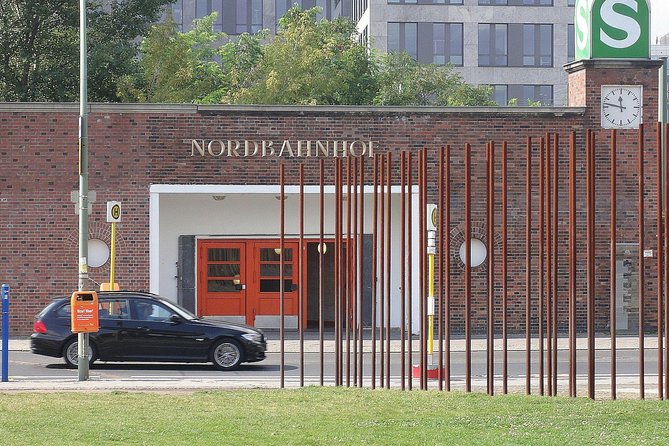
- A focused Cold War route: Visit the former Soviet Embassy, Friedrichstrasse station, the Palace of Tears, the Berlin Wall memorial, the former Stasi headquarters, and Alexanderplatz.
- A historian guide leads the way: Guides are drawn from academic, journalistic, and publishing backgrounds, giving the tour more depth than a basic city walk.
- The Palace of Tears adds human drama: This former border crossing recalls the forced separations created by East Germany’s travel rules.
- The Berlin Wall memorial explains the Death Strip: You hear about escape attempts and the people who died trying to reach the West.
- Alexanderplatz connects history to political change: The square was rebuilt as a showcase of East German life and later became a center of mass demonstrations.
- Public transport is part of the plan: Bring money for transit tickets and wear comfortable shoes for a three-hour outing.
Why this tour matters in modern Berlin
Berlin can make its divided past look tidy. The Wall is mostly gone, checkpoints have lost their power, and sleek new buildings fill many former border zones. That can make the Cold War feel like a museum subject rather than something that shaped real families and daily routines.
This tour pushes past that polished surface. You see how the East German government used architecture, surveillance, border controls, and public spaces to project authority. Just as important, you hear how ordinary people lived with those systems.
The route also avoids treating East Berlin as a collection of dramatic ruins. Some locations are imposing. Others are plain. That contrast is useful. The former Stasi headquarters tells one story through state power and fear, while the Palace of Tears tells another through farewells between relatives.
You should expect a serious historical walk rather than a light city stroll. The subject includes failed escapes, surveillance, political repression, and families split by government policy. If you want a quick overview of Berlin’s landmarks, this may feel too specialized. If you want to understand why the city still carries such a strong emotional charge, the focus is a real advantage.
More East Berlin and DDR history:
- Berlin: DDR Museum Tickets
★ 4.3 · 3,443 reviews - Berlin: 75-minute Trabi Safari
★ 4.8 · 2,854 reviews - Berlin: East and West Hop-On Hop-Off Bus Tour
★ 4.2 · 2,195 reviews
Starting near the Brandenburg Gate and Soviet Embassy
The meeting point is at Unter den Linden 42, a central address near the Brandenburg Gate. The tour begins close to one of Berlin’s best-known symbols, but the opening discussion turns toward the former Soviet Embassy and the political message behind its grand design.
The building was constructed from rubble left by World War II. Its scale and style made a blunt statement about Stalin’s ambition to control Berlin. That detail gives you an early lesson in the tour’s approach: buildings are not just scenery here. Their size, location, and materials reflect power struggles.
Beginning in this area also sets up the difference between the city before and after reunification. The Brandenburg Gate is now a familiar emblem of a unified Germany. Nearby structures recall a period when Berlin was split between competing political systems and foreign powers.
Your guide can help you read the setting instead of simply taking a photograph and moving on. Guides on this experience are described as historians, professors, doctoral students, journalists, art critics, or published authors. That background should suit you if you enjoy asking why a place looks the way it does, not only when it was built.
Friedrichstrasse and the painful work of saying goodbye
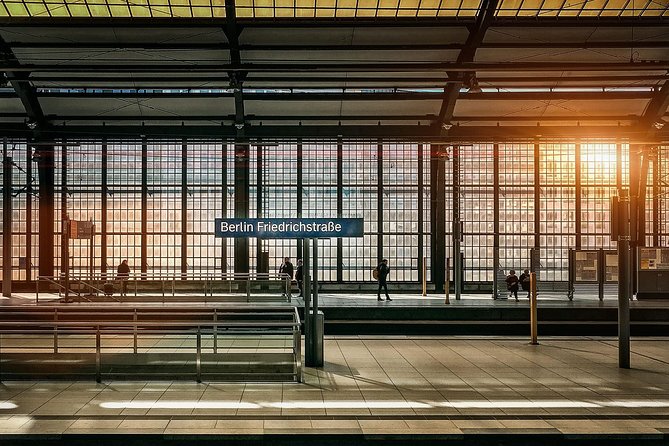
The next major stop is Friedrichstrasse train station, once a key crossing point between East and West Berlin. Rail stations usually suggest movement and possibility. Here, the station also represented restriction, inspection, and separation.
The most moving part is the building known as the Palace of Tears. Families said goodbye there under East Germany’s strict immigration rules. The name captures the mood without needing much explanation. A trip across the border could mean that relatives would not see one another again for a long time, or perhaps ever.
This stop adds a personal scale to the political story. Government policy is easy to discuss in terms of laws and borders. At Friedrichstrasse, you can picture the effect on parents, children, partners, and friends waiting for a final farewell.
The Palace of Tears is especially useful for people who know the broad outline of the Cold War but want a clearer sense of daily life. You may already know that Berlin was divided. This stop helps explain what division felt like inside a family.
The visit is not presented as a cheerful attraction, and that is part of its value. You should give the subject your attention and allow time for the emotional weight of the place. The tour’s serious tone may not suit anyone looking for a casual afternoon of sightseeing.
The Berlin Wall memorial and the Death Strip
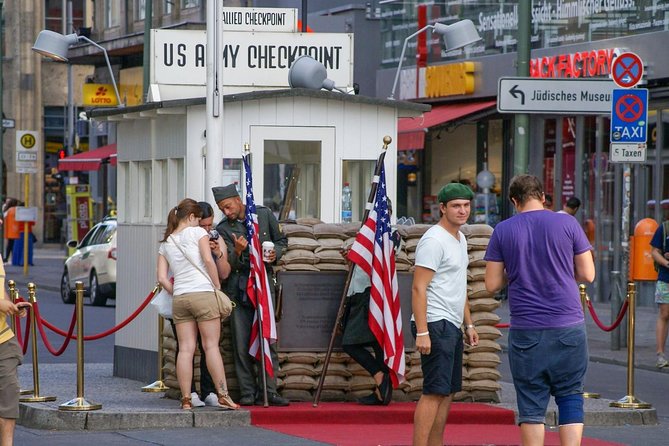
The Berlin Wall memorial offers the clearest look at how the border system worked. Rather than seeing only a remaining section of concrete, you learn about the wider border zone and the notorious Death Strip.
That distinction matters. The Wall was not simply a single barrier. The border system included controlled areas designed to stop escape attempts. People who tried to get through faced deadly risks, and the guide tells the stories of East Berliners whose attempts ended in death.
This part of the tour gives the Wall a human face. Berlin has many places where you can photograph a surviving section, but a good explanation changes what you see. A guard tower, open strip, or fragment of barrier becomes part of a system built to keep citizens inside.
The memorial is also a good place to consider how little physical evidence remains in some parts of the city. You might find it surprising how easily the former border disappears under roads, offices, and apartments. The guide helps connect those ordinary modern spaces with the danger that once defined them.
You should wear comfortable shoes and dress for the weather. The tour lasts three hours, and the route includes several sites separated by public transport. Cold weather can make a history walk feel much longer, although one past participant specifically found that the afternoon passed quickly despite the cold.
More walking tours in Berlin:
- Discover Berlin Half-Day Walking Tour
★ 5.0 · 9,624 reviews - Berlin: Third Reich and Cold War 2 Hour Walking Tour
★ 4.9 · 6,830 reviews - Berlin: Discover Berlin Walking Tour
★ 4.9 · 5,998 reviews - Berlin’s Best: 2 Hour Walking Tour Third Reich and the Cold War
★ 5.0 · 5,486 reviews
The former Stasi headquarters and a state built on suspicion
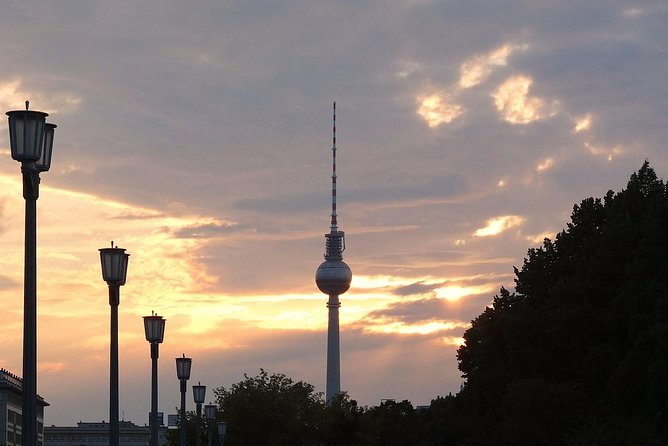
The former Stasi headquarters brings the tour into the machinery of surveillance. The Stasi was East Germany’s feared state security service, and its leader, Erich Mielke, built a huge network of informants and used innovative surveillance methods.
The point here is not just that the government watched people. The Stasi’s methods affected trust between neighbors, colleagues, friends, and even relatives. A society shaped by suspicion can look calm on the surface while people measure every conversation.
The headquarters helps you understand the scale of that system. It also connects the political story to modern concerns about privacy and state power. Your guide explains how the organization recruited spies and gathered information, giving you a clearer idea of how control operated beyond the Wall itself.
This is one of the stops where the guide’s expertise matters most. A quick description of the Stasi can become a list of grim facts. An experienced historian can show how surveillance fit into the larger structure of East German rule.
The former headquarters may be more intellectually demanding than visually impressive. If you expect dramatic interiors at every stop, adjust your expectations. The value comes mainly from the explanation and the link between the site and the wider system.
Alexanderplatz and the demonstrations of 1989
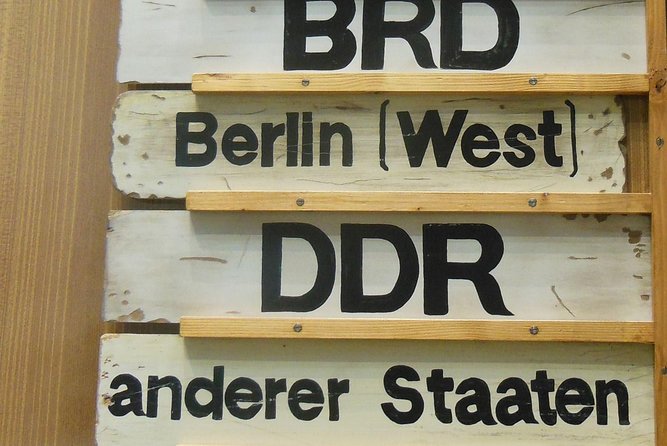
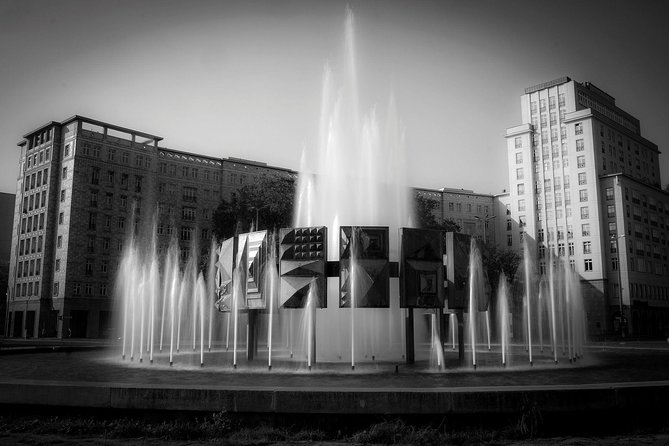
The final major stop is Alexanderplatz, rebuilt in the 1960s as a center of public life and a symbol of East German pride. Its wide spaces and modern Communist-era design were meant to show confidence in the state.
Yet Alexanderplatz later became one of the key settings for mass demonstrations against that same government. The protests in 1989 helped push East Germany toward its collapse and brought four decades of Communist rule to an end.
That change gives the square a useful double meaning. It first served as a stage for official power. Later, it became a place where people publicly challenged that power. The same urban space tells both stories.
I like ending here because it shifts the tour from fear to public action. The Palace of Tears shows what the state could do to families. The Stasi headquarters shows how it monitored society. Alexanderplatz shows people gathering in large numbers and forcing political change.
The square is also a practical final stop. It is a major part of present-day Berlin, so you can continue sightseeing or find food and transport afterward. The tour does not simply leave you at a remote historical site. It finishes in a part of the city that remains central to everyday life.
What the three-hour format feels like
Three hours is enough time to create a connected story, but not enough to explore every location at length. The guide must keep the group moving, especially because public transport links several parts of the route.
That pace is both a strength and a limit. You see more than you would on a short walk around central Berlin, and the route covers sites that are spread across the former East. In exchange, you should not expect long museum visits or extended time inside every building.
Public transport tickets are not included in the price. Plan for that extra cost before you arrive, and keep the ticket issue from becoming a distraction during the tour. The supplied information does not state which transit tickets are needed, so check the current route details when you book.
The tour is available as a private experience or in small groups. A private format may appeal to you if you want to ask many questions or discuss family connections to the divided city. A small group can offer a more social setting while keeping the guide’s explanations focused.
English is the stated tour language. Starting times vary, so you need to check availability for your date. The meeting point is Unter den Linden 42, not necessarily the first landmark discussed in detail, so arrive with enough time to find the address.
What the $153 price buys you
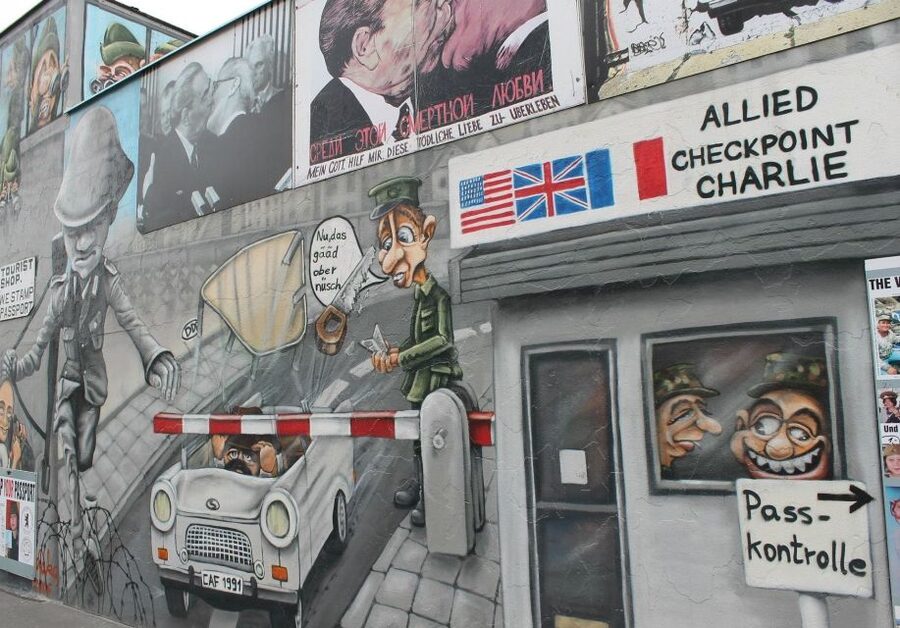
At $153 per person, this is not a budget walking tour. You also pay separately for public transport, which makes the total cost higher. The price makes the most sense if you place a high value on a specialist guide and want a carefully connected history of East Berlin.
You are paying for more than movement between landmarks. The guide links the Soviet Embassy, border station, Wall memorial, Stasi headquarters, and Alexanderplatz into one political story. That connection is difficult to create from isolated visits, especially if you are unfamiliar with Berlin’s divided geography.
The academic backgrounds offered by the guides also help explain the cost. The guide pool includes professors, doctoral students, historians, journalists, art critics, and published authors. Past guide names include Martin, Mark, and Dan. Feedback about these guides emphasizes clear teaching, kindness, practical care, and the ability to explain details that are easy to miss.
One past participant had lived in Berlin for four months and still wanted a better understanding of the divided city. That is a useful clue about the tour’s audience. You do not need to be a first-time visitor to benefit. Even living in Berlin does not automatically make the former border or East German system easy to understand.
For a family or private group with a strong interest in the Cold War, the cost may be reasonable. For someone wanting only a general introduction to Berlin, it may be more than you need. Compare it with your priorities, not just with the price of a standard city walk.
Who will get the most from this East Berlin route
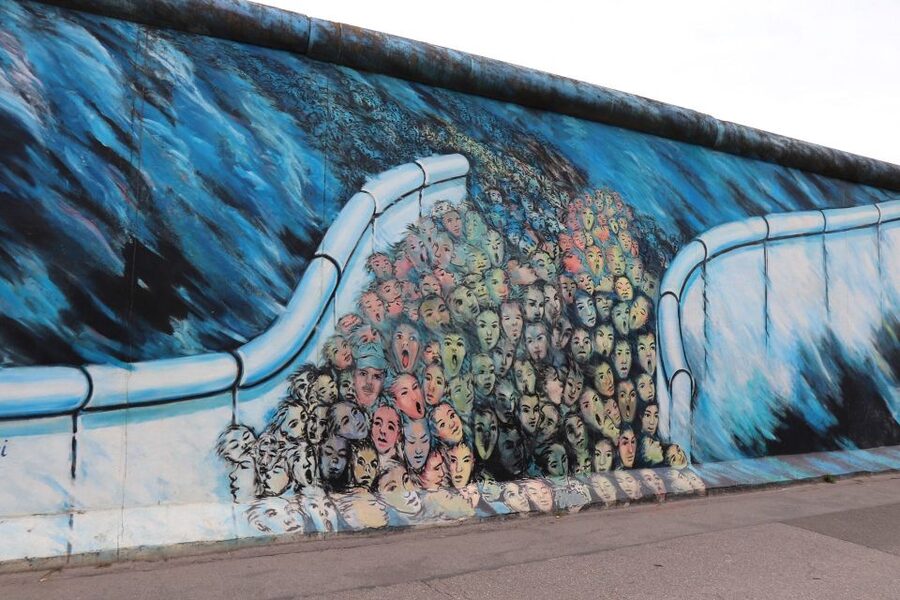
This tour suits you if you want political history, personal stories, and the meaning behind familiar Berlin sights. It is a good match for visitors who already know the basic Wall story and want to examine the East German government in greater detail.
It also suits repeat visitors. The route offers a different Berlin from the usual Brandenburg Gate and museum circuit, even though it begins near the city’s best-known landmark.
You may want to choose another activity if you prefer art, food, nightlife, or broad architectural sightseeing. The experience is centered on Communist rule, surveillance, border controls, failed escapes, and the 1989 protests. That focus is clear from the start and remains consistent.
Families with older children may find the subject useful, but the supplied information does not give a recommended minimum age. Use your own judgment about how comfortable younger members of your group will be with accounts of death and political repression.
The tour also rewards curiosity. Guides such as Dan were praised for checking that participants were doing well and for explaining places in a way that made the past easier to picture. If you enjoy conversation and questions, a private or small-group option should give you the best chance to make the most of that strength.
Final call: book it for history, not just sightseeing
Book this tour if you want to understand how East Berlin worked, how its government controlled movement and information, and how public protest helped end the system. The Palace of Tears, Death Strip, Stasi headquarters, and Alexanderplatz give the three hours a strong emotional and political arc.
Skip it if you want a cheap, relaxed walk with minimal transport or a broad tour of Berlin’s main attractions. At $153, plus transit, the value depends on the guide. Based on the guide backgrounds and the strong praise for Martin, Mark, and Dan, this is best treated as a specialist history lesson conducted on city streets.
For the right visitor, that is exactly the point. You leave with more than photographs of the Wall. You gain a clearer sense of how division shaped buildings, families, public space, and everyday trust in Berlin.
FAQ
How long is the East Berlin: City of Shadows tour?
The tour lasts three hours.
Where does the tour meet?
You meet the guide at Unter den Linden 42, Berlin, Germany.
What language is the tour conducted in?
The tour is conducted in English.
Are public transport tickets included?
No. The route covers long distances between some sites, so you use public transport, but the ticket cost is not included in the tour price.
Which places does the tour visit?
The route includes the area near the Brandenburg Gate and former Soviet Embassy, Friedrichstrasse station and the Palace of Tears, the Berlin Wall memorial, the former Stasi headquarters, and Alexanderplatz.
Who leads the tour?
The guides are professors, doctoral students, historians, journalists, art critics, or published authors. Past guides named in the available information include Martin, Mark, and Dan.
Just added around Berlin
- Berlin Highlights in One Day★ 5.0 · 3 reviews
- Private Berlin One Day Tour with a Local: See the City Unscripted★ 3.5 · 3 reviews
- Individual city tour Berlin for max. 8 persons★ 5.0 · 3 reviews
- Transfer from Berlin Schönefeld Airport (SXF) to Berlin city Hotels – ROUND TRIP★ 4.0 · 3 reviews
- Berlin: Museum Island Tour★ 5.0 · 3 reviews
- Private Analogue Photography Experience in Berlin★ 5.0 · 3 reviews
- Berlin: Local Food Tour in Secrets Hidden Gems★ 4.0 · 3 reviews
- Berlin & The Third Reich Private Guided Tour★ 5.0 · 3 reviews
DDR & East Berlin Tours, compared.






East Berlin and the Berlin Wall 2-Hour Walking Tour
Read our review →
East Berlin Food & History Tour with Eating Europe
Read our review →Browse the lists this tour appears in