
Review · DDR & EAST BERLIN TOURS
East Berlin Food & History Tour with Eating Europe
East Berlin’s story is easiest to grasp with food in your hand. This three-hour walk links communist-era sites, wall art, and club zones with the immigrant-run kitchens that helped shape modern Berlin. You may start with currywurst at a train station, then move through Syrian, Vietnamese, and Turkish flavors.
I like the way the tour treats food as part of the city’s story, not as a series of unrelated snacks. I also like the personal angle: guides such as Clara and Anastasia have been praised for explaining the background of both the neighborhoods and the people behind the food.
The main drawback is practical: you walk between stops, and the tour is not suitable for wheelchair users or people with mobility impairments. Food choices can also change by season or day, so book this for the experience and theme, not one guaranteed menu.
In This Review
- Key points at a glance
- Why food makes East Berlin easier to understand
- Meeting at the station and starting with currywurst
- Syrian flavors at a family supper club
- Vietnamese chicken tacos and Berlin-style fusion
- Döner, shawarma, and the Turkish-German connection
- Wall art, club zones, and 80 years of change
- What the three-hour pace feels like
- Guide quality and the value of personal stories
- Is $104 a fair price?
- Who should book this East Berlin walk?
- Should you book it?
- FAQ
- How long does the East Berlin Food and History Tour last?
- What food is included?
- Are drinks included?
- What language is the tour conducted in?
- Where is the meeting point?
- Is the tour suitable for children and people with dietary needs?
Key points at a glance
- A train-station currywurst stop: Try Berlin’s famous sausage in an everyday setting rather than only at a polished restaurant.
- Syrian food with a family story: Taste smoked-aubergine metabal, drink local beer, and hear about the people behind the kitchen.
- Vietnamese chicken tacos: TyTy Tacos adds a playful Berlin twist to Vietnamese flavors.
- East Berlin in three hours: Cover roughly 80 years of political and social change through streets, art, club areas, and food.
- A full tasting route: Döner or shawarma, caramelised nuts, Club-Mate, water, and several savory stops are included.
- A guide-led introduction: English-speaking guides including Clara and Anastasia bring the food and local history together.
Why food makes East Berlin easier to understand
This is not simply a meal crawl with a few historical facts added between bites. The route uses food to explain how Berlin changed after the communist period and how people from other parts of the world helped shape the city you see today.
That approach works because Berlin’s identity is not fixed. Currywurst, döner, Syrian dishes, and Vietnamese food all tell different parts of the city’s story. You get a look at East Berlin as a place that moved from a controlled, bleak urban setting toward an area known for art, nightlife, migration, and new small businesses.
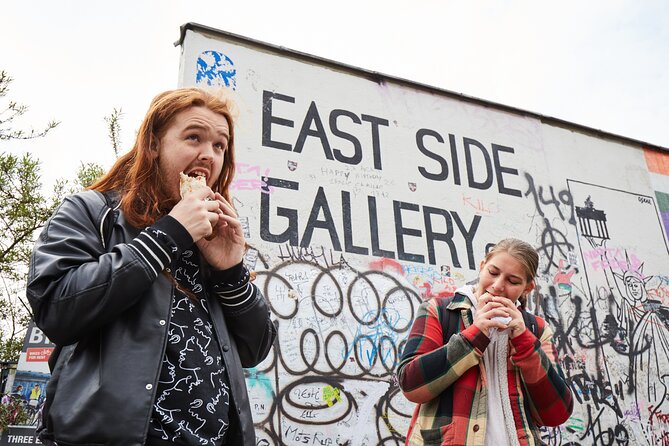
The tour covers key sites, wall art, and club zones along the way. You should not expect a full political history course, but you will get a useful framework for understanding why these streets look and feel so different from the East Berlin of the Cold War.
The food also gives the walk a comfortable rhythm. Three hours can feel long if you are only looking at buildings, but several tastings break up the walking and give you time to talk with your guide and fellow participants. Arrive hungry, but not starving. The portions are designed as tastings, not as one large sit-down lunch.
More East Berlin and DDR history:
- Berlin: DDR Museum Tickets
★ 4.3 · 3,443 reviews - Berlin: 75-minute Trabi Safari
★ 4.8 · 2,854 reviews - Berlin: East and West Hop-On Hop-Off Bus Tour
★ 4.2 · 2,195 reviews
Meeting at the station and starting with currywurst
The meeting point is inside the main hall of the station. Walk toward McDonald’s, continue to track 8, and take the escalator down to the platform. The meeting point is in front of the bakery, where your guide will carry a purple Eating Europe bag.
That detail matters. Large stations can be confusing, and the tour does not begin from a hotel lobby or a quiet square. Give yourself extra time to find the correct hall, track, and escalator. You will want to be ready at the platform rather than searching for the group at the last minute.
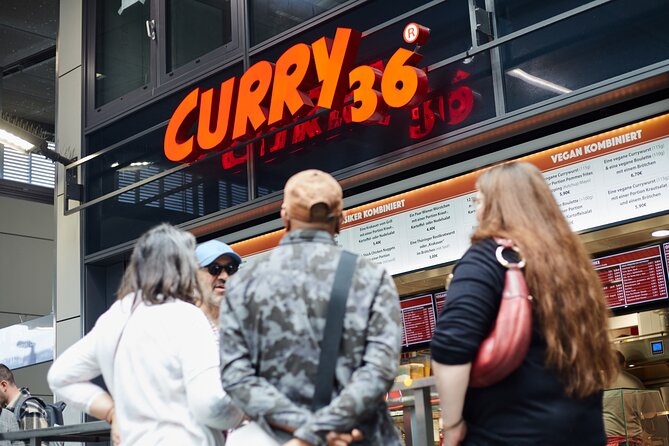
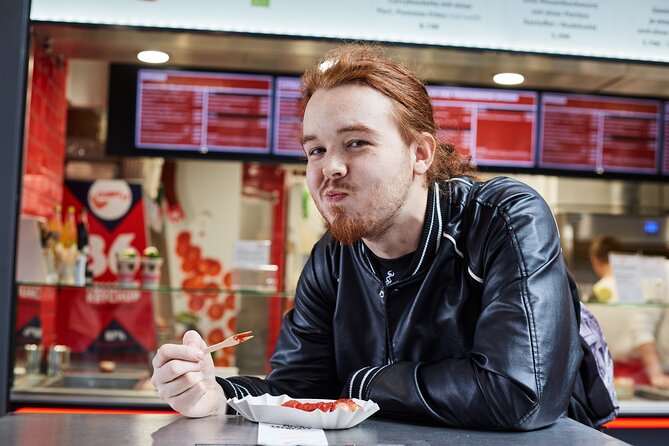
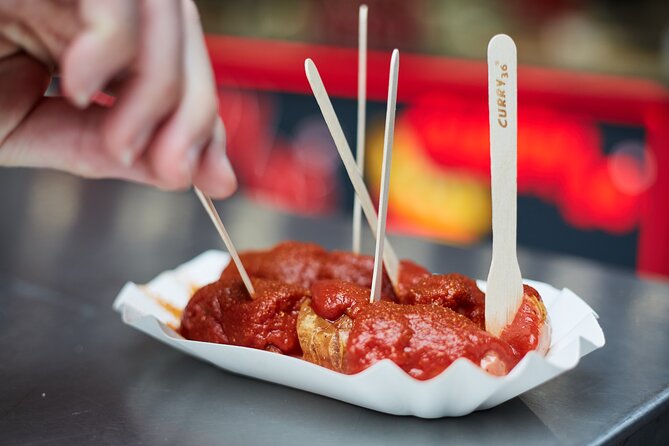
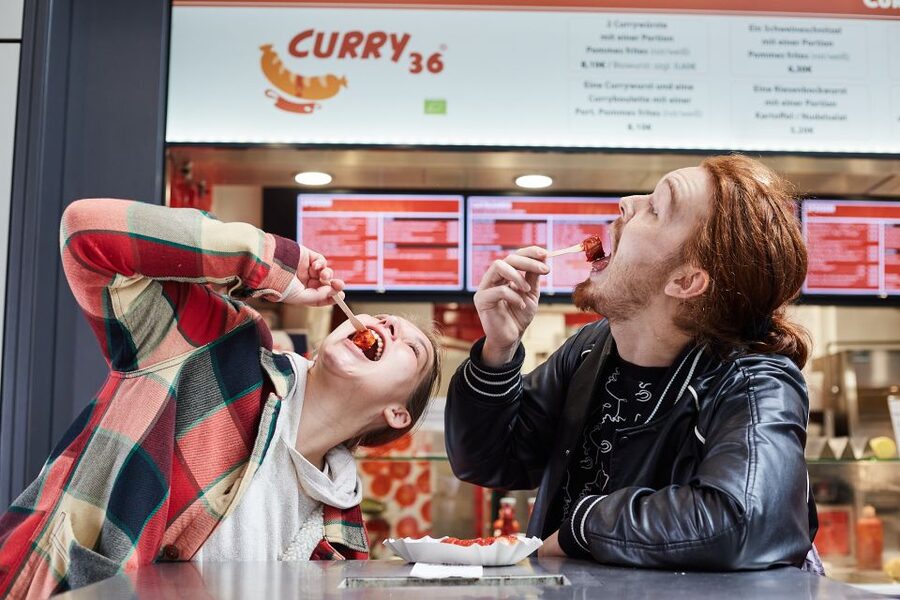
One of the first food moments is currywurst, served at a train station. Currywurst is a Berlin classic: sliced sausage with a spiced tomato sauce and curry powder. Having it in a station setting fits the dish. This is working-city food, quick and informal, and it has been part of Berlin’s everyday culture for decades.
I like this stop because it avoids treating currywurst as a museum object. You get to taste it where ordinary movement through the city and quick meals meet. If you already know the dish, the guide can place it in the wider story of Berlin food. If you are trying it for the first time, this is an easy introduction.
Syrian flavors at a family supper club
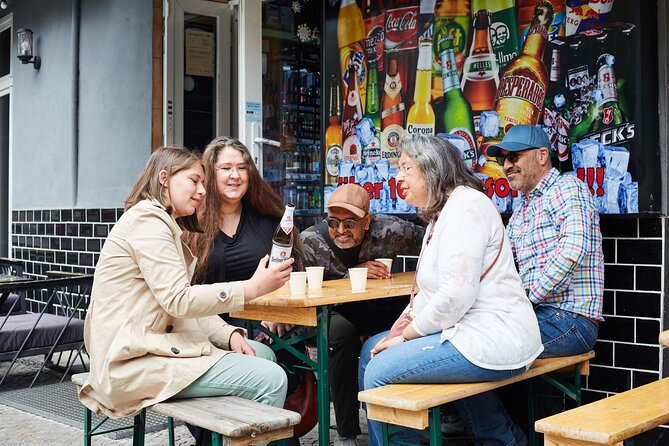
The Syrian stop brings a different kind of connection. You taste metabal, a dip made with smoked aubergine, tahini, and garlic. The smoky eggplant gives the dish a strong flavor, while tahini adds a creamy sesame note.
The setting is described as a family supper club, with craft beer and stories. That combination is important. You are not only sampling a dip from a menu. You are hearing about the people and food traditions that have become part of Berlin’s present-day dining scene.
The inclusion of local craft beer gives you a Berlin pairing rather than a strictly traditional Syrian drink. Water is also included, and you can expect Club-Mate later in the route. Extra drinks are not covered, so plan to pay separately if you want anything beyond the included choices.
This stop may be especially useful if you want food with some human context. Several guides have been praised for explaining the personal histories connected to the places on the route. Clara, in particular, has been singled out for linking the food to the people who brought it to Berlin. The guide assignment can vary, but this personal storytelling is a central part of the experience.
Vietnamese chicken tacos and Berlin-style fusion
The Vietnamese stop features TyTy Tacos, with chicken tacos that blend Vietnamese flavors with local Berlin influences. It is a good reminder that immigrant food in Berlin does not remain frozen in one traditional form. Cooks adapt, experiment, and create dishes for the city they now call home.
Tacos are not the food most people first associate with Vietnamese cooking, which makes this stop more playful than a standard restaurant visit. You get a bold fusion tasting rather than a formal lesson in regional Vietnamese cuisine.
That distinction is worth keeping in mind. If you want strictly traditional dishes from one part of Vietnam, this may not be the stop you imagined. If you enjoy seeing how cuisines cross paths in a modern city, the taco tasting adds variety to the route and keeps the food from feeling repetitive.
The tour’s strongest idea is visible here: Berlin’s food culture comes from exchange. A Vietnamese dish adapted for Berlin tells you something about taste, business, migration, and the city’s willingness to mix influences.
More history walks in Berlin:
- Berlin: Natural History Museum Entrance Ticket
★ 4.6 · 3,382 reviews - Berlin: World Heritage Cruise to Potsdam
★ 4.5 · 1,435 reviews - Berlin Historical Highlights Walking Tour
★ 4.9 · 657 reviews - Berlin Private Complete History All Day Walking Tour
★ 5.0 · 474 reviews
Döner, shawarma, and the Turkish-German connection
You will also taste a döner kebab or shawarma wrap. In Berlin, the döner is much more than a convenient late-night meal. It is one of the clearest examples of Turkish and German food culture meeting in the same dish.
The wrap gives you a familiar street-food format, but the tour places it in a larger setting. You can consider how an imported food becomes part of local daily life, changing along the way without losing its roots.
The exact option may depend on the day and stop, and the company notes that offerings can vary. That flexibility is useful for the operator, but it means you should not treat every named food as an absolute guarantee. The core promise is a selection of Berlin foods and international contributions, not a fixed tasting menu.
The route finishes with a Turkish sweet and mixed caramelised nuts. That ending provides a simple shift from savory food to sugar and spice. It also gives you a final taste from the Turkish influence that runs through Berlin’s street-food culture.
Wall art, club zones, and 80 years of change
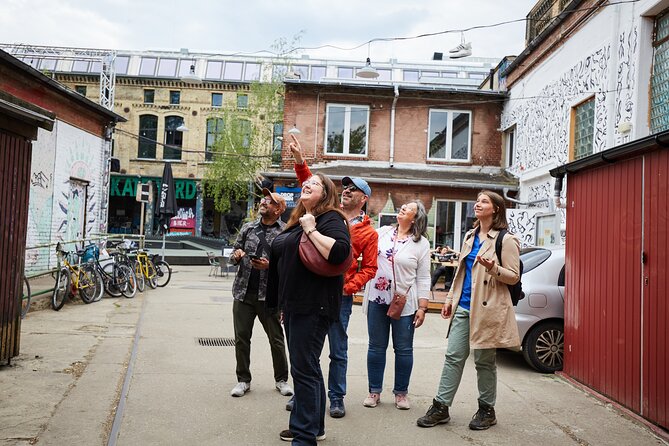
Between tastings, your guide takes you past historical sites, wall art, and club zones. The tour aims to cover about 80 years of Berlin history, moving from the city’s communist past toward its present-day cultural life.
You should expect the history to be tied to the places around you. Wall art can show how public space became a way to express ideas, while club areas point to the city’s newer reputation for nightlife and creative freedom. The food stops make this change more personal by showing who opened businesses and introduced new tastes.
This is a useful choice for a first visit. You will not see every major East Berlin landmark in three hours, but you will gain a street-level introduction to an area that can otherwise feel hard to read. One first-time visitor described the tour as a good way to spend a few hours in Berlin because it combined local areas, food, and history.
It can also work for repeat visitors. One guide has been praised for showing familiar Berlin visitors places and ideas they had not encountered before. That suggests the route is not limited to the most obvious postcard sights.
Do not expect silence or a slow museum pace. You are walking through working city streets and stopping for food, so the experience is active and informal. Flat shoes are essential. Comfortable clothing will help, especially if you are joining after a full day of sightseeing.
What the three-hour pace feels like
The tour lasts three hours, long enough for several food stops and a meaningful amount of neighborhood history without taking up an entire day. You move through the area on foot, so the walking is part of the experience rather than transportation between restaurants.
The route appears designed around small tastings. Included food covers döner or shawarma, metabal, Vietnamese chicken tacos, currywurst, and mixed caramelised nuts. You also receive Club-Mate, local craft beer, and water.
Because these are tastings, you may still want another meal later, particularly if you have a large appetite. The tour is best treated as a substantial introduction to the local food scene, not a guaranteed full-day eating plan.
The group requires at least two participants. If that minimum is not met, the company will contact you about rescheduling or reimbursement. Children under four can join without a ticket, but their food is not included. Paid food tickets apply from age four.
The route is not suitable for wheelchair users or people with mobility impairments. That is not a minor footnote here. You need to manage a walking route, station access, platforms, and food stops, so ask about your needs before booking if you have any concerns.
Guide quality and the value of personal stories
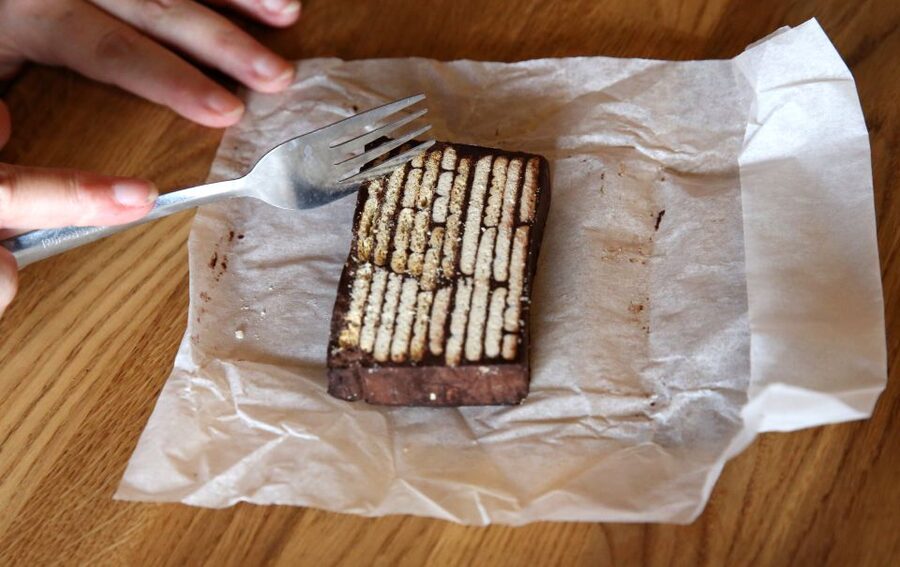
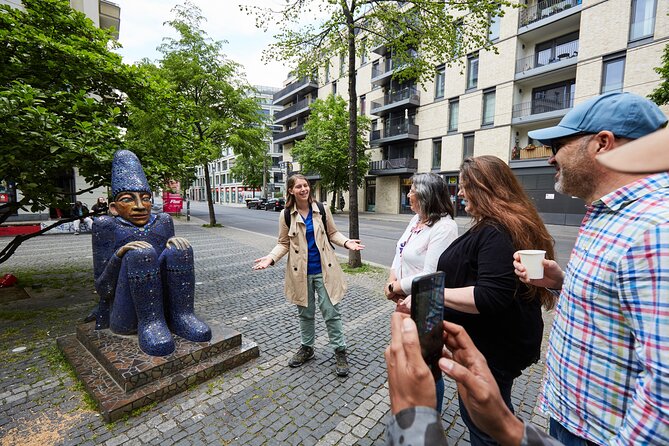
The guide can make or break a food walk, and the feedback attached to this experience points to a strong emphasis on explanation. Clara has been praised for her knowledge of local areas, food types, and the personal background of the businesses visited. Anastasia has also been praised for choosing good places and sharing interesting historical detail.
Another guide is named Carla in the feedback, so guide assignments clearly vary. You should book with the expectation of an English-speaking local guide, not a specific person unless the booking page confirms that name for your date.
What I value most is the connection between food and biography. A dish is easier to remember when you know something about the family, migration story, or local setting behind it. This is where the tour offers more than ordering the same foods on your own.
You also receive Food and the City insider tips. These can help you decide what to eat and where to explore after the tour, though the supplied information does not specify the exact format or number of recommendations. Bring a phone or small notebook if you like recording restaurant names and neighborhood suggestions.
Is $104 a fair price?
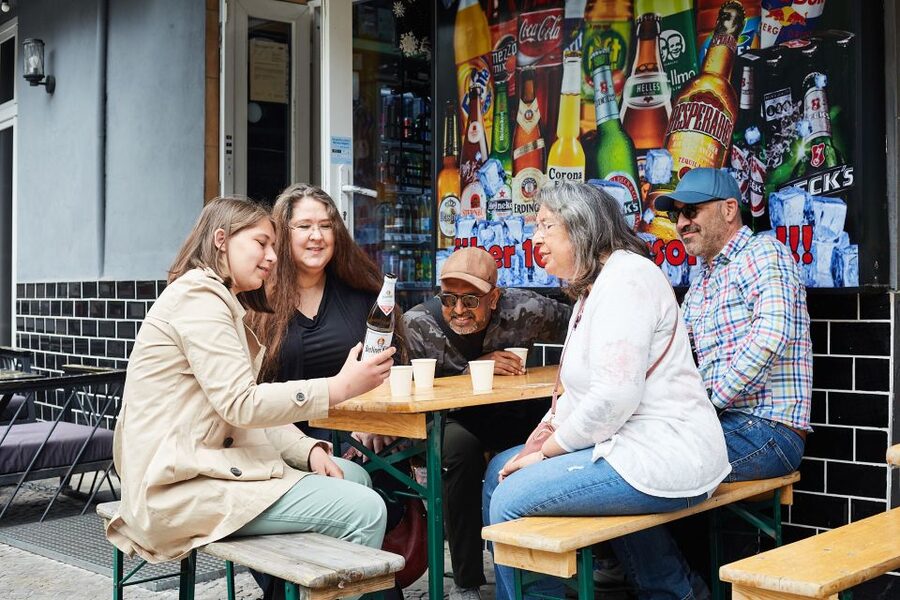
At $104 per person, this is not a bargain food walk. You are paying for a three-hour guided experience, several tastings, drinks, local history, and the convenience of moving between selected stops with someone who explains the context.
The value is strongest if you are visiting Berlin for the first time, want a guided introduction to East Berlin, and would otherwise spend time and money finding these foods on your own. It is also useful if you care about the stories behind immigrant-run food businesses rather than simply eating a cheap döner.
The price is harder to justify if your main goal is quantity. You could buy currywurst, döner, sweets, and drinks independently for less, though you would not get the connected history, route planning, or guide commentary.
Think of it as part walking tour and part guided tasting session. You are paying for interpretation and access to a planned sequence, not just for the retail value of the food. Free cancellation up to 24 hours ahead and reserve-now, pay-later booking add flexibility, but they do not change the basic price calculation.
Who should book this East Berlin walk?
I would recommend it to first-time visitors who want a quick sense of how Berlin’s past and present fit together. The food gives you an easy way into topics that might otherwise feel abstract, especially the connection between migration and the city’s everyday dining.
It is also a good match for repeat visitors. If you have already seen the major Cold War sights, a food-focused route can show you another side of East Berlin. The guide’s local knowledge may lead you to places and stories you would not find by following a standard landmark route.
Food lovers should enjoy the range. You move from currywurst to Syrian metabal, Vietnamese chicken tacos, döner or shawarma, Turkish sweets, caramelised nuts, Club-Mate, and craft beer. The selection is broad rather than focused on one national cuisine.
I would be more cautious if you have severe or life-threatening food allergies. Dietary requests such as vegetarian and gluten-free needs can be sent by email or added when booking, but food stops may vary and the company does not accept responsibility for severe allergies or intolerances.
Should you book it?
Book this tour if you want history attached to real food, a manageable three-hour walk, and a guide who can explain how East Berlin changed through migration, art, nightlife, and small food businesses. It is a particularly sensible choice for a first Berlin visit or for a return trip when you want something beyond major monuments.
Skip it if you need a fully fixed menu, cannot walk comfortably, or are mainly looking for the cheapest way to eat. At $104, the tour earns its price through the guide, organization, drinks, and local context. The food is the doorway, but the real subject is Berlin’s ongoing change.
FAQ
How long does the East Berlin Food and History Tour last?
The tour lasts three hours and is conducted on foot.
What food is included?
Included tastings are döner kebab or a shawarma wrap, metabal, Vietnamese chicken tacos, currywurst, and mixed caramelised nuts. Food offerings and stops can vary by day or season.
Are drinks included?
Club-Mate, local craft beer, and water are included. Extra drinks are not included.
What language is the tour conducted in?
The tour is conducted in English with a live English-speaking guide.
Where is the meeting point?
Enter the station’s main hall, walk toward McDonald’s, continue to track 8, and take the escalator down. Meet in front of the bakery on the platform. The guide will carry a purple Eating Europe bag.
Is the tour suitable for children and people with dietary needs?
Children under four can join free, but food is not included for them. Paid tickets with food included are available from age four. Vegetarian and gluten-free requests may be accommodated if noted in advance, but the tour is not suitable for people with severe or life-threatening food allergies.
More Food Tours in Berlin
- Berlin Center Food Tour with 8+ Authentic Local Tastings
★ 5.0 · 1,227 reviews - Berlin City Bike Tour with Beer Garden Stop
★ 5.0 · 917 reviews - Kreuzberg: Culinary Food Tour
★ 4.5 · 770 reviews - Berlin: BRLO BRWHOUSE Tour and Craft Beer Tasting
★ 4.4 · 654 reviews
Just added around Berlin
- Berlin Highlights in One Day★ 5.0 · 3 reviews
- Private Berlin One Day Tour with a Local: See the City Unscripted★ 3.5 · 3 reviews
- Individual city tour Berlin for max. 8 persons★ 5.0 · 3 reviews
- Transfer from Berlin Schönefeld Airport (SXF) to Berlin city Hotels – ROUND TRIP★ 4.0 · 3 reviews
- Berlin: Museum Island Tour★ 5.0 · 3 reviews
- Private Analogue Photography Experience in Berlin★ 5.0 · 3 reviews
- Berlin: Local Food Tour in Secrets Hidden Gems★ 4.0 · 3 reviews
- Berlin & The Third Reich Private Guided Tour★ 5.0 · 3 reviews
DDR & East Berlin Tours, compared.






East Berlin and the Berlin Wall 2-Hour Walking Tour
Read our review →
East Berlin Food & History Tour with Eating Europe
Read our review →Browse the lists this tour appears in