
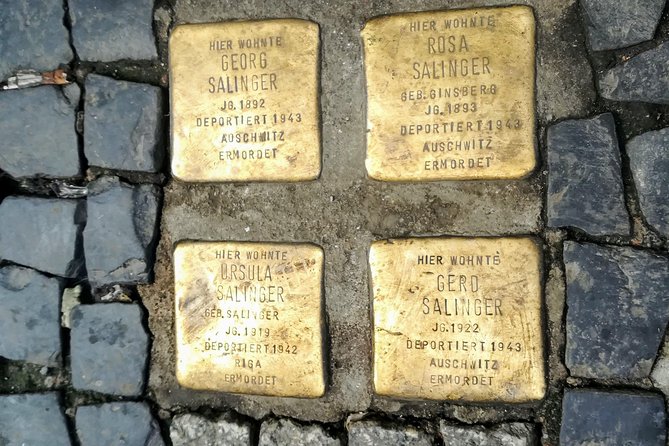
Review · JEWISH BERLIN & HOLOCAUST MEMORIALS
In Search of Jewish Berlin Walking Tour
Berlin’s Jewish story is best understood on foot, where grand buildings, quiet courtyards, schoolhouses, memorials, and ordinary streets reveal how Jewish life developed, suffered, and began again. This three-hour walk takes you through the Scheunenviertel and nearby Mitte with a Jewish history scholar, ending at the Holocaust Memorial.
I especially like the small group of no more than 10 people, which gives you room to ask questions. I also like the range of the route, from the New Synagogue and Jewish institutions on Auguststrasse to the Women’s Block and Peter Eisenman’s memorial. The main drawback is price: at $156.53 per person, this is a costly three-hour walk, though the specialist guide and small-group format help explain it.
In This Review
- Key points before you book
- Why this walk gives Berlin more meaning
- Meeting the guide at Rosenthaler Strasse
- The New Synagogue and the idea of belonging
- Auguststrasse and the former Jewish Girls’ School
- Hackesche Höfe and the Barn Quarter
- The Women’s Block and an act of protest
- The Holocaust Memorial at the end of the walk
- The guide makes the difference
- Is $156.53 a fair price?
- Who should take this tour?
- Practical details for a smoother walk
- Should you book In Search of Jewish Berlin?
- FAQ
- How long is In Search of Jewish Berlin?
- What language is the tour offered in?
- How many people can join the tour?
- Where does the tour begin?
- Are admission fees included?
- Can I cancel for a full refund?
Key points before you book
- A scholar leads the walk: Guides are professors, graduate students, or journalists with a strong background in Berlin and Jewish studies.
- The route covers several eras: You move from medieval Jewish life and 19th-century assimilation to Nazi persecution, postwar remembrance, and the present-day Jewish community.
- The group is capped at 10: You should have a better chance to hear the guide and shape the discussion than on a large city tour.
- The New Synagogue is a major highlight: Its grand design reflects the confidence and social integration sought by 19th-century German Jews.
- The Holocaust Memorial is part of the route: The walk closes with a personal encounter with 2,711 concrete slabs.
- Plan ahead: The tour is booked about 66 days in advance on average, and free cancellation applies up to 24 hours before the start time.
Why this walk gives Berlin more meaning

Berlin can sometimes feel like a city of disconnected monuments. You see a synagogue, a plaque, a memorial, or a preserved facade, but without context, each place can remain only a striking object. This tour links those sites into a clear story.
You begin with Jewish life in Berlin, then move through the Scheunenviertel, also called the Barn Quarter. The route shows where Jewish institutions once operated and where a Jewish community lived, worked, learned, worshipped, and built a public presence.
The story then turns painful. Nazi arrests, deportations, and the destruction of Jewish life are not treated as isolated events. The route shows how those events affected particular streets and buildings. It also includes the courage of non-Jewish women who protested the arrest of Jewish men in 1943.
The final stop is the Memorial to the Murdered Jews of Europe. By that point, you have spent several hours learning about people and places rather than simply looking at a memorial. That preparation can make the memorial’s stark design more powerful.
More Jewish Berlin and memorial walks:
- Berlin: Jewish Museum Berlin Entrance Ticket
★ 4.5 · 8,393 reviews - Nazi Berlin and the Jewish Community Tour
★ 4.8 · 55 reviews - Path of Resistance: Berlin’s Hidden Holocaust Stories
★ 5.0 · 33 reviews
Meeting the guide at Rosenthaler Strasse
The tour begins at Rosenthaler Str. 40/41 in Berlin-Mitte, near public transportation. You receive confirmation when booking, and most people can take part. The experience is offered in English and lasts about three hours.
The guide is the heart of this experience. The company uses professors, graduate students, and journalists as hosts, so you can expect a lesson shaped by research but presented as a conversation. The named guides associated with this tour include Ioana, Forrest, Lee, Heather, and Isabel Daniel.
That range matters because this is not simply a memorized route. Guides have answered detailed questions, adjusted the discussion to the group’s interests, and added personal insight from living in Berlin. Isabel Daniel, for example, was completing a Ph.D. on the subject explored during the walk. Ioana has lived in Berlin for 17 years and has extensive academic study behind her.
Your exact guide will depend on the date you book. Still, the format suggests a high level of subject knowledge and a willingness to discuss difficult questions. I would choose this walk if you want context and conversation, not just a list of dates.
The New Synagogue and the idea of belonging
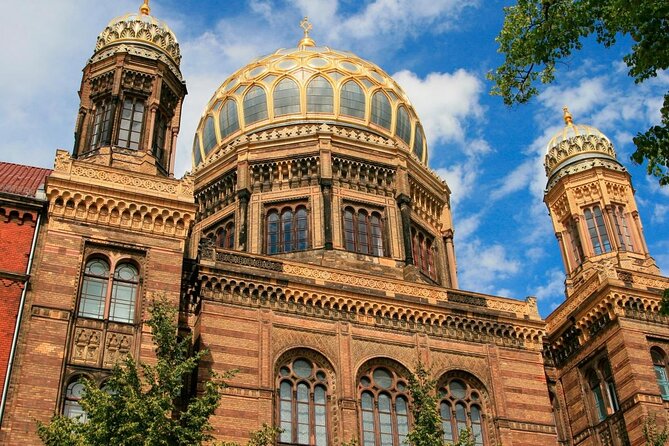
The Stiftung Neue Synagoge Berlin, also known as the Centrum Judaicum, is one of the most affecting places on the route. The building’s grand architecture once expressed the place German Jews hoped to hold in 19th-century society.
Its design reflected confidence and a desire for full participation in German public life. That makes the site more than a beautiful building. It raises questions about assimilation, belonging, and the hope that Jewish citizens could build a secure future in Germany.
The New Synagogue is also tied to Jewish Berlin today. The site is home to the Jewish community’s revival in Berlin, giving the visit a present-day dimension. You are not looking only at a vanished world. You are also considering continuity and renewal after catastrophe.
The stop lasts about 20 minutes, with admission included at no extra charge. Since the tour is focused on the city’s Jewish story, the guide can explain why this building matters within that larger story rather than treating it as an architectural photo stop.
One practical note: the supplied details do not promise a full interior tour or a separate museum visit. Think of this stop as a guided look at the site and its meaning within the walking route.
Auguststrasse and the former Jewish Girls’ School
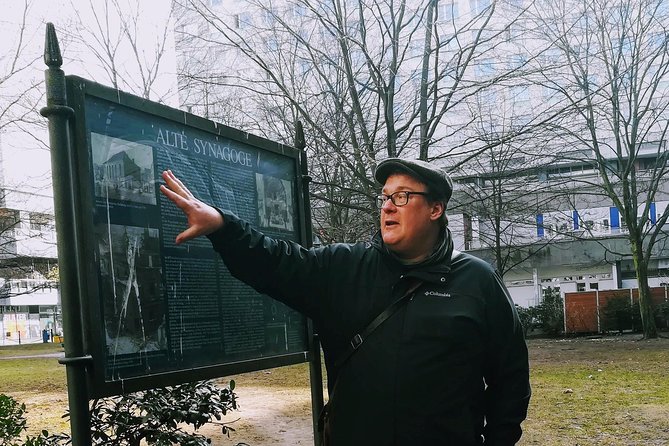
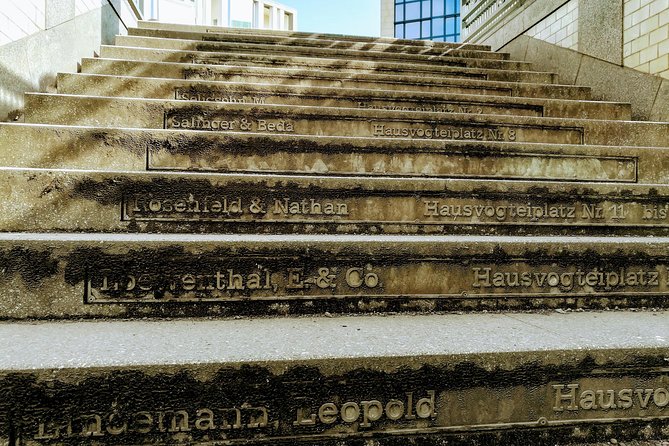
Auguststrasse offers a different view of Jewish Berlin. Instead of focusing on a synagogue, the guide points to the Jewish Girls’ School at Auguststraße 11-13.
Built between 1927 and 1928 by architect Alexander Beer, the school is a historical monument in the New Objectivity style. Its design and purpose show a Jewish community building institutions for education and daily life in the years before the Nazi takeover.
Today, the building contains an exhibit hall and a coffee shop. You may want to return later if the opening hours suit your plans, since the tour itself gives you about 20 minutes at the site and is not presented as a full museum visit.
I like this stop because it makes the subject more personal. A school suggests children, teachers, families, and ordinary routines. It helps you picture Jewish Berlin as a living community rather than only as a subject connected to persecution.
The guide can also place the school in the wider story of the late 1920s. That period was not yet the Holocaust, but the building’s later history gives the stop a painful shadow. The walk asks you to hold both ideas at once: a community investing in its future, and the destruction that followed.
More walking tours in Berlin:
- Discover Berlin Half-Day Walking Tour
★ 5.0 · 9,624 reviews - Berlin: Third Reich and Cold War 2 Hour Walking Tour
★ 4.9 · 6,830 reviews - Berlin: Discover Berlin Walking Tour
★ 4.9 · 5,998 reviews - Berlin’s Best: 2 Hour Walking Tour Third Reich and the Cold War
★ 5.0 · 5,486 reviews
Hackesche Höfe and the Barn Quarter
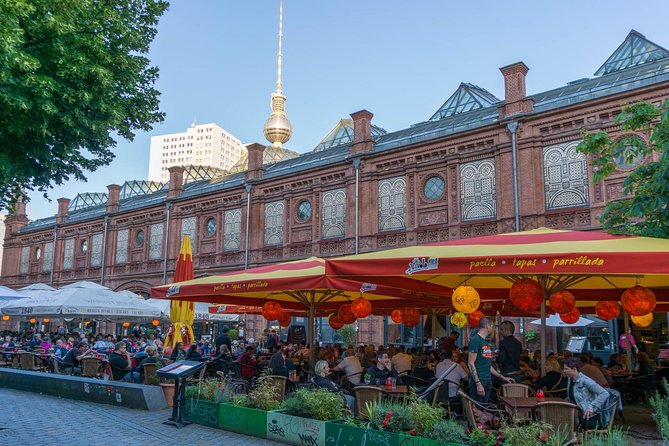
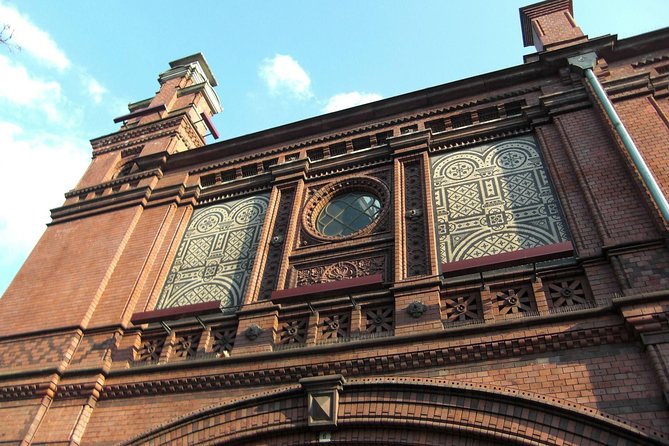
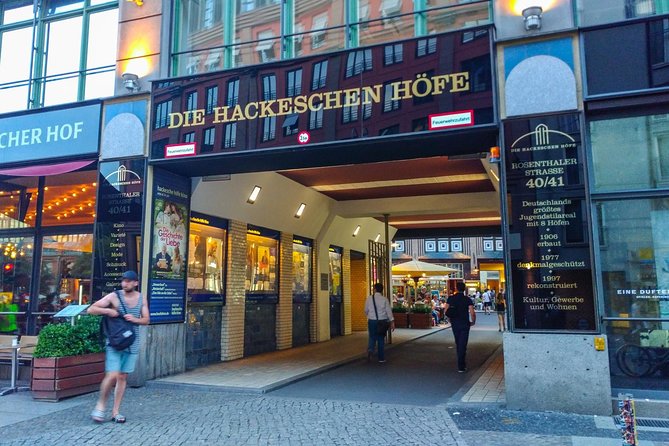
At Hackescher Markt, the tour enters an area where Jewish life developed around Spandauer Vorstadt and the Scheunenviertel. You will take in the courtyards and architecture of Die Hackeschen Höfe while hearing about German Jewish life in Berlin-Mitte.
This is one of the more visually engaging sections of the walk. The courtyards offer graceful architecture and a sense of how urban life unfolded behind the main streets. The guide’s job here is to connect the physical setting to the people who lived and worked in the area.
The Barn Quarter name can sound quaint, but the neighborhood’s story is not a simple tale of picturesque old Berlin. This district became associated with Jewish residents and institutions, and its streets reflect the pressures, opportunities, and social changes that shaped Jewish life in the capital.
The stop lasts around 30 minutes, making it the longest single visit on the route. That gives you time to look carefully and ask questions. It also means the walking pace may feel measured rather than rushed.
Hackesche Höfe is a popular part of central Berlin, so you should expect an active city setting rather than a quiet memorial space. The guide helps you look past the shops and courtyards to the layers of history beneath them.
The Women’s Block and an act of protest
The Women’s Block, or Block der Frauen, is a small but powerful memorial. It recalls the non-Jewish wives and relatives of Jewish men arrested by the Nazis and targeted for deportation.
These women sustained protest demonstrations. Their actions offer a difficult and important detail in the story of Nazi Germany: public resistance did happen, even under a brutal dictatorship, and the people involved faced real danger.
The stop takes about 20 minutes. It is not as grand as the New Synagogue or as visually dramatic as the Holocaust Memorial, but that is part of its force. You stand with a story about persistence, family ties, and protest in a city where fear was used to control daily life.
This is also a good place to ask questions. The route gives you time for discussion, and small groups work especially well at sites where the meaning is less obvious from the monument alone.
The Holocaust Memorial at the end of the walk
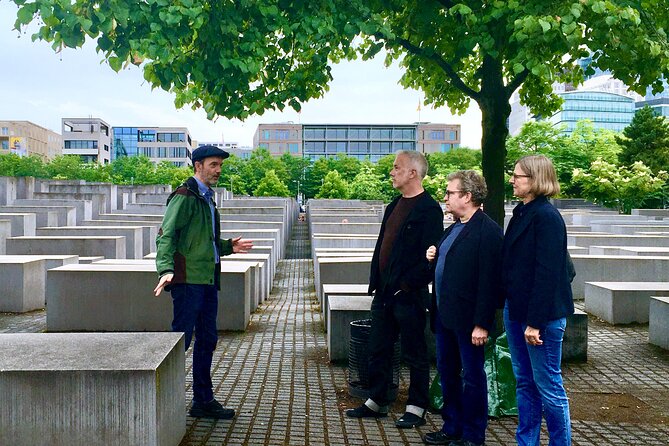
The final listed stop is the Memorial to the Murdered Jews of Europe, designed by architect Peter Eisenman. Its 2,711 concrete slabs form a large field with paths that rise and fall between them.
The design does not give you a single viewpoint or a simple explanation. As you pass among the slabs, the space changes around you. The memorial is meant to provide a personal encounter, and the guide’s earlier discussion gives you historical grounding before you enter it.
The stop lasts about 20 minutes and admission is free. You should not expect a long museum visit as part of the walking tour. The value here is the site itself, along with the guide’s explanation of what the memorial represents and how Germany acknowledges the Holocaust.
Ending here makes sense, but it also means you may want quiet time afterward. The tour does not include food or drinks, and the end point is simply listed as Berlin, Germany rather than a specific restaurant or transit station. Plan your next stop before you begin if you need to reach a timed booking.
The guide makes the difference
The strongest reason to book this tour is the guide. The route contains sites you can visit on your own, and several are free to enter or view. What you are paying for is the connection between them and the chance to ask informed questions.
The guides are described as enthusiastic hosts and storytellers, but the useful point is more specific: they can adapt the tour to your questions and interests. Ioana has been praised for handling sensitive material with empathy. Forrest is associated with clear explanations that are easy to follow. Lee has been described as gracious and enthusiastic about the subject. Heather brings visible passion and openness to discussion.
You may also have a very small group. Although the maximum is 10, the group can be smaller, and one booking had only a couple. That can make the walk feel more like a private tutorial without the full cost of a private tour.
The subject is serious, so a guide who can balance facts, empathy, and discussion matters. I would not choose this experience if you want a light sightseeing stroll. I would choose it if you want to understand how Jewish Berlin developed, how it was attacked, and how the city remembers it now.
Is $156.53 a fair price?
At $156.53 per person, the tour is expensive for three hours. The stops themselves do not carry an admission charge, and you must pay separately for any food or drinks. If you compare it with a standard city walking tour, the price may give you pause.
The value comes from specialization. You are getting a small group, an English-speaking academic-style guide, and a route built around a subject that can be difficult to understand through casual sightseeing. You also save the work of researching the New Synagogue, Auguststrasse, the Hackesche Höfe, the Women’s Block, and the Holocaust Memorial and then connecting them yourself.
Group discounts are available, though the amount is not specified. The tour is also booked about 66 days ahead on average, so I would not leave it until the final day of your Berlin stay.
For someone with a strong interest in Jewish history, German history, architecture, or Holocaust remembrance, the cost may be justified. If your main goal is a general introduction to Berlin, a less specialized walk may offer better value.
Who should take this tour?
I would recommend it to you if you want:
- A focused introduction to Jewish life in Berlin from its early beginnings through the present
- A small group where questions are welcome
- A guide with academic or journalistic training
- A thoughtful route through Mitte and the Scheunenviertel
- Help interpreting memorials instead of simply photographing them
- A serious experience that treats difficult subjects with care
Families with older children and teenagers may also find it useful, especially if they are ready for discussion of Nazi persecution and the Holocaust. The tour is not presented as a children’s activity, so younger children may find the pace and subject matter demanding.
It also suits repeat visitors to Berlin. You may have walked around Hackescher Markt or passed the Holocaust Memorial before, but a strong guide can change how you see familiar places.
Practical details for a smoother walk
Wear comfortable shoes and allow the full three hours. The experience is a walking tour through central Berlin, with several stops and time for discussion.
The route is near public transportation at the starting point. The meeting address is Rosenthaler Str. 40/41, 10178 Berlin, Germany. The end point is listed only as Berlin, Germany, so do not assume the walk finishes at a particular station or attraction.
The tour is offered in English, and confirmation arrives at booking. Most people can participate. Food and drinks are not included, so bring water or plan a café stop afterward.
You can cancel for a full refund up to 24 hours before the local start time. Changes or cancellations made less than 24 hours before the start are not accepted for a refund.
Should you book In Search of Jewish Berlin?
Book this tour if you want a serious, guided look at Jewish Berlin and are willing to pay for specialist attention. The strongest features are the small group, the academic guides, and the way the route connects everyday institutions with persecution and remembrance.
Skip it if you want a cheap overview, a fast-paced sightseeing loop, or a tour centered mainly on interiors. You will spend three hours with difficult history, and the value depends heavily on your interest in the subject.
For the right reader, this is a thoughtful use of a morning or afternoon in Berlin. It gives you places to see, questions to consider, and a clearer sense of the people and communities behind the city’s memorials.
FAQ
How long is In Search of Jewish Berlin?
The walking tour lasts approximately three hours.
What language is the tour offered in?
The tour is offered in English.
How many people can join the tour?
The maximum group size is 10 people.
Where does the tour begin?
The meeting point is Rosenthaler Str. 40/41, 10178 Berlin, Germany.
Are admission fees included?
The listed stops have free admission. Food and drinks are not included.
Can I cancel for a full refund?
Yes. You can cancel at least 24 hours before the local start time for a full refund. Cancellations or changes made less than 24 hours before the start are not accepted for a refund.
Just added around Berlin
- Berlin Highlights in One Day★ 5.0 · 3 reviews
- Private Berlin One Day Tour with a Local: See the City Unscripted★ 3.5 · 3 reviews
- Individual city tour Berlin for max. 8 persons★ 5.0 · 3 reviews
- Transfer from Berlin Schönefeld Airport (SXF) to Berlin city Hotels – ROUND TRIP★ 4.0 · 3 reviews
- Berlin: Museum Island Tour★ 5.0 · 3 reviews
- Private Analogue Photography Experience in Berlin★ 5.0 · 3 reviews
- Berlin: Local Food Tour in Secrets Hidden Gems★ 4.0 · 3 reviews
- Potsdam Highlights – Private sightseeing tour by minibus★ 5.0 · 3 reviews
Jewish Berlin & Holocaust Memorials, compared.

Path of Resistance: Berlin’s Hidden Holocaust Stories
Read our review →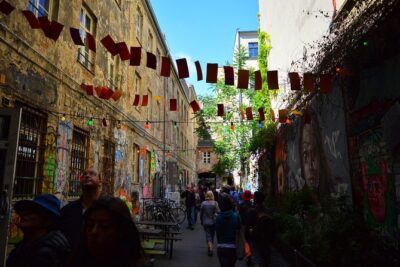
Private Tour: Jewish Heritage Walking Tour of Berlin
Read our review →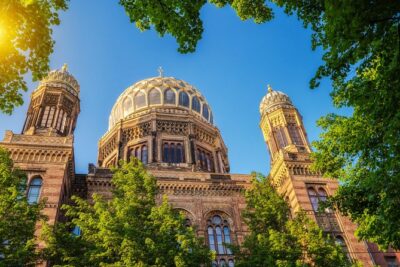
Jewish Berlin: Walking tour The Old Jewish Quarter (private 3 Hours tour)
Read our review →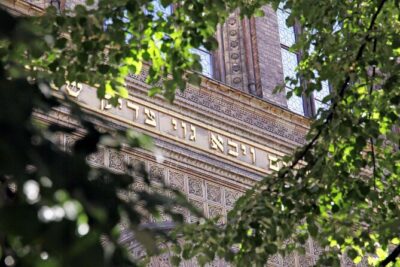
Path of Resistance: Berlin’s Hidden Holocaust Stories
Read our review →
Browse the lists this tour appears in