
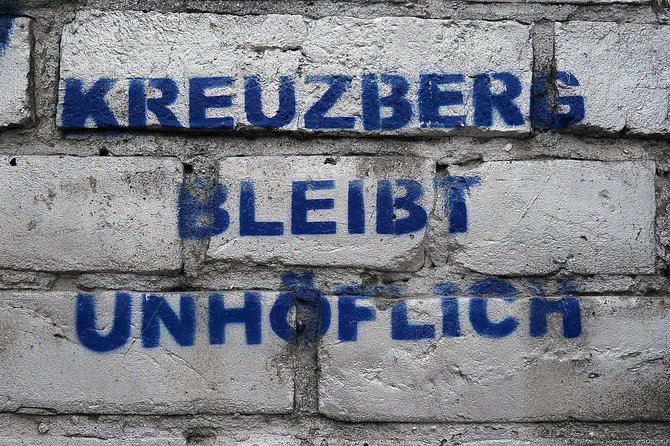
Review · KREUZBERG TOURS
Kreuzberg Private Walking Tour: Immigrants, Artists & Hipsters
Kreuzberg is Berlin at its most unsettled and interesting, where old worker housing, Turkish shops, street art, clubs, and new development press against one another. This private walk gets past postcard Berlin and into the neighborhood’s complicated story, from Cold War division to today’s fight over gentrification.
I like the small private format, which lets the guide adjust the pace and focus. I also like the mix of street art, immigrant culture, and political history, rather than a walk built around monuments alone. The main drawback is practical: several sites are too far apart to reach on foot, so you’ll need public transport during the three-hour tour.
In This Review
- Key points at a glance
- Why Kreuzberg makes a better walking subject than a postcard district
- Starting beside Oberbaumbrücke and the Spree
- Seeing the Berlin Wall through Kreuzberg’s streets
- Oranienstraße and the SO36 pulse
- Viktoriapark and a quieter side of Kreuzberg
- A historian guide and a genuinely private group
- Public transport is part of the plan
- Is $450 good value for your group?
- Who will enjoy this Kreuzberg walk most?
- Should you book it?
- FAQ
- How long does the Kreuzberg private walking tour last?
- How many people can join the private tour?
- What is the price of the tour?
- Where does the tour start?
- Does the tour include public transport?
- Are morning and afternoon departures available?
- Can I cancel for a full refund?
Key points at a glance
- Oberbaumbrücke sets the scene: Begin beside Berlin’s handsome double-decker bridge and the Spree River.
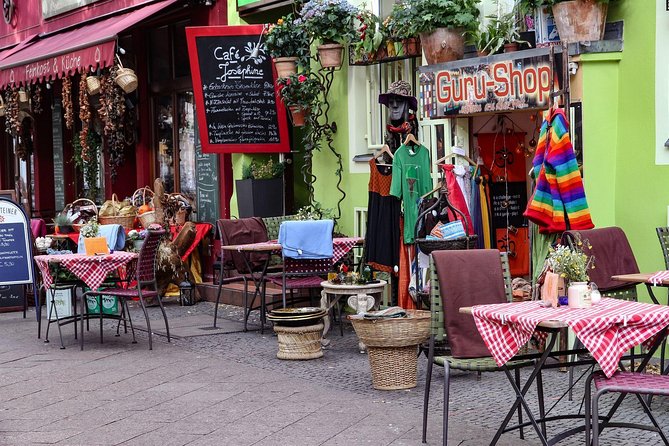
- SO36 shows Kreuzberg’s rough edge: Explore Oranienstraße, independent shops, cafes, and streets tied to old clashes between anarchists and police.
- The Berlin Wall story is local and visible: See remaining fragments and learn how division shaped the district.
- Klaus offers a flexible guiding style: He is known for adapting the walk to your interests and pace, including families with children.
- Viktoriapark adds breathing room: Finish with one of Kreuzberg’s best-known green spaces.
- The price favors a full group: At $450 for up to 10 people, the cost makes more sense when shared by several relatives or friends.
Why Kreuzberg makes a better walking subject than a postcard district
Kreuzberg was once a 19th-century workers’ district and later part of West Berlin, pressed against the Berlin Wall. Its identity came from many forces at once: immigrant communities, wartime destruction, Cold War neglect, artists, anarchists, squatters, bars, cafes, and cheap buildings that gave creative people room to work.
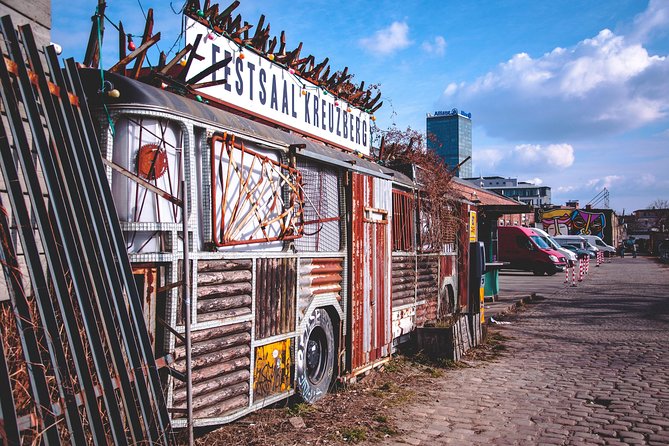
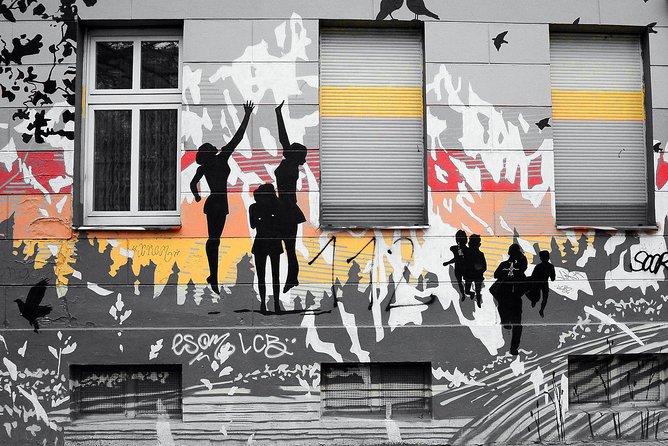
That mix still shapes the walk. You’ll see a district where Turkish businesses and market goods sit beside design shops, art spaces, nightlife, and walls covered in large-scale street art. The point is not simply to admire colorful paint. Your guide explains why abandoned buildings and empty plots gave artists space, and why that freedom is harder to protect as property values rise.
The tour also asks where Kreuzberg goes next. Riverside development near the Spree may bring new offices, housing, and investment. It may also speed up the changes already pushing some long-time businesses and lower-cost spaces out of the neighborhood. I find that forward-looking angle especially useful. It keeps the walk from treating Kreuzberg as a frozen counterculture museum.
You should come ready for a neighborhood with contradictions. It can feel creative and welcoming in one block, polished and commercial in the next. That tension is the subject, not a flaw in the tour.
More Kreuzberg on foot and by bike:
- Kreuzberg: Culinary Food Tour
★ 4.5 · 770 reviews - Berlin: Kreuzberg Guided Walking Evening Tour
★ 4.7 · 555 reviews - Berlin: Alternative Bike Tour of Kreuzberg & Friedrichshain
★ 4.7 · 548 reviews
Starting beside Oberbaumbrücke and the Spree
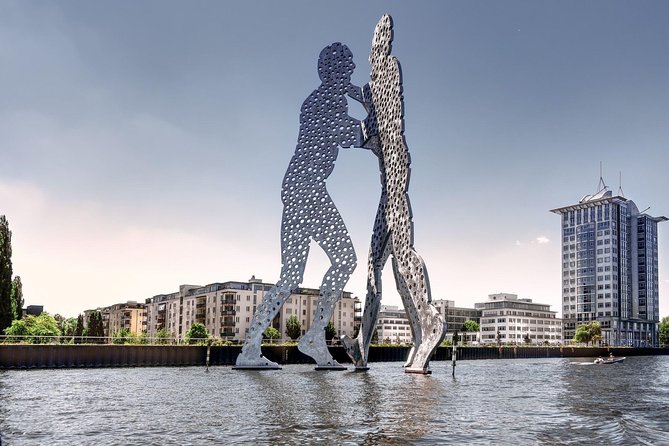
The meeting point is at Schlesische Str. 18, in the Kreuzberg area, with the route beginning around Oberbaumbrücke. This double-decker bridge crosses the Spree and is one of Berlin’s most recognizable bridges, with a strong link to the eastern side of the district.
The bridge is a smart opening point because it gives you immediate geographic context. You are close to the former border between East and West Berlin, and the guide can show how the old SO36 area relates to the river, the wall, and nearby development. Rather than dropping you into a random side street, the walk starts with a clear sense of place.
Oberbaumbrücke also helps explain the name SO36. The term comes from the former postal code for the eastern half of Kreuzberg. It is still used as a local nickname, carrying memories of the area before cafes, galleries, and newer retailers changed its image.
The opening stop is short, listed at about 15 minutes. That is enough for orientation, photographs, and a first dose of local history, but not a long bridge tour. If bridge architecture is your main interest, this walk will give you context rather than a detailed architectural study.
Seeing the Berlin Wall through Kreuzberg’s streets
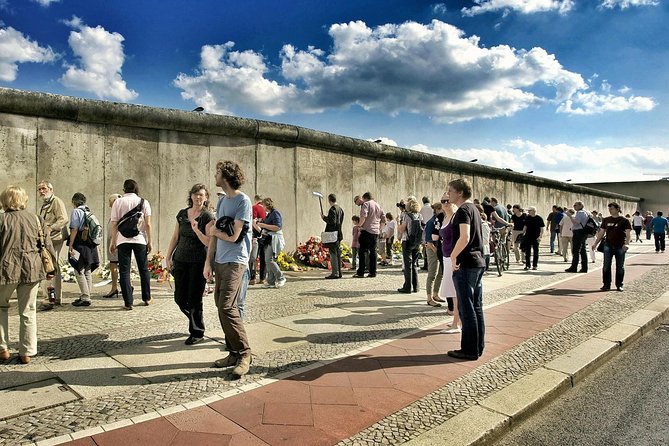
The Berlin Wall stop lasts about 25 minutes and focuses on what remains in the area. You’ll see fragments of the wall before moving past art-covered walls, former abandoned buildings, and open plots that found new uses as creative spaces.
This part matters because Kreuzberg’s identity cannot be separated from the wall. The district was not simply divided by a line on a map. Cold War pressure helped leave some areas cut off, underfunded, or overlooked. Buildings and lots that might otherwise have been redeveloped remained available for unusual uses.
Your guide connects those physical traces with the local art scene. Street art here is not just decoration added for visitors. It grew from a setting where artists had access to neglected walls and buildings, and where opposition to authority was part of daily life.
The wall remnants may be modest compared with larger Berlin memorial sites. That can be a benefit if you want to understand the wall as part of a lived-in neighborhood rather than visit only a formal memorial. It also means you should not expect a large museum, extensive indoor exhibits, or a long preserved section.
Oranienstraße and the SO36 pulse

The route then reaches Oranienstraße, one of Kreuzberg’s best-known streets. The planned stop lasts around 35 minutes, giving you time to take in its cafes, boutiques, and mixed local character.
The street is named after the Dutch princely House of Orange. It also carries a more combative past, with street battles at the turn of the 20th century between Berlin anarchists and police. That detail helps explain why Kreuzberg’s rebellious reputation did not appear out of nowhere.
Today, Oranienstraße offers a useful look at the district’s changing economy. You may find Turkish businesses and food shops alongside independent retailers and cafes aimed at newer customers. The tour does not present one side as the only authentic one. Instead, you get to see how several versions of Kreuzberg occupy the same few blocks.
This is likely one of the most enjoyable sections for anyone who likes street-level observation. You can look at signs, storefronts, murals, and market goods while your guide explains what has changed. A historian guide such as Klaus can help turn small details into a broader story, and his reported habit of following your interests is useful here. If food matters to you, he is also known for knowing where to find good spaetzle, an unexpectedly practical bonus.
Keep in mind that this is a walking and interpretation tour, not a food tour. Food and drinks are not included, and the route does not promise tastings. You may find places worth returning to later, but you should not book it expecting a planned meal.
More walking tours in Berlin:
- Discover Berlin Half-Day Walking Tour
★ 5.0 · 9,624 reviews - Berlin: Third Reich and Cold War 2 Hour Walking Tour
★ 4.9 · 6,830 reviews - Berlin: Discover Berlin Walking Tour
★ 4.9 · 5,998 reviews - Berlin’s Best: 2 Hour Walking Tour Third Reich and the Cold War
★ 5.0 · 5,486 reviews
Viktoriapark and a quieter side of Kreuzberg
Viktoriapark provides a change of pace after the busy streets and political history. The stop lasts about 20 minutes and introduces one of Berlin’s best-known green spaces.
The park shows that Kreuzberg is not all concrete, murals, nightlife, and traffic. It gives you room to consider how public space fits into a district under pressure. Parks can serve long-time residents, families, artists, and newer arrivals at the same time, which makes them part of the neighborhood’s social story.
Because the stop is fairly short, you should expect an overview rather than a full park visit. You may have time to enjoy the setting and hear why it matters, but the tour is not designed as a long botanical or garden walk. If you want a leisurely break, plan to return after the guided portion.
The park also helps keep the tour from feeling like a nonstop march through contested streets. Three hours is a useful length for Kreuzberg, but a little variety makes the pace easier, especially for a family.
A historian guide and a genuinely private group
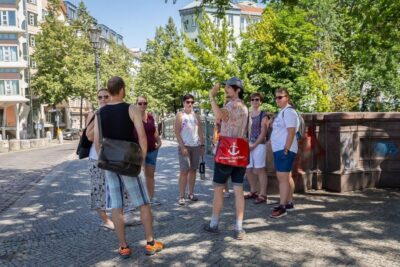
The tour includes a private historian guide for your group alone, with a maximum of 10 people. That makes a real difference in Kreuzberg, where the best questions often concern small signs of change rather than famous sights.
A private guide can pause when you want more context, move along when a topic is less important to you, and adjust the walk for different ages. Klaus received especially strong praise for being friendly, fun, and willing to match the pace and interests of the people he was guiding. A parent traveling with a 12-year-old found the neighborhood both interesting and manageable, which is helpful if you want history without a lecture-heavy afternoon.
The guide’s role is important because the area does not explain itself in a tidy sequence. A mural, a Turkish shop, a vacant lot, and a new riverside project may look unrelated. Good commentary connects them without claiming that Kreuzberg has one simple identity.
You should still tell the operator what interests you when booking. The tour offers morning and afternoon departures, and the provider asks you to state your preference. If you are especially interested in architecture, food, political movements, family-friendly pacing, or gentrification, say so in advance.
Public transport is part of the plan

The distances between the main sites are too great to walk in full, so you’ll use public transport several times. That is an important detail to consider before booking. This is not a single compact loop where every stop sits around the corner.
The tour price does not include public transport. You should budget for those fares and allow a little time for moving between sections. The supplied information also lists optional bike rental at 10 euros per person, but you should not assume a bike is required. The central product is a walking tour, with transport used to link the farther points.
For many people, the transit breaks are useful. They let the guide explain how the sections connect across Kreuzberg and prevent a three-hour walk from becoming tiring. If you have limited mobility or dislike changing location during a tour, ask the provider for details before booking. Most people can participate, but the route involves walking and transport rather than a seated vehicle.
Morning and afternoon starts give you some control over the day. An afternoon departure may work well if you want to combine the tour with nearby meals or nightlife afterward. A morning walk may feel better if you prefer cooler hours and a fresh start. The exact appeal depends on your schedule, since no meal or drink is included.
Is $450 good value for your group?
The cost is $450 per group, for up to 10 people. That is expensive for one or two people, but it becomes much more reasonable when shared among a family or group of friends. At the full limit, the cost works out to $45 per person before transport and any food.
The value comes from the private format and the subject matter. You are paying for a historian’s time, a route shaped around your group, and a neighborhood explanation that is difficult to get from a standard city-center highlights walk. You are not paying for admission tickets, since the listed stops are free.
For a couple, the price is harder to justify unless you place a high value on private guiding and have a strong interest in Kreuzberg. For a family of four to ten, it can make sense, particularly if you want to ask questions freely or keep the pace comfortable for a child.
The tour averages bookings about 10 days ahead, so I would not leave it until the last minute if the departure time matters. Confirmation is sent within 48 hours, subject to availability. Free cancellation is available up to 24 hours before the start time, which gives you some useful flexibility.
Who will enjoy this Kreuzberg walk most?
I would choose this experience if you want to understand how Berlin’s past still shapes its streets. It suits people who enjoy social history, urban change, street art, immigrant culture, and neighborhood politics more than a checklist of grand monuments.
It is also a good fit for:
- Families who want a private pace and a guide who can keep younger people involved.
- First-time Berlin visitors who want a strong introduction to Kreuzberg.
- Repeat visitors who have already seen central Berlin and want a less formal district.
- Small groups that can share the $450 price.
- Anyone curious about gentrification and future development, not just the area’s counterculture past.
I would look elsewhere if you want a food tasting tour, a bike tour included in the price, or a detailed museum-style Berlin Wall visit. You should also think twice if you want every part of the route to be walked without public transport.
Should you book it?
Book this Kreuzberg tour if you want a personal, well-paced look at a neighborhood shaped by immigration, art, conflict, and rising property pressure. The strongest reasons are the private historian, the flexible approach associated with Klaus, and the way the route links the Berlin Wall to present-day street life.
The decision is easiest for groups of four or more. At $450, the cost is a serious commitment for two people, but a fairer deal when split across a family or group. Tell the provider your preferred morning or afternoon start, ask for a pace suited to your party, and set aside money for public transport and any food you buy along the way.
FAQ
How long does the Kreuzberg private walking tour last?
The tour lasts approximately three hours.
How many people can join the private tour?
The tour accepts a maximum of 10 travelers per group.
What is the price of the tour?
The price is $450 per group, for up to 10 people.
Where does the tour start?
The meeting point is Schlesische Str. 18, 10997 Berlin, Germany.
Does the tour include public transport?
No. You need to use public transport several times because some key sites are too far apart to walk between. Transport costs are not listed as included.
Are morning and afternoon departures available?
Yes. You can choose a morning or afternoon departure, and you should provide your preference when booking.
Can I cancel for a full refund?
Yes. You can cancel up to 24 hours before the experience start time for a full refund. Changes or cancellations made less than 24 hours before the start time are not accepted for a refund.
Just added around Berlin
- Berlin Highlights in One Day★ 5.0 · 3 reviews
- Private Berlin One Day Tour with a Local: See the City Unscripted★ 3.5 · 3 reviews
- Individual city tour Berlin for max. 8 persons★ 5.0 · 3 reviews
- Transfer from Berlin Schönefeld Airport (SXF) to Berlin city Hotels – ROUND TRIP★ 4.0 · 3 reviews
- Berlin: Museum Island Tour★ 5.0 · 3 reviews
- Private Analogue Photography Experience in Berlin★ 5.0 · 3 reviews
- Berlin: Local Food Tour in Secrets Hidden Gems★ 4.0 · 3 reviews
- Berlin & The Third Reich Private Guided Tour★ 5.0 · 3 reviews
Kreuzberg Tours, compared.


Alternative Bike Tour of Kreuzberg & Friedrichshain
Read our review →

Berlin Off-the-Beaten-Path Walking Tour: Kreuzberg, Mitte and Friedrichshain
Read our review →
Kreuzberg Berlin: Off the Beaten Track PRIVATE Walking Tour
Read our review →
Experience the Alternative Kreuzberg on a Bike Tour
Read our review →Browse the lists this tour appears in