
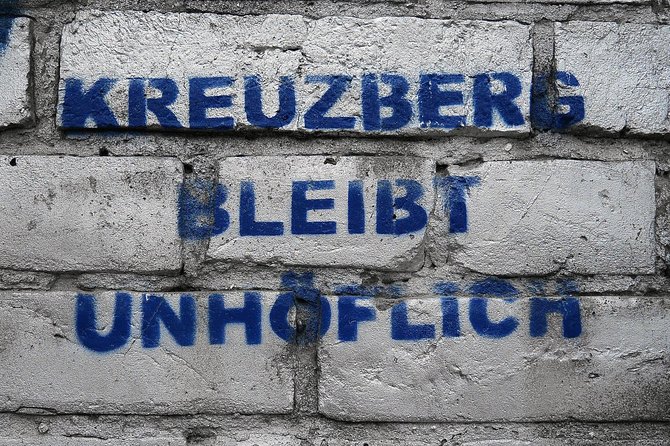
Review · KREUZBERG TOURS
Kreuzberg Walking Tour: Immigrants, Artists & Hipsters
Kreuzberg’s appeal is its constant push and pull: Cold War borderland turned creative district, immigrant neighborhood turned hipster address, and gritty old quarter facing costly new development. This three-hour tour follows those changes through streets, wall remains, abandoned plots, food stalls, and local hangouts rather than treating Kreuzberg as a postcard stop.
I like the small group size, which gives you room to ask questions, and the way the tour links history with daily life. I also like that guides such as Peter and Ronan are described as patient, thoughtful conversationalists who can offer ideas for the rest of your Berlin stay. The main drawback is the price, $153.85 per person, especially since public transport, food, and an optional €10 bike rental cost extra.
In This Review
- Key points to know before booking
- Why Kreuzberg makes a better history lesson than a standard city tour
- Oberbaumbrücke and the road into SO36
- Berlin Wall remains and the afterlife of abandoned spaces
- Graffiti, street art, and the visual language of Kreuzberg
- Görlitzer Park and a slower look at local life
- Markthalle 9, Turkish culture, and the best edible lesson
- Walking or cycling: which version suits you?
- Riverside development and Kreuzberg’s uncertain future
- What the $153.85 price gets you
- Who will enjoy this Kreuzberg tour most?
- Final decision: should you book it?
- FAQ
- Where does the tour start?
- Where does the tour end?
- How long does the tour last?
- Is the tour offered in English?
- How large is the group?
- Is this a walking tour or a bicycle tour?
- How much does bicycle rental cost?
- Are food and drinks included?
- Will the tour use public transportation?
- Is hotel pickup included?
- Can children join the tour?
- Can I cancel for a full refund?
Key points to know before booking
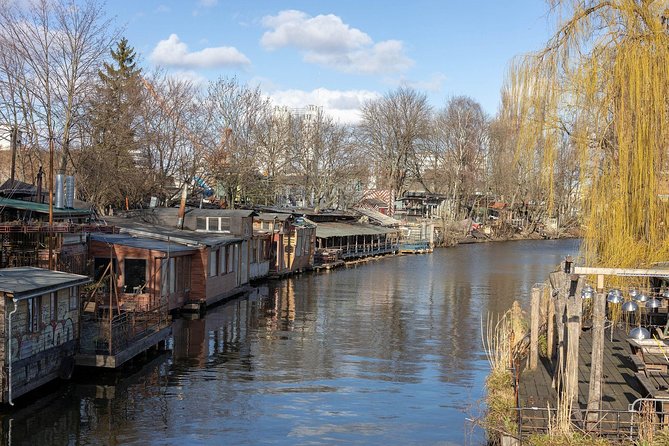
- A Cold War story told on neighborhood streets: See how Kreuzberg changed from a marginal district beside the Berlin Wall into one of Berlin’s most talked-about areas.
- Small-group attention: The tour is listed for six people, with booking limits that may allow up to eight per reservation and ten travelers overall.
- Food is part of the lesson: Turkish shops, markets, spices, flowers, and Gözleme help explain Kreuzberg’s immigrant culture.
- Choose walking or cycling: The bicycle option covers more ground within the district, but rental costs €10 per person.
- Art is treated as history: Graffiti, street art, reused buildings, and vacant plots are part of the neighborhood’s story, not just decoration.
- Some transit is required: Distances between major stops are too long to walk comfortably, so budget for public transport.
Why Kreuzberg makes a better history lesson than a standard city tour
If you have already seen Berlin’s grand monuments, Kreuzberg gives you a useful change of pace. It is less about famous façades and more about how a neighborhood is shaped by borders, migration, protest, art, nightlife, and real estate.
The tour begins near Schlesische Strasse 18 and heads toward Oberbaumbrücke. That starting point matters. The bridge is one of Berlin’s prettiest crossings, but it also links two districts with very different reputations and histories. As you walk across, you begin to see Kreuzberg not as an isolated pocket, but as part of a city that was once split in two.
I would choose this tour after visiting the central sights, not before. You will get more from its Cold War and post-1989 stories once you have a basic feel for Berlin’s division and reunification. Still, the guide’s explanations are meant to work for newcomers, and one particularly strong aspect is that even people who have lived in Berlin for years can find fresh angles here.
The tour is offered in English and led by a professional art historian. That background is useful because Kreuzberg’s story is not only political. It is also about architecture, public space, murals, informal uses of land, and the way artists change how a district is seen.
More Kreuzberg on foot and by bike:
- Kreuzberg: Culinary Food Tour
★ 4.5 · 770 reviews - Berlin: Kreuzberg Guided Walking Evening Tour
★ 4.7 · 555 reviews - Berlin: Alternative Bike Tour of Kreuzberg & Friedrichshain
★ 4.7 · 548 reviews
Oberbaumbrücke and the road into SO36
Oberbaumbrücke is a graceful place to begin. Take a moment to look around before the walking starts in earnest. The bridge provides a clear visual entry into the district, and your guide can set up the larger question of what Kreuzberg became after the border disappeared.
From there, the route moves toward SO36, the section of Kreuzberg known for its rougher past and strong subcultural identity. During the Cold War, this part of West Berlin sat beside the Wall and had a reputation as a marginal, unruly area. Low rents and isolation helped attract immigrants, artists, squatters, musicians, and political groups.
The tour connects those groups to the neighborhood you see today. Rock musicians passed through during the Cold War years, while artists and young people used cheap or abandoned spaces in ways that would have seemed unlikely in a more polished district.
You should expect a good deal of walking, street observation, and conversation rather than a long list of formal monuments. The point is to understand why Kreuzberg looks and feels the way it does. If you prefer nonstop landmark photos, this may seem loose. If you enjoy seeing how ordinary streets carry political meaning, it is a strong part of the route.
Berlin Wall remains and the afterlife of abandoned spaces
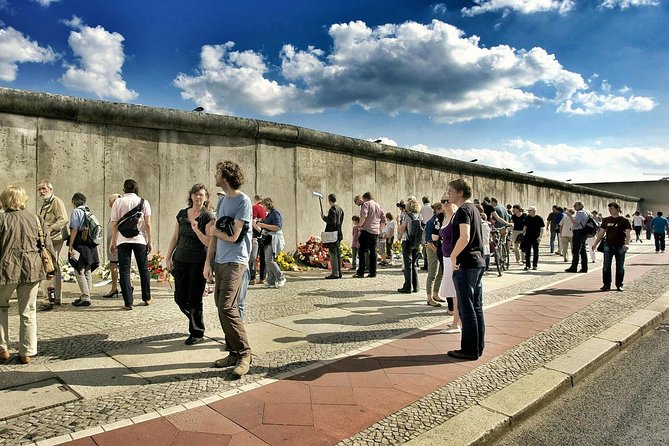
Berlin Wall remains help anchor the story. The Wall is often presented through major memorial sites, but in Kreuzberg you see how it shaped everyday geography. Streets, buildings, and vacant plots were affected by the border, and the district’s unusual position helped preserve space for uses that would have been harder to imagine in a more expensive part of town.
Your guide discusses creative uses of abandoned buildings and land. This is where the tour’s art-history angle earns its keep. You are not only looking at murals and rough façades. You are considering who gets to use urban space, why informal projects appear, and what happens when the city becomes fashionable.
That last point is important. Kreuzberg is not frozen in its alternative past. The same atmosphere that drew artists and independent businesses has also helped raise interest and prices. A good guide should help you see both sides: the freedom and character created by low-cost space, and the pressure that follows when a neighborhood becomes desirable.
The pace here should suit curious walkers. You can ask about the meaning of a mural, the history of a building, or the forces changing the area. The small group makes those exchanges more practical than they would be on a large bus tour.
Graffiti, street art, and the visual language of Kreuzberg
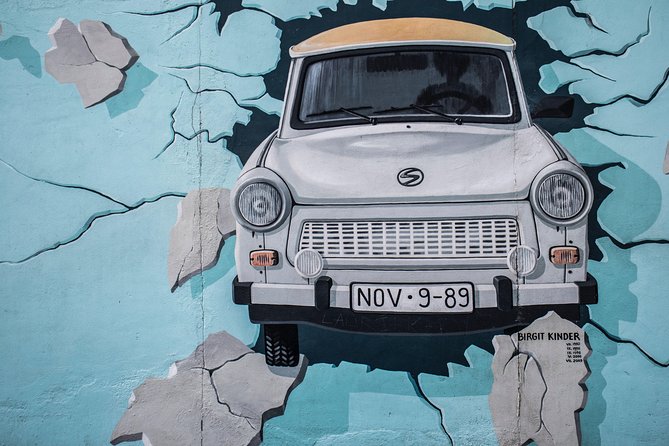
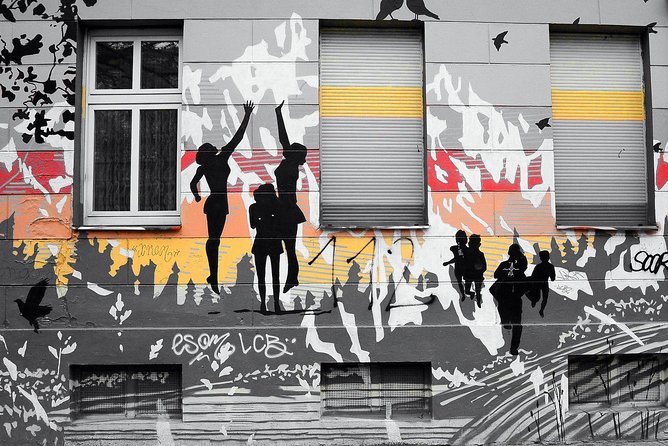
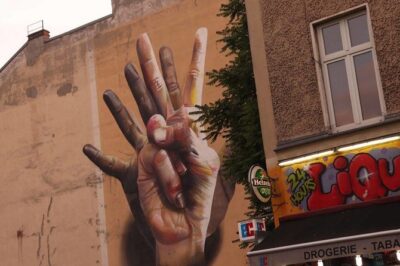
Street art is not a quick photo stop on this tour. It is part of Kreuzberg’s public conversation. Your guide explains why graffiti matters to the district’s identity and how walls became places for protest, expression, humor, and territorial claims.
You will see that Kreuzberg’s art is not all polished or easy to interpret. Some work may be large and carefully planned, while other marks are rough, temporary, or difficult to separate from ordinary urban wear. That uncertainty is part of the lesson.
I like this approach because it avoids treating street art as decoration stripped from its setting. A mural means something different on a former border street, beside a squatted building, or near a new development project. The guide helps connect the image to the street around it.
The tour does not promise a fixed collection of artworks, and street art changes quickly. That is a practical consideration. You should book this for context and conversation, not for a guaranteed list of famous pieces.
More walking tours in Berlin:
- Discover Berlin Half-Day Walking Tour
★ 5.0 · 9,624 reviews - Berlin: Third Reich and Cold War 2 Hour Walking Tour
★ 4.9 · 6,830 reviews - Berlin: Discover Berlin Walking Tour
★ 4.9 · 5,998 reviews - Berlin’s Best: 2 Hour Walking Tour Third Reich and the Cold War
★ 5.0 · 5,486 reviews
Görlitzer Park and a slower look at local life

Görlitzer Park gives the route a change of rhythm. After the harder political and architectural subjects, the park lets you observe how people use shared space in the middle of the city.
The supplied details do not promise a particular activity in the park, so you should not expect a staged performance or special event. Instead, its value is as a place to discuss Kreuzberg’s everyday life and the way public spaces shape a neighborhood’s reputation.
This is also a good place to remember that Kreuzberg is not a museum display. It is a working district with competing needs. Residents, artists, shopkeepers, families, nightlife crowds, and developers all have different ideas about what the area should become.
That balance is one of the tour’s strongest features. It does not present Kreuzberg as a perfect alternative enclave. You get a more useful picture of a district with charm, friction, history, and change.
Markthalle 9, Turkish culture, and the best edible lesson
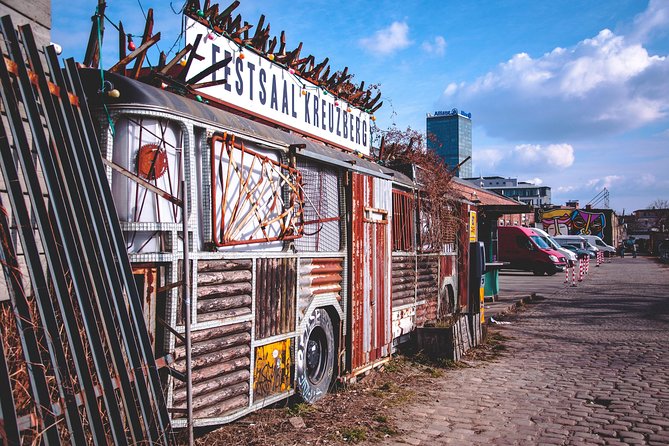
Markthalle 9, a market hall about 120 years old, brings the food part of the tour into focus. Markets can tell you more about a neighborhood than a formal monument, especially when the conversation moves from architecture to shopping, cooking, migration, and daily routines.
The route also passes Turkish shops and colorful markets filled with flowers, spices, and takeaway food. Kreuzberg’s Turkish culture is central to the experience, and this part gives you a direct way to see it rather than hearing about it only in abstract terms.
You may have a chance to sample Gözleme, a deep-fried pastry filled with ingredients such as spinach and cheese. Food and drinks are not included unless specifically stated, so bring extra money if you want to taste something. This is a small but important cost, since the food stops work best when you can pause for a snack instead of simply looking through a shop window.
I would ask the guide for recommendations during the tour. Peter, one of the guides associated with this experience, has been praised for offering useful ideas for enjoying the rest of a Berlin visit. That kind of practical local advice can add value, especially if you want to eat or shop in Kreuzberg after the group finishes.
The market section may be less appealing if you want a sit-down meal. It is better understood as a moving food lesson with optional bites, not a dedicated food tour.
Walking or cycling: which version suits you?
The walking version keeps you close to the details. You can stop more easily to look at street art, examine buildings, and follow the guide’s explanation without worrying about traffic or parking a bicycle.
The bicycle version covers more ground while staying within Kreuzberg. It can make sense if you want a broader view of the district or prefer riding to walking. Bike rental is optional and costs €10 per person, so the advertised tour price does not cover it.
Public transport is needed a few times because some key sites are too far apart to reach comfortably on foot. That means the tour is not a single continuous stroll from start to finish. You should have a transit ticket or payment method ready, and wear shoes suitable for walking and getting on and off local transport.
The exact balance between walking, cycling, and transit may depend on the day and the guide. The bicycle option is not a way to leave the district and see a large part of Berlin. It simply lets you cover more of Kreuzberg during the same roughly three-hour period.
Riverside development and Kreuzberg’s uncertain future
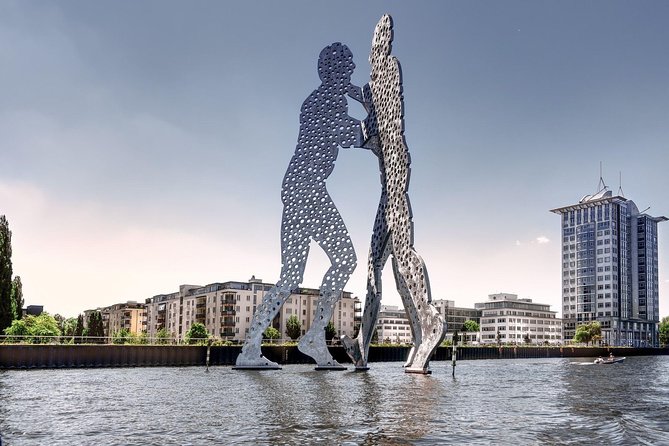
The tour closes with a discussion of controversial riverside development plans. This is a fitting ending because it brings the neighborhood’s past into the present.
Kreuzberg’s old identity grew from isolation, cheap space, migration, and alternative culture. Its current appeal has made that identity harder to protect. Riverside projects can bring new housing, offices, public areas, or investment, but they can also change the feel of the district and put pressure on long-standing communities.
You do not need to agree with one side to benefit from this discussion. The useful question is how a city decides who the neighborhood is for. By ending with development rather than a final monument, the tour makes clear that Kreuzberg is still being argued over.
One guide has also ended the day at the Friedrichshain-Kreuzberg Museum, which would be a fitting close to the subject. The museum stop is not clearly listed as a guaranteed part of every departure, so treat it as a possible ending rather than a promise. Ask when booking if this matters to you.
What the $153.85 price gets you
At $153.85 per person, this is an expensive neighborhood tour. You are paying for a professional art historian, a small group, and a focused three-hour conversation rather than for admissions, meals, or private transport.
The value depends on how you like to travel. If you want a quick orientation and a few good photo stops, the price may feel high. You can walk through Kreuzberg on your own for far less, and public transport is extra here.
I see better value if you care about context and questions. A guide can connect the bridge, Wall remains, street art, Turkish markets, park, market hall, and riverside plans into one story. That connection is difficult to build from a guidebook while you are moving through unfamiliar streets.
Group size also matters. The tour is described as six people maximum, while the booking information allows a maximum of eight per booking and ten travelers overall. Confirm the group limit for your date if a very intimate outing is important to you.
There are group discounts, and free cancellation is available up to 24 hours before the start time. Canceling later means losing the amount paid, and changes made inside that 24-hour window are not accepted.
Who will enjoy this Kreuzberg tour most?
I would recommend it to you if you have already seen Berlin’s central sights and want a neighborhood with more texture and debate. It suits visitors who like urban history, immigration, public art, food culture, architecture, and thoughtful discussion.
It is also a good choice for repeat visitors. One strong feature of the guide style is the willingness to discuss questions rather than rush through prepared facts. Ronan has been described as patient and skilled at conversation, while Peter is known for personal local insight and practical Berlin suggestions.
The tour can also work for Berlin residents who want to see Kreuzberg through a different lens. It is not limited to first-time visitors.
You may want something else if you dislike walking, changing between transport modes, or paying separately for snacks. Children must be accompanied by an adult, and most people can participate, but the supplied information does not provide detailed accessibility guidance. Ask the provider about your specific mobility needs before booking.
Final decision: should you book it?
Book this tour if you want to understand why Kreuzberg became Kreuzberg, not simply photograph its murals. The best reasons are the small group, the art historian guide, the direct look at immigrant culture, and the honest discussion of a neighborhood caught between its alternative past and expensive future.
Skip it if your priority is a low-cost food outing, a fixed list of major sights, or a tour with all transport and tasting costs included. At $153.85, you need to value interpretation.
For the right reader, this is a thoughtful three-hour introduction to one of Berlin’s most complicated districts. Bring comfortable shoes, allow extra money for transit and food, and choose the bike option only if covering more ground matters to you.
FAQ
Where does the tour start?
The tour starts at Schlesische Str. 18, 10997 Berlin, Germany.
Where does the tour end?
The listed ending is Berlin, Germany. A past itinerary has ended at the Friedrichshain-Kreuzberg Museum, but that should be confirmed for your departure.
How long does the tour last?
The tour lasts approximately three hours.
Is the tour offered in English?
Yes. The tour is offered in English.
How large is the group?
The tour is described as a small-group experience with a maximum of six people. The booking information also lists a maximum of eight people per booking and ten travelers overall, so confirm the exact group limit when reserving.
Is this a walking tour or a bicycle tour?
It can be done on foot, and a bicycle version is also offered. The bicycle tour covers more ground but remains within Kreuzberg.
How much does bicycle rental cost?
Optional bicycle rental costs €10 per person.
Are food and drinks included?
No. Food and drinks are not included unless specifically stated. You may wish to budget for optional samples such as spinach and cheese Gözleme.
Will the tour use public transportation?
Yes. You will need to use public transport several times because some key sites are too far apart to walk comfortably.
Is hotel pickup included?
No. Hotel pickup and drop-off are not included.
Can children join the tour?
Yes, but children must be accompanied by an adult.
Can I cancel for a full refund?
Yes. You can cancel at least 24 hours before the experience start time for a full refund. Cancellations or changes made less than 24 hours before the start time are not accepted for a refund.
Just added around Berlin
- Berlin Highlights in One Day★ 5.0 · 3 reviews
- Private Berlin One Day Tour with a Local: See the City Unscripted★ 3.5 · 3 reviews
- Individual city tour Berlin for max. 8 persons★ 5.0 · 3 reviews
- Transfer from Berlin Schönefeld Airport (SXF) to Berlin city Hotels – ROUND TRIP★ 4.0 · 3 reviews
- Private Analogue Photography Experience in Berlin★ 5.0 · 3 reviews
- Berlin: Museum Island Tour★ 5.0 · 3 reviews
- Berlin: Local Food Tour in Secrets Hidden Gems★ 4.0 · 3 reviews
- Berlin & The Third Reich Private Guided Tour★ 5.0 · 3 reviews
Kreuzberg Tours, compared.


Alternative Bike Tour of Kreuzberg & Friedrichshain
Read our review →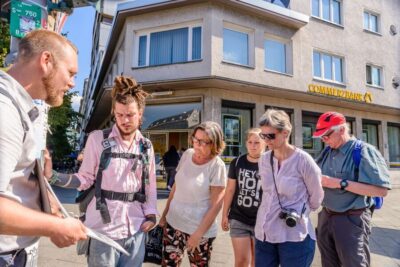
Berlin Off-the-Beaten-Path Walking Tour: Kreuzberg, Mitte and Friedrichshain
Read our review →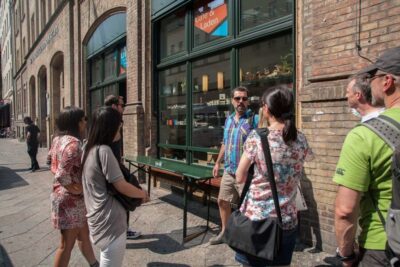
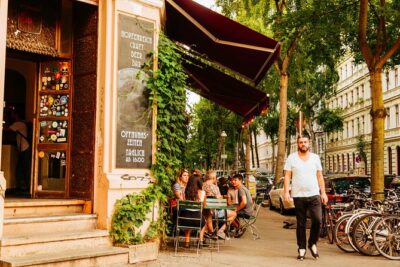
Kreuzberg Berlin: Off the Beaten Track PRIVATE Walking Tour
Read our review →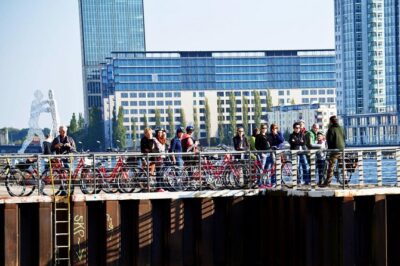
Experience the Alternative Kreuzberg on a Bike Tour
Read our review →Browse the lists this tour appears in