
Review · THIRD REICH & WWII SITES
Private Third Reich Walking Tour of Berlin
Berlin’s Nazi past is not tucked away in a distant museum. It is under your feet near Brandenburg Gate, beside government offices, and beneath an ordinary parking area marking the site of Hitler’s bunker. This private walking tour puts those places into a clear two-hour route, with a historian explaining how the Nazi regime rose and how Berlin became its command center.
I like the private format, since your guide can adjust the pace and answer the questions your own group brings. I also like the mix of major memorials and less familiar sites, especially the former Aviation Ministry and the Georg Elser sculpture. The main drawback is the short running time: two hours gives you a sharp introduction, not a full study of Nazi Berlin.
In This Review
- Key points at a glance
- Why this walk matters in central Berlin
- Beginning near Brandenburg Gate
- The Topography of Terror and the machinery of Nazi rule
- Hitler’s bunker site, without the Hollywood version
- Walking through the Memorial to the Murdered Jews of Europe
- The former Aviation Ministry and Nazi architecture
- Remembering Georg Elser and the question of resistance
- A guide who can adjust the route
- What two hours can and cannot cover
- Is $150.51 per person good value?
- Practical details before you reserve
- Who should book this Berlin history walk?
- Should you book it?
- FAQ
- How long is the Private Third Reich Walking Tour of Berlin?
- Where does the tour begin?
- Where does the tour end?
- Is the tour private?
- What language is the tour offered in?
- Can I visit the Topography of Terror after the tour?
- What is the cancellation policy?
Key points at a glance
- Hitler’s bunker site is now an unmarked urban space: You see where he spent his final days, without a preserved interior or dramatic ruin.
- The private guide can shape the conversation: Guides such as Stefan and Alexander have led detailed, personal tours, with time for questions and photos.
- The route links power, terror, resistance, and remembrance: You move from Nazi offices to the Holocaust Memorial and the Georg Elser memorial.
- The Topography of Terror adds useful follow-up material: You can visit its free documentation center after the walk.
- The tour begins at Brandenburg Gate and ends near the Topography of Terror: Plan for a walk back to public transport after the final stop.
- The price makes most sense for a small group: At $150.51 per person, group discounts and shared interest in the subject matter matter greatly.
Why this walk matters in central Berlin
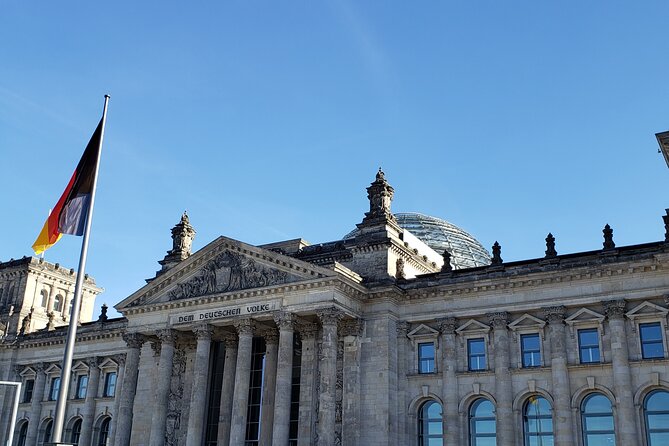
Berlin’s central district can feel like a parade of famous sights: Brandenburg Gate, the Reichstag, Potsdamer Platz, and grand government buildings. Yet the streets also hold the physical setting of the dictatorship that began the Second World War and carried out the murder of Europe’s Jews.
That contrast is the strength of this experience. You are not only looking at monuments. You are connecting locations where decisions were made, where resistance took place, and where the city later created memorials to victims.
A private guide can help prevent the route from becoming a grim checklist. The subject is serious, but the best parts of the walk are the links between places. You can ask how the Nazi state gained power, how its agencies worked, and how postwar Berlin chose to mark the crimes.
This is also a useful first look at Berlin’s complicated historical geography. The route does not treat the Third Reich as an isolated chapter. It places Nazi buildings and memorials beside the modern city, which makes the past feel close and difficult to ignore.
More Third Reich sites in Berlin:
- Berlin: Third Reich and Cold War 2 Hour Walking Tour
★ 4.9 · 6,830 reviews - Berlin: Berlin Story Bunker Entry Ticket
★ 4.6 · 6,759 reviews - Berlin’s Best: 2 Hour Walking Tour Third Reich and the Cold War
★ 5.0 · 5,486 reviews
Beginning near Brandenburg Gate
The meeting point is Brandenburg Gate at Pariser Platz. That makes practical sense for a first visit to Berlin, since the gate is easy to find and close to several central historical sites.
Your guide will meet your private group there and begin the walk through the city. The supplied route focuses on five main stops, though the exact order and discussion can be shaped around your interests. One guided account also included the former site of the book burnings, the Reichstag, and memorials to Roma, homosexual victims, and Jews. Ask at the start if you want those subjects given more attention.
Starting here also gives the guide a chance to explain how central Berlin changed from the Nazi period to the divided postwar city and then to the present capital. Do not expect an elaborate introduction with props or a large group briefing. The appeal is the direct conversation between you and one historian.
The Topography of Terror and the machinery of Nazi rule
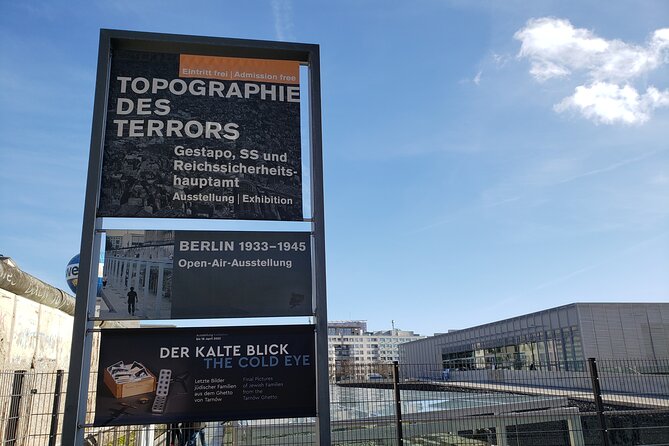
The Topography of Terror is listed as a 20-minute stop, with free admission. It occupies the former site of the main institutions that organized Nazi persecution and terror.
This is one of the most useful places on the walk because it moves the story beyond Hitler alone. A dictatorship depends on offices, police forces, paperwork, orders, and people who carry out those orders. The documentation here helps you see that structure.
The exhibition can be emotionally heavy, but it is also direct and practical. You are looking at evidence from the institutions that directed repression. Your guide can give you a framework before you continue, helping you understand the difference between Nazi propaganda, administrative control, political policing, and mass murder.
Because the tour ends here, you can return to the documentation center after the guided portion at no extra admission charge. That is a good use of time if the subject interests you. Two hours will not allow a long visit, and you may want to come back later for a slower look.
Hitler’s bunker site, without the Hollywood version
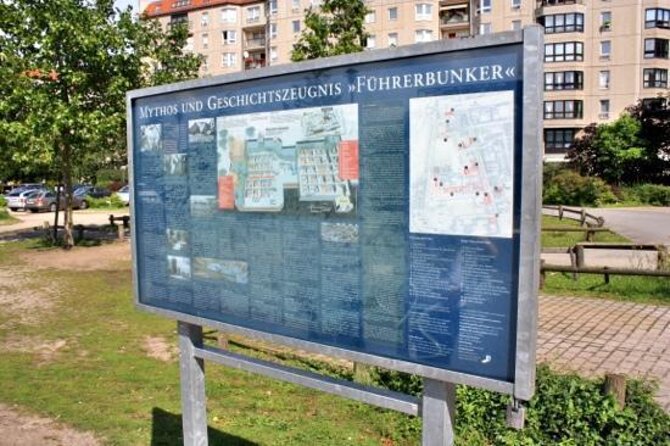
The former Führerbunker site is one of the most striking stops because it is so ordinary. The bunker itself is not open as a historic attraction. You see the location where Hitler spent his final days and committed suicide near the end of the war, now associated with a parking area rather than a preserved underground complex.
That plain setting is worth taking seriously. It blocks the temptation to turn the bunker into a dark tourist spectacle. The guide’s explanation supplies the context: the collapse of Nazi Germany, the final days of the regime, and the aftermath of Hitler’s death.
You should expect no dramatic underground rooms or intact command center. The value is in understanding the location and the decisions made there. A good guide also helps keep attention on the wider human cost, rather than allowing the story to become centered only on Hitler.
This stop is particularly useful for teenagers and first-time visitors who know the bunker from films or documentaries. It turns a familiar image into a real place in Berlin, while making clear how little physical evidence remains.
More walking tours in Berlin:
- Discover Berlin Half-Day Walking Tour
★ 5.0 · 9,624 reviews - Berlin: Discover Berlin Walking Tour
★ 4.9 · 5,998 reviews - Berlin: Hidden Backyards Guided Walking Tour
★ 4.8 · 5,360 reviews - Third Reich Berlin: Hitler and WWII Walking Tour
★ 5.0 · 3,301 reviews
Walking through the Memorial to the Murdered Jews of Europe
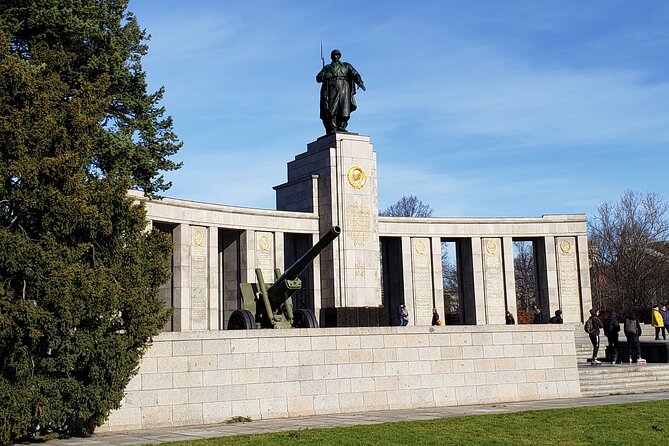
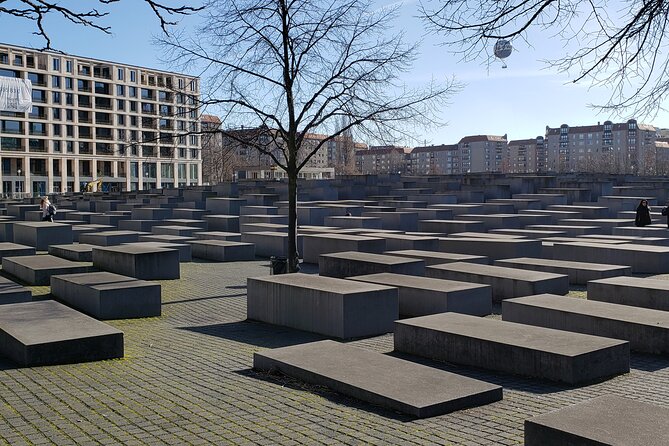
The Holocaust Memorial is not simply a photo stop. You walk through the field of concrete blocks, and the changing height and uneven ground create a physical experience that is hard to reduce to a single explanation.
The memorial is dedicated to the Jewish people murdered under the Nazi regime. Your guide can discuss the purpose of the design and the questions it raises, while giving you room to experience the site quietly.
The planned visit lasts about 20 minutes. That is enough for an introduction and a walk through the memorial, but it is not a substitute for the nearby information center if you want individual stories and fuller documentation. The tour’s main job is to place the memorial in the city and connect it to the institutions and leaders discussed elsewhere.
You may also pass or discuss other memorials in the central district. One route included memorials to Roma and Sinti people and to homosexual victims of Nazi persecution. These additions matter because they widen the story beyond one site and show the range of people targeted by the regime.
The former Aviation Ministry and Nazi architecture
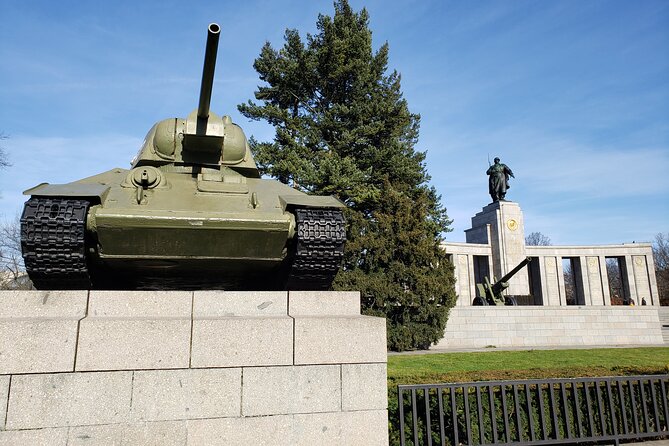
The Bundesministerium der Finanzen occupies a large building that once served as the Nazi Aviation Ministry. The tour spends roughly 20 minutes examining the building and its architectural style.
This stop adds a useful physical dimension. Nazi power was not expressed only through speeches and uniforms. It was also built into huge government offices designed to project order, authority, and permanence.
You will see the exterior and discuss the building’s former role. Do not expect a museum-style interior visit based on the information provided. The point is to read the architecture as part of the political story and understand how the government used monumental buildings.
The building’s current use also creates an important contrast. A former Nazi ministry now houses a modern German government department. That change does not erase the past, but it shows how Berlin continues to use, reinterpret, and live beside structures from the dictatorship.
Remembering Georg Elser and the question of resistance
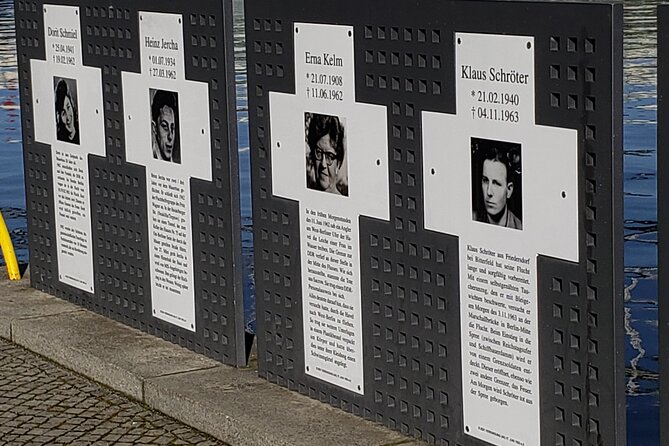
The Georg Elser sculpture is a smaller stop, planned for about 10 minutes. Elser tried to kill Hitler with a bomb in 1939, before the war had reached its later scale.
This memorial is valuable because it complicates the idea that nobody resisted. Elser acted alone and failed, but his attempt shows that opposition existed early in the regime. Your guide can place his action beside the broader political climate and explain why resistance was so dangerous.
The sculpture is not as famous as the Holocaust Memorial, and that is part of its usefulness. It gives the walk a human-sized point of focus after the monumental buildings and memorial fields. You are reminded that history was shaped not only by institutions, but also by individuals who made difficult choices.
The stop is brief, so ask questions while you are there. If resistance is a major interest for you, mention it before the walk so the guide can give that subject more space.
A guide who can adjust the route
The strongest reason to choose a private walk is the conversation. You are not locked into a fixed lecture delivered to a large crowd. The guide can spend more time on architecture, military events, resistance, the Holocaust, or Berlin’s postwar memory, depending on what you want to understand.
Guides named Stefan and Alexander have led this experience. Stefan is described as a passionate historian with a wide range of knowledge, while Alexander’s approach included detailed explanations, questions, and pauses for photographs. You cannot assume which guide you will receive, but those examples show the kind of personal historical discussion the tour is designed to provide.
The private setup also works well for families. One account specifically found the tour suitable for two teenagers, which is useful because the subject can be difficult to present to younger people without either oversimplifying it or overwhelming them.
Ask questions. This is not a tour where you need to save every thought for the end. If your group wants to understand how the Nazis gained power, why specific buildings were placed where they were, or how Berlin memorializes victims, say so early.
What two hours can and cannot cover
The advertised duration is about two hours. That is long enough to walk between several central sites and gain a solid framework, but it is not enough for a full treatment of the Third Reich.
You will get the most from it if you treat the walk as a foundation. The guide gives you the map, the key dates, and the connection between places. You can then return to the Topography of Terror or visit other museums on your own.
The route includes several 20-minute stops, plus a shorter 10-minute visit to the Georg Elser sculpture. Walking time and questions fill the rest. Wear comfortable shoes, since the tour moves through central Berlin on foot. The provided details do not specify a pace or total distance, so ask when booking if anyone in your group needs a slower walk.
The stops are spread across the city center rather than gathered in one museum. That makes the experience feel like a city walk, but it also means weather may affect your comfort. There is no need to rush your photographs, yet the schedule may require the guide to keep moving.
Is $150.51 per person good value?
The listed price is $150.51 per person. That is a substantial cost for a two-hour walk, especially for one or two people. The calculation changes if you are sharing the private booking with family or friends, since group discounts are available.
The price pays for a private English-language historian rather than admission to a paid attraction. All listed stops are free, including the Topography of Terror exhibition. You are paying for interpretation, route planning, and the ability to shape the discussion around your group.
I would judge the value by your interest in the subject. If you want a quick orientation and do not plan to ask many questions, a free exhibition and self-guided walk may be enough. If you want a specialist to connect scattered sites and explain difficult history in person, the private format is easier to justify.
It is particularly good value for a family or small group that would otherwise book several separate activities. The flexibility can also save time during a short stay, since you move directly among the key locations rather than working out the route alone.
Practical details before you reserve
The activity is offered in English and comes with a mobile ticket. Confirmation is normally sent when you book, though reservations made within nine days of the tour may receive confirmation within 48 hours, subject to availability.
You are asked to provide your hotel address during booking. The listed information does not explain exactly why it is needed, so enter it carefully and check the final confirmation for meeting instructions.
The tour ends at the Topography of Terror on Niederkirchnerstraße. Afterward, you may visit the free documentation center. The nearest underground station is about a 10-minute walk away, and the guide can show you how to reach it.
Service animals are allowed, the route is near public transportation, and most people can participate. Since this is a walking tour through central Berlin, contact the provider if your group has specific mobility needs. The activity is private, so only your group participates.
Free cancellation is available up to 24 hours before the start time for a full refund. Changes or cancellations made less than 24 hours before the start are not accepted for a refund.
Who should book this Berlin history walk?
I would choose this tour if you want the Nazi period explained through real city locations rather than studied only in a museum. It suits first-time visitors who need orientation, families with older children or teenagers, and anyone who values the chance to ask a historian direct questions.
It is also a good match if your interests are specific. Tell the guide if you want more on resistance, Nazi architecture, the Holocaust, the final days in the bunker, or the memorial culture of modern Berlin.
I would hesitate if you prefer a relaxed sightseeing walk with plenty of free time. The subject is serious, and the two-hour schedule covers several difficult places. You should also think carefully about the cost if you are booking for only one person.
Should you book it?
Book this private walk if you want a focused introduction to Nazi Berlin and value a guide who can adapt the discussion to your group. The best elements are the direct look at the bunker site, the contrast between former Nazi offices and modern Berlin, and the chance to continue at the free Topography of Terror afterward.
Skip it if you want extensive museum time, interior access to historic buildings, or a low-cost tour. For most history-minded visitors sharing the booking with family or friends, it offers a thoughtful way to begin understanding Berlin’s darkest chapter.
FAQ
How long is the Private Third Reich Walking Tour of Berlin?
The tour lasts approximately two hours.
Where does the tour begin?
It begins at Brandenburg Gate on Pariser Platz, 10117 Berlin.
Where does the tour end?
The walk ends at the Topography of Terror, Niederkirchnerstraße 8, 10963 Berlin.
Is the tour private?
Yes. Only your group participates in the activity.
What language is the tour offered in?
The tour is offered in English.
Can I visit the Topography of Terror after the tour?
Yes. You may visit the free documentation center at the Topography of Terror after the walk. The nearest underground station is about a 10-minute walk away, and the guide can show you the way.
What is the cancellation policy?
You can cancel up to 24 hours before the start time for a full refund. Cancellations or changes made less than 24 hours before the start time are not accepted for a refund.
Just added around Berlin
- Berlin Highlights in One Day★ 5.0 · 3 reviews
- Private Berlin One Day Tour with a Local: See the City Unscripted★ 3.5 · 3 reviews
- Individual city tour Berlin for max. 8 persons★ 5.0 · 3 reviews
- Transfer from Berlin Schönefeld Airport (SXF) to Berlin city Hotels – ROUND TRIP★ 4.0 · 3 reviews
- Berlin: Museum Island Tour★ 5.0 · 3 reviews
- Private Analogue Photography Experience in Berlin★ 5.0 · 3 reviews
- Berlin: Local Food Tour in Secrets Hidden Gems★ 4.0 · 3 reviews
- Berlin & The Third Reich Private Guided Tour★ 5.0 · 3 reviews
Third Reich & WWII Sites, compared.



Berlin’s Best: 2 Hour Walking Tour Third Reich and the Cold War
Read our review →
Third Reich Berlin: Hitler and WWII Walking Tour
Read our review →

Berlin Third Reich Sites: Half-Day Walking Tour
Read our review →
Guided Bike Tour of the Berlin Wall and Third Reich
Read our review →
Hitler’s Germany: Berlin During the Third Reich & WWII
Read our review →Browse the lists this tour appears in