

Review · THIRD REICH & WWII SITES
Private Walking Tour in Berlin: Hitler’s Germany & WWII
Berlin’s Nazi past is not tucked away in one museum. It is spread across ordinary streets, empty lots, memorials, government buildings, and a railway ruin. This private walking tour connects those places into a four-hour story, from resistance and persecution to war, genocide, defeat, and the rebuilt German capital.
I like the private format, since your guide can slow down for questions or spend more time at a site that matters to you. I also like the range of stops, especially the links between Otto Weidt’s workshop, the former Gestapo headquarters, the Holocaust Memorial, and the Reichstag.
The main drawback is simple: you do not go inside the attractions. You will need a Berlin AB public-transport ticket, costing about €4 per person, and four hours on foot can feel demanding on a hot day.
In This Review
- Key points to know before booking
- A serious Berlin walk that connects the whole story
- From Otto Weidt’s workshop to Berlin’s Jewish history
- Anhalter Bahnhof and the machinery of deportation
- Topography of Terror and the former Nazi command center
- The Aviation Ministry and the limits of a building’s appearance
- Johann Georg Elser and the story of resistance
- The Holocaust Memorial requires time and quiet
- Remembering gay men and women persecuted by the Nazis
- Hitler’s bunker site and the end of the dictatorship
- Soviet Memorial Tiergarten and the war’s aftermath
- The Reichstag: a useful final stop
- What $173.06 per person really buys
- The guide matters more than the route
- Practical details that shape the day
- Who should book this Berlin history tour
- Should you book it?
- FAQ
- How long does the walking tour last?
- Is the tour private?
- Are the attractions visited from inside?
- Where does the tour start and finish?
- Is public transportation included?
- Can I cancel for a full refund?
Key points to know before booking
- Ten carefully chosen stops cover resistance, deportation, Nazi persecution, wartime destruction, and postwar memory.
- The tour is private, so only your group takes part and the pace can be adjusted.
- All sites are viewed from outside, including the former Gestapo and SS headquarters and the Reichstag.
- The guide makes the difference, with Jasper, Stefan, Rohan, Lewis, and Xavier praised for clear, engaging explanations.
- The walk begins near Museum Island at Neue Promenade and usually ends at the Reichstag.
- The $173.06 per-person price buys a dedicated guide for roughly four hours, but admission tickets and public transport are not included.
A serious Berlin walk that connects the whole story
This is not a tour of grand Nazi architecture. Much of what you see is a remnant, a memorial, or an unmarked-looking urban space. That is part of its value. Your guide helps you read the city, explaining how power operated, how persecution became policy, and how Berlin remembers what happened.
The route begins at Neue Promenade 3, near the Museum Blindenwerkstatt Otto Weidt. It then moves through several central Berlin districts before finishing at the Reichstag. The exact amount of time spent at each place can change because the guide can respond to your group’s interests.
That flexibility matters. If you want more time on resistance, the Holocaust, military history, or the final days of Hitler’s government, you can ask. The tour is not locked into a rigid script, although the listed stops suggest a brisk pace of about 10 minutes at most locations.
The subject is difficult, and the tour deals with deportation, mass murder, state terror, and war. It is best suited to people who want serious historical context rather than light sightseeing. A guide can make the connections clear, but no walking tour can make this material easy.
More Third Reich sites in Berlin:
- Berlin: Third Reich and Cold War 2 Hour Walking Tour
★ 4.9 · 6,830 reviews - Berlin: Berlin Story Bunker Entry Ticket
★ 4.6 · 6,759 reviews - Berlin’s Best: 2 Hour Walking Tour Third Reich and the Cold War
★ 5.0 · 5,486 reviews
From Otto Weidt’s workshop to Berlin’s Jewish history
The first stop is the Museum Blindenwerkstatt Otto Weidt. The site recalls Otto Weidt, who operated a workshop and tried to protect Jewish employees during the Nazi period. You view the location from outside while your guide explains its place in the story of resistance and survival.
This is a strong opening because it puts an individual face on a huge subject. Instead of beginning with Hitler or military events, the tour starts with a place connected to people trying to protect one another under a criminal regime.
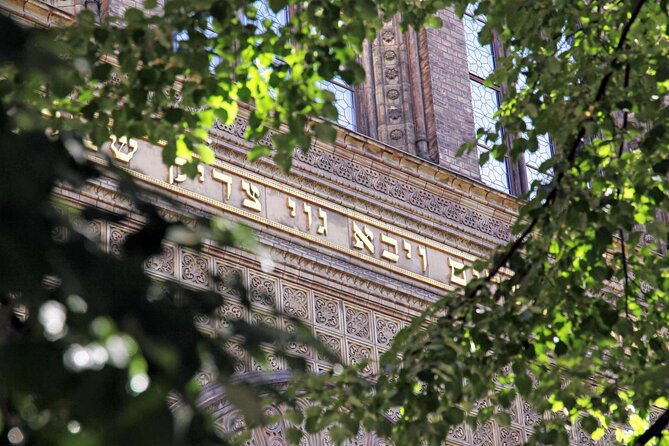
The next stop is the New Synagogue Berlin and Centrum Judaicum. Its history helps your guide explain Berlin’s Jewish community and the destruction of Jewish life under National Socialism. Again, you remain outside, so this is a short orientation rather than a museum visit.
Allow around 10 minutes at each of these first locations. If you want to enter either site, you would need to do that separately before or after the walk. The tour’s purpose here is to establish context, not to provide indoor exhibits.
Anhalter Bahnhof and the machinery of deportation
Anhalter Bahnhof is one of the more striking physical remnants on the route. Once a major railway station, it is now associated with the deportation of prisoners to concentration camps. You will see the ruins and hear how an ordinary transport system could be used as part of organized persecution.
The value of this stop lies in the contrast between the station’s everyday purpose and its wartime role. Railways, timetables, paperwork, and official orders helped turn mass deportation into an administrative process. A guide can make that grim connection visible without reducing the subject to a list of dates.
The visit is short, about 10 minutes, and there is no admission charge. Since the site is viewed from outside, you should not expect a long examination of the station’s interior or a formal museum presentation. The explanation from the guide carries most of the weight.
Topography of Terror and the former Nazi command center

The Topography of Terror marks the former headquarters of the Gestapo and SS. This is one of the tour’s essential stops because it points to the institutions that carried out surveillance, torture, imprisonment, and terror across Germany and occupied Europe.
Your guide explains the site from outside. That distinction is important. The Topography of Terror is also an indoor documentation center, but entry is not part of this walking experience. If you want to study its displays, plan a separate visit.
I would treat this stop as a useful introduction to the site rather than a substitute for the museum. The tour gives you a clear framework and helps place the building complex within Berlin’s former Nazi government district. You can then decide if you want to return for the indoor material.
More walking tours in Berlin:
- Discover Berlin Half-Day Walking Tour
★ 5.0 · 9,624 reviews - Berlin: Discover Berlin Walking Tour
★ 4.9 · 5,998 reviews - Berlin: Hidden Backyards Guided Walking Tour
★ 4.8 · 5,360 reviews - Third Reich Berlin: Hitler and WWII Walking Tour
★ 5.0 · 3,301 reviews
The Aviation Ministry and the limits of a building’s appearance
The former Aviation Ministry is a useful reminder that Nazi power often worked from solid, official-looking government buildings. The structure is tied to Hermann Göring’s ministry and to the machinery of the Nazi state, but it also survived the war and later served different governments.
Your guide explains the building’s role from the outside. For me, this is the kind of stop that benefits most from a historian’s help. On your own, you might simply see a large government office. With context, the building becomes part of the story of how a dictatorship governed, planned war, and used bureaucracy to enforce its aims.
The stop lasts around 10 minutes. If architecture is your main interest, you may find the visit brief. If you want to understand how Nazi rule operated beyond rallies and battlefields, it earns its place on the route.
Johann Georg Elser and the story of resistance
The Johann Georg Elser sculpture introduces one of the people who tried to kill Hitler. Elser planned and carried out an attempted assassination in 1939, before the war had fully taken the shape it later would. The sculpture gives the tour a chance to focus on resistance and the risks faced by anyone who opposed Hitler.
This is an important correction to the idea that nobody resisted. Resistance came in different forms, and it often ended in prison, execution, or danger to family members. Your guide can place Elser alongside the wider question of how Germans responded to the Nazi system.
The stop is brief, about 10 minutes, but the private setup helps here. Ask questions if you want to know more about individual resistance, political opposition, or the difference between early opposition and later attempts to remove Hitler.
The Holocaust Memorial requires time and quiet
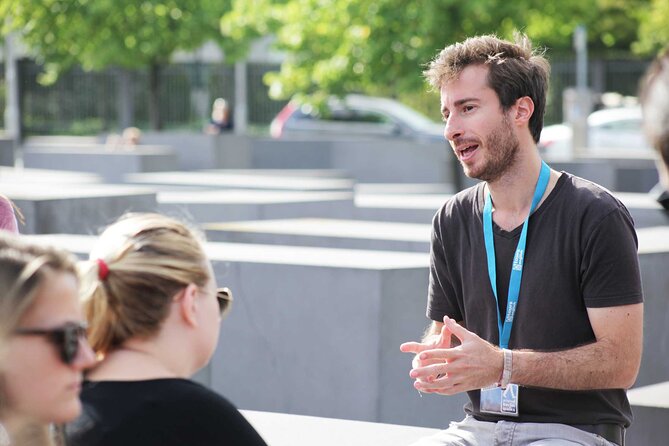
The Memorial to the Murdered Jews of Europe is the emotional center of the walk. Its field of concrete blocks occupies a large open area near the Brandenburg Gate and the former government district. The guide explains the memorial’s purpose and the history it represents.
You have about 15 minutes here, slightly longer than at most stops. That is useful, but it is still not a long visit. The memorial is designed to be experienced as well as explained, so your guide may give you time to walk among the blocks and form your own response.
The memorial can be crowded, and it is open to the city around it. You should expect an urban public space, not a quiet cemetery. The underground information center is a separate indoor experience and is not included in this tour.
I appreciate that this stop is paired with sites of political power. The memorial is not treated as an isolated monument. It sits within the same central district where Nazi leaders planned and directed persecution, making the geography difficult to ignore.
Remembering gay men and women persecuted by the Nazis
The Monument to Homosexuals Persecuted Under National Socialist Regime broadens the tour’s account of Nazi persecution. It focuses on people targeted because of their sexuality and makes clear that Nazi repression affected more than one group.
Your guide explains the monument and the history behind it in about 10 minutes. This stop is valuable because it adds another layer to the story of who was watched, arrested, imprisoned, and abused under the regime.
As with the other memorials, the tour does not take you inside a museum. The guide’s explanation gives you the basic context, while the monument itself provides a place to pause and consider how public memory has developed in modern Berlin.
Hitler’s bunker site and the end of the dictatorship
The route includes the site of Hitler’s bunker, although the supplied stop list does not give it a separate numbered entry. The tour description identifies it as one of the places you will learn about before the walk reaches the Reichstag.
The bunker itself is not an accessible attraction. You see the area from above ground, with no dramatic underground chamber to visit. That is worth knowing in advance. The site is historically important, but it is also deliberately understated, and your guide’s explanation is what makes it meaningful.
The point is not to glorify Hitler or turn the bunker into a morbid spectacle. It is to explain the final stage of Nazi rule and the collapse of the government that had caused so much destruction. A good guide keeps the focus on consequences rather than fascination with the dictator.
Soviet Memorial Tiergarten and the war’s aftermath
The Soviet Memorial in Tiergarten shifts the story from Nazi rule to the immediate aftermath of Berlin’s defeat. The memorial commemorates Soviet soldiers and gives your guide a place to explain the final battle for the city and the political changes that followed.
This stop helps prevent the tour from ending with Hitler’s death alone. Berlin’s war story continued through occupation, memorial building, division, and competing memories of victory and defeat.
The memorial is viewed from outside and takes around 10 minutes. Its setting in the Tiergarten provides a change from the dense central streets, but the tour remains a history walk rather than a park stroll.
The Reichstag: a useful final stop
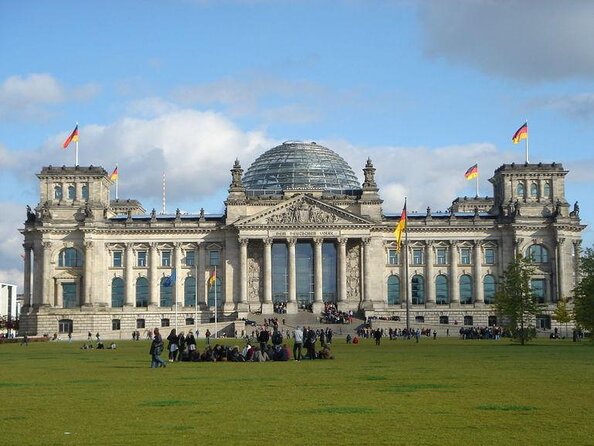
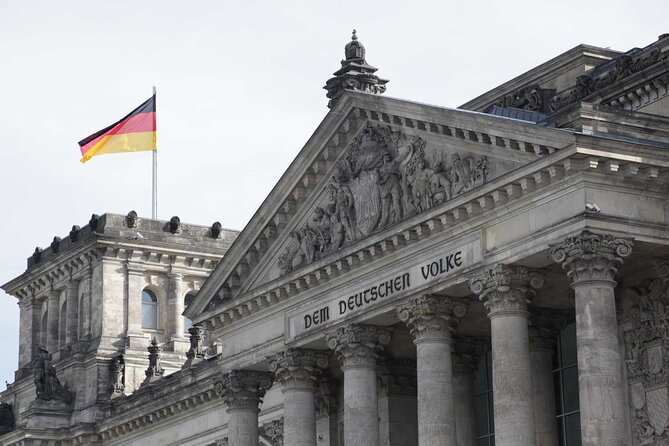
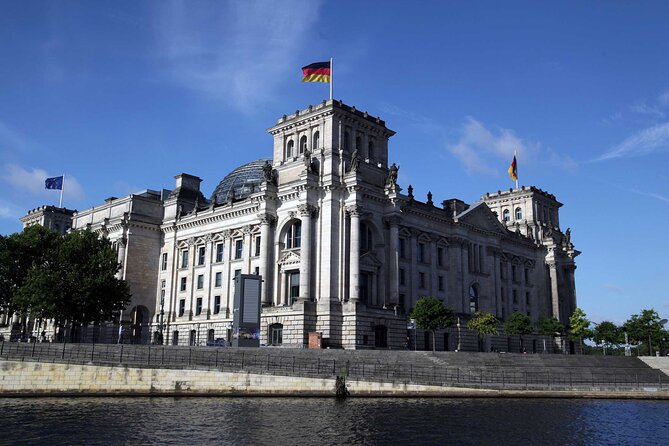
The walk usually ends outside the Reichstag Building at Platz der Republik. Your guide explains the building’s role and the way it fits into Berlin’s political history, but entry is not included.
Ending here is effective. The Reichstag represents the German state before the Nazi takeover, the political destruction that followed, and the country’s later return to parliamentary government. It gives the tour a final point of reference beyond the war itself.
If you want to visit the Reichstag interior or its glass dome, you must arrange that separately. The experience finishes outside, so consider booking a later time if you want to continue sightseeing in the government quarter.
What $173.06 per person really buys
At $173.06 per person, this is not a cheap general walking tour. The price makes more sense if you are booking for a small private group and want a guide who can tailor the discussion to your questions.
The fee includes the professional guide and all listed taxes and fees. It does not include public transport, with a Berlin AB single ticket costing about €4 per person, or tips.
The tour’s value depends heavily on your group. For two people, the per-person cost may feel high. For a larger private group, the chance to share one guide and control the pace can make the price more reasonable. You are paying for historical interpretation and flexibility, not admission to ten paid attractions.
The tour lasts about four hours, though some accounts place the walk closer to three and a half to four hours. A hot day can make that a serious consideration. Wear comfortable shoes, bring water, and expect to spend much of the time outdoors.
The guide matters more than the route
The route is strong, but the guide determines how useful it becomes. The guides praised most warmly include Jasper, Stefan, Rohan, Lewis, and Xavier. Their strengths are described in practical terms: clear explanations, friendly conversation, strong subject knowledge, humor, and an ability to answer questions.
Rohan was especially effective with a younger participant who had studied the period at school. That suggests the tour can work well for families with older children or teenagers who already have some background.
Stefan was noted for inviting questions and asking what the group thought. Lewis was singled out as a guide who made the walk feel essential to understanding Berlin. Xavier was praised for bringing less familiar details and emotional force to a dark period.
You cannot guarantee a particular guide unless the provider confirms one. If a guide’s style matters to you, ask about availability when booking. A historian-led tour is most useful when you take part, so bring questions instead of treating the walk as a lecture.
Practical details that shape the day
This is a private activity, meaning only your group participates. Pickup is offered, but the published meeting point is Neue Promenade 3, 10178 Berlin. Confirm the exact pickup arrangement after booking rather than assuming door-to-door service.
The tour ends at the Reichstag Building, Platz der Republik 1, 11011 Berlin. That makes it easy to continue toward the Brandenburg Gate or the government quarter, though the tour itself does not include entry to the Reichstag.
You need a mobile ticket, and the experience is near public transport. A Berlin AB ticket is not included. Most people can take part, and service animals are allowed.
Confirmation is sent within 48 hours of booking, subject to availability. Free cancellation is available if you cancel at least 24 hours before the local start time. Changes or cancellations made later are not accepted for a refund.
Who should book this Berlin history tour
I would recommend this walk if you want a connected account of Berlin under Hitler rather than a single museum visit. It suits adults, history students, older teenagers, and anyone who wants to understand how ordinary places became part of a system of persecution and war.
It is also a good fit if you prefer asking questions and setting the pace. The private format gives you more room to pause than a large group tour, although the number of stops means you should still expect a steady walk.
I would hesitate if you want extensive indoor museum time, a relaxed pace, or a tour focused mainly on architecture. You will see many places from the outside, and several stops last only 10 minutes.
Should you book it?
Book this tour if the Nazi period is a major reason for your Berlin visit and you want a historian to connect memorials, ruins, government buildings, resistance sites, and the bunker area. The route is serious, well chosen, and broader than a simple Hitler-focused walk.
Before booking, accept two limits: the $173.06 price is a premium for a private guide, and no attraction admission is included. If you are comfortable with that and can manage four hours on foot, this is a useful way to read Berlin’s most difficult chapter without reducing it to a checklist of famous names.
FAQ
How long does the walking tour last?
The tour lasts approximately four hours. Some descriptions place the walk at about three and a half to four hours, depending on the pace and the group’s questions.
Is the tour private?
Yes. Only your group participates in the activity.
Are the attractions visited from inside?
No. The listed sites are viewed from outside, including the former Gestapo and SS headquarters, the Holocaust Memorial, the Reichstag, and the other stops.
Where does the tour start and finish?
The published starting point is Neue Promenade 3, 10178 Berlin. The tour usually ends outside the Reichstag Building at Platz der Republik 1, 11011 Berlin.
Is public transportation included?
No. You need a Berlin AB single ticket, which costs about €4 per person.
Can I cancel for a full refund?
Yes, if you cancel at least 24 hours before the experience start time. Cancellations or changes made less than 24 hours before the start are not accepted for a refund.
Just added around Berlin
- Berlin Highlights in One Day★ 5.0 · 3 reviews
- Private Berlin One Day Tour with a Local: See the City Unscripted★ 3.5 · 3 reviews
- Individual city tour Berlin for max. 8 persons★ 5.0 · 3 reviews
- Transfer from Berlin Schönefeld Airport (SXF) to Berlin city Hotels – ROUND TRIP★ 4.0 · 3 reviews
- Berlin: Museum Island Tour★ 5.0 · 3 reviews
- Private Analogue Photography Experience in Berlin★ 5.0 · 3 reviews
- Berlin: Local Food Tour in Secrets Hidden Gems★ 4.0 · 3 reviews
- Berlin & The Third Reich Private Guided Tour★ 5.0 · 3 reviews
Third Reich & WWII Sites, compared.



Berlin’s Best: 2 Hour Walking Tour Third Reich and the Cold War
Read our review →
Third Reich Berlin: Hitler and WWII Walking Tour
Read our review →

Berlin Third Reich Sites: Half-Day Walking Tour
Read our review →
Guided Bike Tour of the Berlin Wall and Third Reich
Read our review →
Hitler’s Germany: Berlin During the Third Reich & WWII
Read our review →Browse the lists this tour appears in