
Review · DDR & EAST BERLIN TOURS
Small Group Walking Tour of East Berlin with a French Guide
East Berlin’s story becomes clearest when you walk through the places where it happened. This French-language tour links a former ghost station, the Berlin Wall Memorial, Alexanderplatz, and the East Side Gallery in about three hours, turning separate sights into one readable chapter of Berlin’s past.
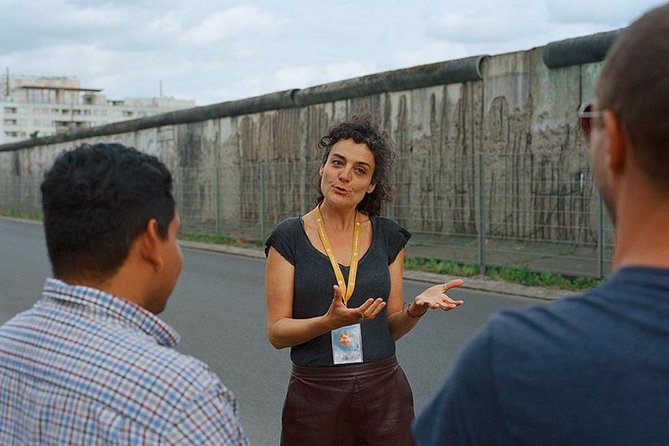
I like the route for two reasons: it combines major landmarks without burying you in a museum all morning, and it makes room for human stories about escape tunnels, death-strip casualties, and peaceful protests. Guides Paul and Stéphane have been praised for clear, lively explanations. The main consideration is pace: you will walk for roughly three hours and also need to buy your own AB public-transport day ticket.
In This Review
- Key points at a glance
- Why this route makes East Berlin easier to understand
- Starting at Potsdamer Platz and reaching Nordbahnhof
- The Berlin Wall Memorial on Bernauerstrasse
- Alexanderplatz and the pressure of peaceful protest
- Finishing with the East Side Gallery
- How much walking and transport to expect
- Group size, timing, and the French-language advantage
- Who will get the most from this walk
- Booking ahead and cancellation flexibility
- Should you book the East Berlin walking tour?
- FAQ
- Is this tour conducted in French?
- How long does the walking tour last?
- Where does the tour start?
- Where does the tour end?
- Is public transportation included?
- Can I cancel for a full refund?
Key points at a glance
- A French-language history walk: The guide explains Cold War politics and daily life in Communist East Berlin in French.
- A former ghost station first: The route uses the S-Bahn to reach Nordbahnhof, a station closed for nearly 30 years after the Wall went up.
- The Wall Memorial is the heart of the tour: You see an original section of the death strip and hear about escape attempts and lives lost.
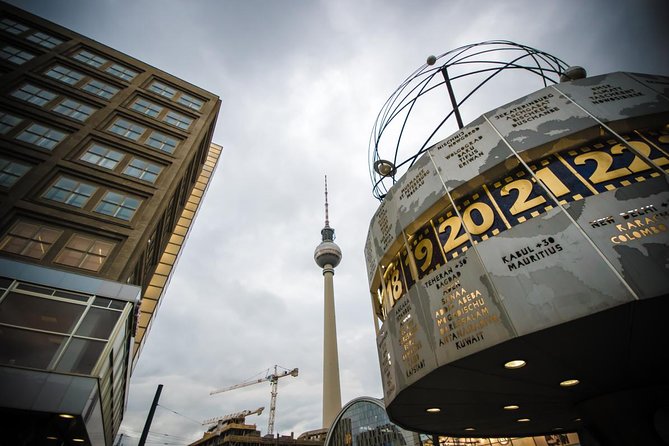
- Alexanderplatz connects politics to change: The tour explains how peaceful demonstrations challenged STASI control.
- The East Side Gallery provides a colorful finale: You finish beside 104 murals, including the famous Brezhnev and Honecker kiss.
- Small enough for a personal feel, but not tiny: The group can reach 25 people, and the experience is usually booked about 34 days ahead.
Why this route makes East Berlin easier to understand
Berlin offers so many Cold War sights that it can be hard to know how they fit together. This walk gives you a simple timeline. You begin with the physical barriers and closed transport links created after Berlin was divided, move through the human cost of the Wall, then finish with the protests and artwork that followed its collapse.
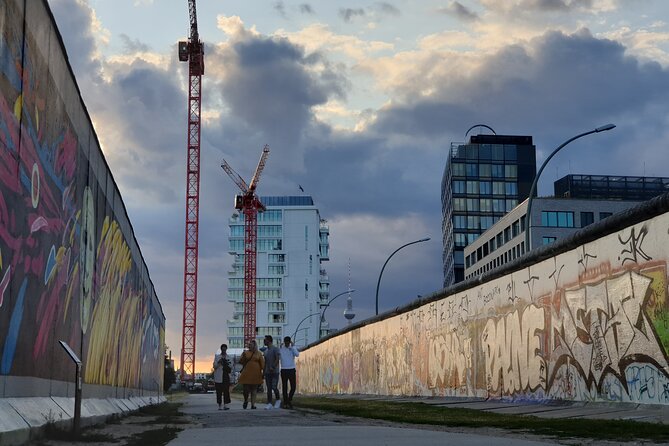
That order matters. At the Berlin Wall Memorial, the Wall is not just a famous piece of concrete. You stand where the border system included a death strip, watch areas, and severe restrictions on movement. At Alexanderplatz, the focus shifts from the border itself to the people who challenged the political system. At the East Side Gallery, the Wall becomes an open-air art site.
I especially like that the tour does not treat East Berlin as a collection of postcard stops. The guide discusses what daily life was like under Communist rule, as well as the larger international conflict. That gives the route more weight than a quick photo walk.
The tour is conducted in French, so it is best suited to French-speaking visitors who want history explained in their strongest language. The praise for guides Paul and Stéphane points to a style that is both clear and lively, but the exact guide on your date may differ.
More East Berlin and DDR history:
- Berlin: DDR Museum Tickets
★ 4.3 · 3,443 reviews - Berlin: 75-minute Trabi Safari
★ 4.8 · 2,854 reviews - Berlin: East and West Hop-On Hop-Off Bus Tour
★ 4.2 · 2,195 reviews
Starting at Potsdamer Platz and reaching Nordbahnhof
The meeting point is Vive Berlin Tours at Potsdamer Platz, with a 10:00 a.m. start. Potsdamer Platz is a practical place to begin because it represents Berlin’s dramatic postwar division and later redevelopment, but the route quickly moves toward a less polished and more revealing part of the city.
You take the S-Bahn to Nordbahnhof. Your public-transport ticket is not included, so arrange an AB day card before or around the start of the tour. The transport cost is a small extra, but it is worth planning for because arriving without the right ticket can create an awkward delay before the walking portion begins.
Nordbahnhof was one of Berlin’s ghost stations. After the Wall was built, some stations on West Berlin subway and rail lines ran beneath or near East Berlin territory but could not be used by East Berlin residents. Trains passed through without stopping, while the platforms remained closed for nearly three decades.
This brief first stop lasts about 10 minutes, yet it sets the tone well. The Cold War was not only a political argument between governments. It shaped ordinary acts such as commuting, changing trains, and crossing town.
The Berlin Wall Memorial on Bernauerstrasse
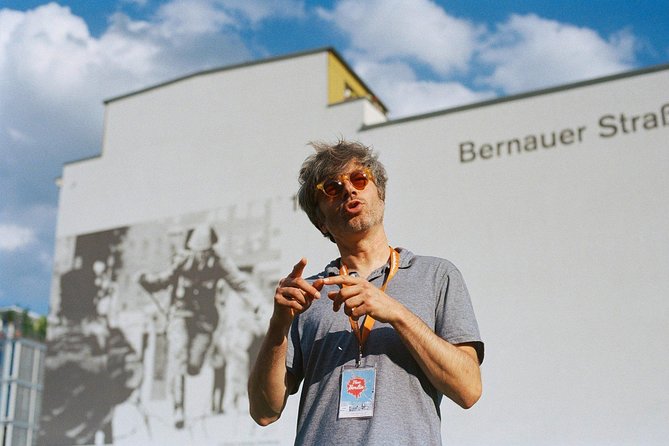
The longest history segment takes place at the Berlin Wall Memorial on Bernauerstrasse, where you spend about 50 minutes. This is the part of the walk that deserves your full attention.
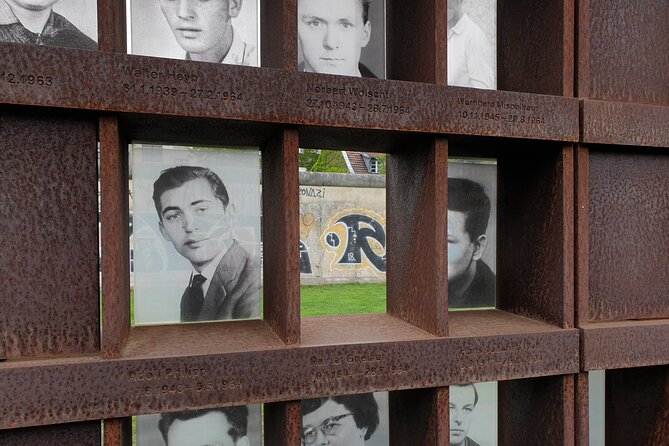
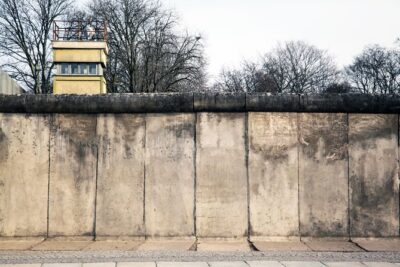
Here you see an original stretch of the former border area, including the death strip, also described as no man’s land. The surviving section helps you picture how the Wall worked as a system rather than a single barrier. The guide explains the separation of families and neighborhoods, the danger of approaching the border, and the lives lost while people tried to cross.
The stories of escape attempts give this stop a strong human focus. You hear about tunnels dug beneath the border, along with the risks taken by people who wanted to leave East Berlin. These accounts can be difficult, but they explain why the Wall remains more than a Cold War symbol. It was a daily threat built into the city.
I would allow yourself a little quiet time here. A guide can supply dates and political context, but the physical remains do some of the teaching. You can better understand the scale of the separation when you see how much space the border system required and how firmly it divided the street.
This stop also helps you avoid a common mistake: thinking of the Wall as something that appeared only at famous viewpoints. The Wall ran through normal urban life. Bernauerstrasse shows how homes, streets, transport, and families were caught in its path.
The drawback is emotional rather than practical. The material is serious, and the tour moves on after a fixed period. If you want to read every memorial panel or examine the site at length, you will need to return on your own.
Alexanderplatz and the pressure of peaceful protest
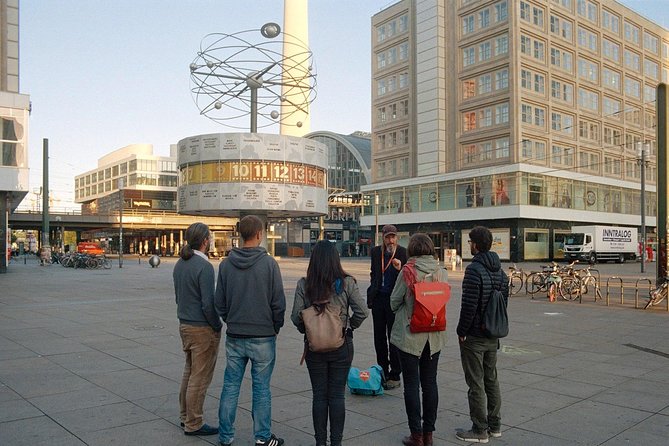
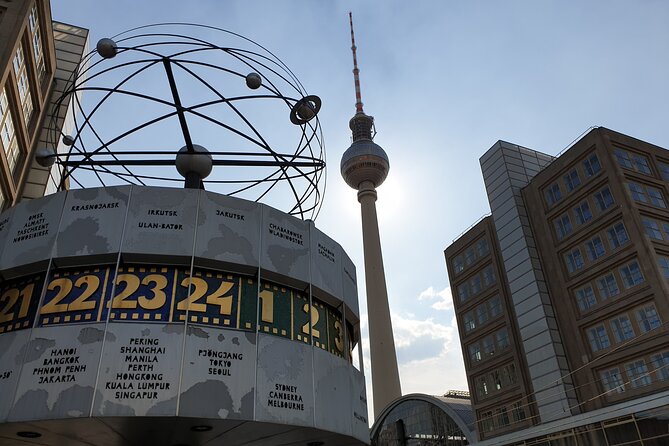
The route then reaches Alexanderplatz, where the historical emphasis changes. You spend around 20 minutes in front of buildings that represent socialist East Berlin and discuss the peaceful demonstrations that helped bring the system down.
Alexanderplatz is useful because it places political change in a public city center rather than at a border crossing. The focus here is on the people who challenged STASI repression through peaceful protest. The guide connects those demonstrations to the collapse of the Wall and the later breakup of the Soviet bloc.
This part of the tour gives you an important correction to the idea that the Wall simply fell without warning. The opening of the border became the famous moment, but pressure had been building through public protest and political unrest. Alexanderplatz helps explain that chain of events.
The stop is only about 20 minutes, so expect a focused explanation rather than a long architectural tour. You will see representative socialist buildings, but the point is their political setting and the role of the square in public life.
I like this balance between structures and people. The buildings show how the state presented itself. The protests show how ordinary citizens pushed back. A good guide can make that contrast plain without turning the stop into a lecture.
More walking tours in Berlin:
- Discover Berlin Half-Day Walking Tour
★ 5.0 · 9,624 reviews - Berlin: Third Reich and Cold War 2 Hour Walking Tour
★ 4.9 · 6,830 reviews - Berlin: Discover Berlin Walking Tour
★ 4.9 · 5,998 reviews - Berlin’s Best: 2 Hour Walking Tour Third Reich and the Cold War
★ 5.0 · 5,486 reviews
Finishing with the East Side Gallery
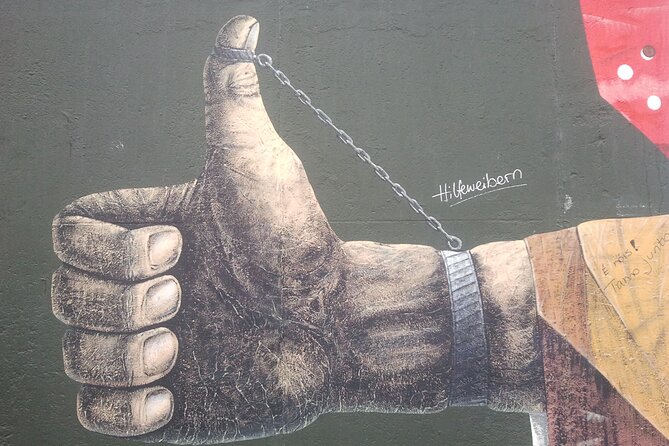
The final stop is the East Side Gallery, the best-known colorful remnant of the Berlin Wall. The gallery contains 104 murals painted on a long surviving section, including the famous image of Leonid Brezhnev and Erich Honecker kissing.
This is a striking way to finish. Earlier, you have looked at the Wall as a tool of control and danger. Here, the same kind of structure becomes a public art surface. The murals do not erase the painful past, but they show how Berlin chose to mark the change.
You spend about 15 minutes at the gallery. That is enough for an introduction and photographs, but not necessarily enough to study every mural closely. If the artwork is your main reason for booking, make a note of the end point and return later with more time.
The tour ends near Mühlenstrasse and Straße der Pariser Kommune in the 10243 area. There is no hotel drop-off, so plan your next move before the walk begins. The end point is useful for continuing your own Berlin day, but the tour itself does not include onward transportation.
How much walking and transport to expect
The experience lasts approximately three hours and requires a moderate level of physical fitness. You walk between several historic areas and also use the S-Bahn near the beginning. Comfortable shoes are the sensible choice.
The route is not a coach tour with long seated stretches. That is one of its strengths. Moving through streets and public spaces helps you notice how the city changes from one historical zone to another. It also means you should not book this as a low-effort activity.
The public-transport day card for zones AB is not included. You also pay separately for food, drinks, and any optional tip. Since the listed price is $27.91 per person, the tour remains reasonably priced even after adding transit, especially when you consider that the guide covers several major sites in one morning.
The real value comes from the interpretation. You can see the East Side Gallery and Alexanderplatz without paying for entry, but a guide links them to the Wall’s construction, border deaths, public protest, and the end of Communist rule. If you already know Berlin’s Cold War story well, the price may feel less essential. If the subject is new to you, the context is the reason to book.
Group size, timing, and the French-language advantage
The maximum group size is 25 people. That is small enough to be more manageable than a large city tour, though it is not a private or intimate walk. At busy sights, staying close to the guide will matter.
The 10:00 a.m. start gives you a useful first half of the day. You finish after roughly three hours, leaving time for lunch and further sightseeing. The fixed morning schedule also means you should arrive at Potsdamer Platz early enough to find the meeting point without rushing.
French is the central feature here. Historical explanations often lose detail when you are working in a second language, so a French-speaking guide can make complicated subjects easier to follow. The feedback attached to the experience repeatedly emphasizes explanations that are clear, educational, energetic, and full of information. That is exactly what you want for a subject involving several countries, political systems, and decades of tension.
Guide names Paul and Stéphane have been associated with particularly strong sessions. You should not assume one of them will lead your departure, but their praised qualities give you a useful idea of the intended style: approachable teaching rather than a dry recital of dates.
Who will get the most from this walk
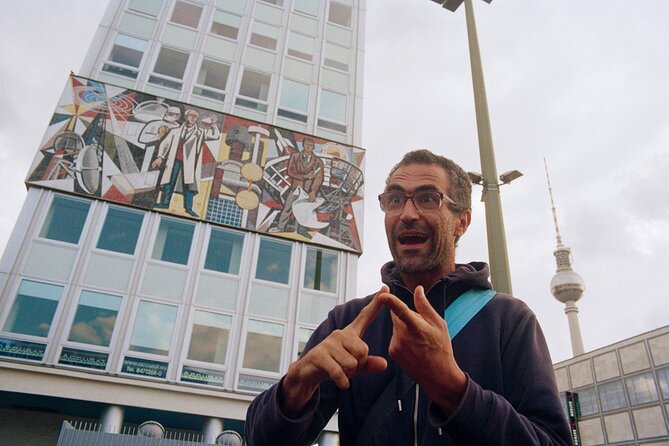
I would recommend this tour to French-speaking visitors making a first serious visit to Berlin’s Cold War sites. It is also a good fit if you want the main East Berlin landmarks explained in one coherent outing rather than pieced together from separate visits.
History students, families with older children, and anyone interested in the Wall’s human consequences should find the Bernauerstrasse section especially worthwhile. The stories about tunnels, escape attempts, and deaths give the period a personal scale.
You may want something else if you prefer to explore at your own pace. The schedule allows limited time at each stop, particularly Alexanderplatz and the East Side Gallery. Art lovers who want to inspect all 104 murals should plan a separate visit.
This is also not the best choice for anyone who finds three hours of walking difficult. Service animals are allowed, and the tour is near public transportation, but the supplied details do not promise a fully step-free route or special mobility arrangements. Contact the provider before booking if you need those specifics.
Booking ahead and cancellation flexibility
The experience is booked about 34 days in advance on average. That suggests you should not leave it until the last morning if your Berlin dates are fixed, particularly if you need a French-language tour on a specific day.
Free cancellation is available if you cancel at least 24 hours before the start time. Cancellations or changes made inside that window are not refunded or accepted. The cut-off uses Berlin local time, so keep that in mind if you are arranging plans from another time zone.
Confirmation arrives when you book, and the ticket is mobile. You still need to handle your own transport, meals, and drinks.
Should you book the East Berlin walking tour?
Book it if you want a focused French-language introduction to East Berlin, prefer learning while walking, and value human stories as much as famous sights. The route is well chosen: Nordbahnhof explains the divided transport system, Bernauerstrasse shows the Wall’s human cost, Alexanderplatz explains peaceful resistance, and the East Side Gallery shows how the Wall was later reclaimed through art.
At $27.91 per person, it is a solid value for a three-hour guided route, even with the separate AB transport ticket. Just bring good shoes, arrive ready for a moderate walk, and keep extra time for the East Side Gallery if you want more than a quick look.
Skip it if you need a private group, a slow art-focused visit, or a tour with no extra transport cost. For most French-speaking visitors who want the main Cold War sights put into a clear story, this is a practical and worthwhile morning.
FAQ
Is this tour conducted in French?
Yes. The experience includes a French-speaking local guide who explains East Berlin’s political history, the Berlin Wall, escape attempts, and life under Communist rule.
How long does the walking tour last?
The tour lasts approximately three hours, beginning at 10:00 a.m.
Where does the tour start?
The meeting point is Vive Berlin Tours at Potsdamer Platz 10, 10785 Berlin, Germany.
Where does the tour end?
The tour ends near nextbike BerlinJelbi at Mühlenstraße and Straße der Pariser Kommune, 10243 Berlin, Germany.
Is public transportation included?
No. You need to buy your own public-transport day card for zones AB. Transportation to and from the attractions is not included.
Can I cancel for a full refund?
Yes, if you cancel at least 24 hours before the experience start time. Cancellations or changes made less than 24 hours before the start are not refunded or accepted.
Just added around Berlin
- Berlin Highlights in One Day★ 5.0 · 3 reviews
- Private Berlin One Day Tour with a Local: See the City Unscripted★ 3.5 · 3 reviews
- Individual city tour Berlin for max. 8 persons★ 5.0 · 3 reviews
- Transfer from Berlin Schönefeld Airport (SXF) to Berlin city Hotels – ROUND TRIP★ 4.0 · 3 reviews
- Berlin: Museum Island Tour★ 5.0 · 3 reviews
- Private Analogue Photography Experience in Berlin★ 5.0 · 3 reviews
- Berlin: Local Food Tour in Secrets Hidden Gems★ 4.0 · 3 reviews
- Berlin & The Third Reich Private Guided Tour★ 5.0 · 3 reviews
DDR & East Berlin Tours, compared.



East Berlin and the Berlin Wall 2-Hour Walking Tour
Read our review →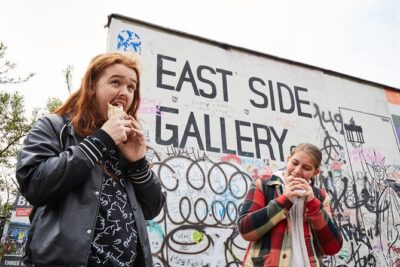
East Berlin Food & History Tour with Eating Europe
Read our review →Browse the lists this tour appears in