
Review · JEWISH BERLIN & HOLOCAUST MEMORIALS
Third Reich and the Holocaust in Berlin Private Guided Tour
Berlin’s streets tell the story here. At the Topography of Terror, you confront the Nazi regime through documents and photographs displayed at the former Gestapo and SS headquarters. From there, the route links propaganda sites, war memorials, Holocaust remembrance, and the human stories behind them.
I like the private format and the route’s clear focus. Your guide can adjust the pace and explain difficult subjects in your language, while the five-hour option adds the Jewish Quarter and Otto Weidt’s workshop. The main drawback is the $219 per-person price, which is a serious outlay unless your group values personal attention and several hours with a specialist guide.
In This Review
- Key points to know before booking
- Why this Berlin tour matters
- Starting at the Topography of Terror
- Potsdamer Platz and a divided city
- The Memorial to the Murdered Jews of Europe
- Brandenburg Gate and the Reichstag
- The Soviet War Memorial
- Why the five-hour option is worth considering
- Guides, language, and the private format
- What the itinerary does well, and where it stops short
- Price, timing, and practical details
- Who should book this experience
- Should you book it?
- FAQ
- How long is the tour?
- What is included in the five-hour tour?
- Is the Jewish Quarter included in the three-hour tour?
- Which languages are available?
- Where do I meet the guide?
- Is this a private tour?
- What main sights are included?
- Can I cancel for a full refund?
Key points to know before booking
- Topography of Terror: Begin with the institutions that planned and carried out Nazi terror, rather than with a vague overview of wartime Berlin.
- Private walking format: Your guide can adapt the pace, questions, and emphasis to your interests.
- Five-hour route: Add Friedrichstrasse, the Jewish Quarter, Trains to Life, Trains to Death, and Otto Weidt’s Blindenwerkstatt Museum.
- Strong guide reports: Silvia is a historian with a Second World War specialty, while Gunnar and Manfred are also named in especially warm feedback.
- Major Berlin landmarks: See Potsdamer Platz, the Holocaust memorial, Brandenburg Gate, the Reichstag, and the Soviet War Memorial in one connected route.
- Serious subject matter: This is an educational memorial tour, not a light sightseeing stroll. Give it the time and attention it deserves.
Why this Berlin tour matters
Berlin is one of the few cities where the history of the Third Reich is written into ordinary streets, empty spaces, surviving buildings, and carefully designed memorials. You do not need to search far for the places where power was seized, propaganda was staged, and decisions about persecution were made.
This tour gives those places a guide and a sequence. Instead of seeing the Brandenburg Gate, Reichstag, or Potsdamer Platz as separate postcard stops, you learn how each fits into the city’s Nazi and wartime story.
The route also avoids presenting the Holocaust as a series of dates alone. You hear about German and Jewish citizens during the rise and fall of Adolf Hitler, then move toward memorials that ask you to consider the human cost. That shift matters. It keeps the tour tied to real people, not only institutions and military events.
The subject can be painful. The tone is meant to be serious, and you should expect photographs, documents, and accounts of persecution. If you want a quick orientation to Berlin’s main sights, this is not the right choice. If you want context for the city’s darkest period, it offers a useful framework.
More Third Reich sites in Berlin:
- Berlin: Third Reich and Cold War 2 Hour Walking Tour
★ 4.9 · 6,830 reviews - Berlin: Berlin Story Bunker Entry Ticket
★ 4.6 · 6,759 reviews - Berlin’s Best: 2 Hour Walking Tour Third Reich and the Cold War
★ 5.0 · 5,486 reviews
Starting at the Topography of Terror
The meeting point is in front of Typisch Berlin café at Wilhelmstraße 42. Do not go inside the café, since its staff are not informed about the tour. This small detail is worth noting because the meeting place is a landmark rather than a dedicated tour office.
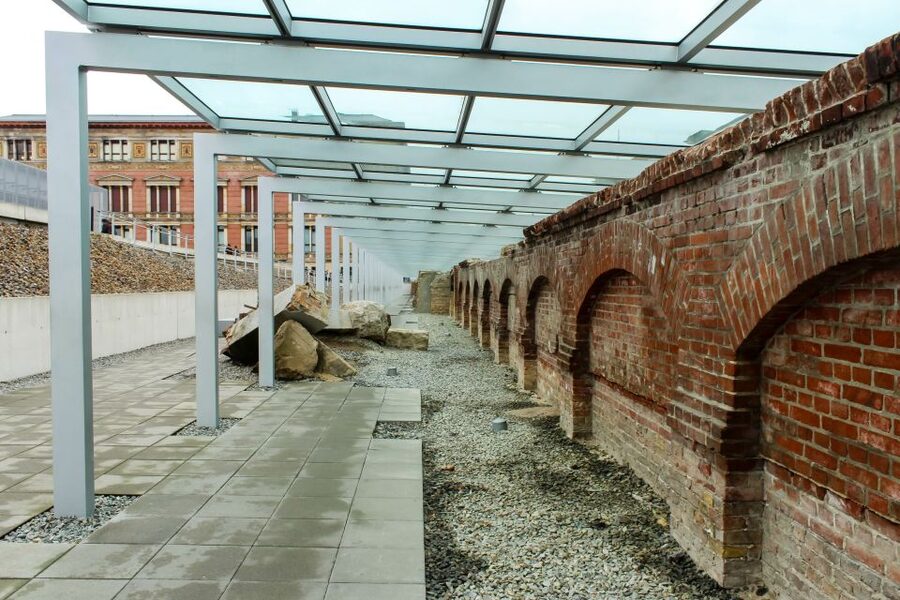
The first major stop is the Topography of Terror. The exhibition occupies the former headquarters of the Gestapo and SS, making the setting part of the lesson. You are not simply looking at a museum display in an unrelated building. You are learning about the agencies of Nazi terror on ground connected to those agencies.
The museum focuses on the Nazi Party’s rise to power and the crimes carried out during the Holocaust. Your guide adds explanation as you move through the material, helping connect the people, policies, and events that shaped the period.
I see this as the strongest opening for the tour. It establishes how the regime worked before you move on to symbols and memorials. The possible downside is that museum viewing takes concentration. Five hours may sound generous, but a serious exhibition can absorb a lot of your attention, especially if you stop to read every panel.
Your guide speaks the language selected at booking. English, French, Russian, Spanish, Italian, German, and Polish are offered. That is useful here, since precise wording and historical nuance matter more than casual sightseeing chatter.
Potsdamer Platz and a divided city

The route continues toward Potsdamer Platz, an important place for understanding Berlin at the end of the war. The tour explains how the American, British, and Soviet Allied zones met there after the city was liberated.
Potsdamer Platz is now associated with modern Berlin, but this stop turns your attention to the city’s postwar division and the competing powers that shaped its future. It also gives the route a wider frame. The tour is not only about Nazi rule in isolation. It connects the Third Reich to World War II and to the political order that followed Germany’s defeat.
Because this is a private walk, you can ask your guide to spend more time on military events, propaganda, civilian life, or the division of Berlin. That flexibility is one of the clearest reasons to choose a private tour instead of a fixed group walk.
Do keep your expectations practical. The experience is described as a walking tour, and the stops are spread through the Old Town and Jewish Quarter. Comfortable shoes and attention to the weather are sensible, though the exact walking distance is not specified.
The Memorial to the Murdered Jews of Europe

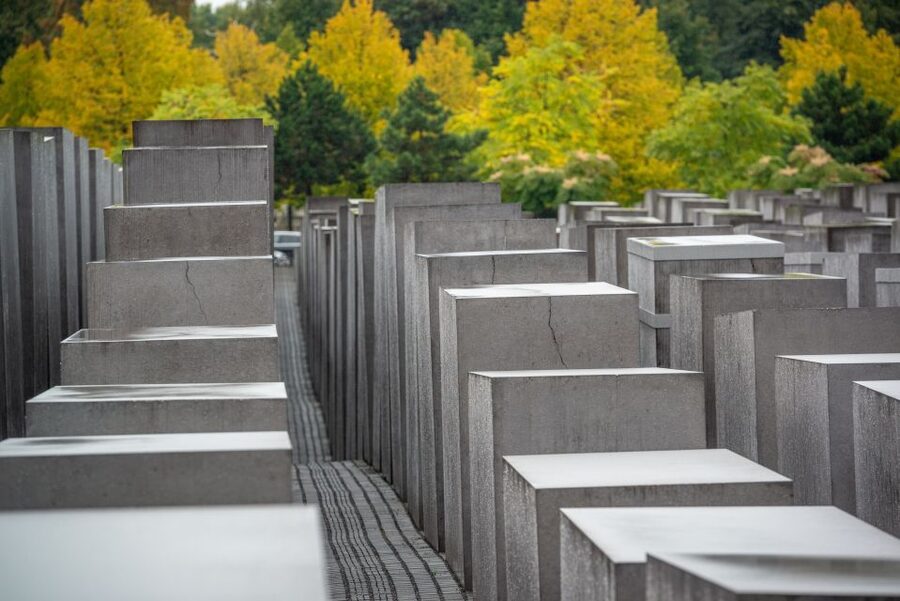
The Memorial to the Murdered Jews of Europe is one of Berlin’s best-known sites, but a guide can help you approach it with the right context. The memorial honors the six million Jewish victims of the Holocaust, and its field of concrete slabs creates a powerful, unsettled space in the heart of the capital.
This is not a place where a long speech is always helpful. You may find that the guide gives background before or after you walk among the slabs, allowing the memorial itself to do some of the work. A private format helps because you can ask questions without feeling that you are holding up a large group.
The value of this stop comes from its place in the route. You have already learned about Nazi institutions at the Topography of Terror. Now you encounter a memorial centered on the people murdered by that system. The movement from perpetrators and machinery to victims and remembrance is carefully chosen.
You should allow yourself a quieter pace here. It is a memorial, not a photo stop. The tour does not treat it as decoration between major landmarks, and you should not expect a cheerful sightseeing mood.
More Jewish Berlin and memorial walks:
- Berlin: Jewish Museum Berlin Entrance Ticket
★ 4.5 · 8,393 reviews - Nazi Berlin and the Jewish Community Tour
★ 4.8 · 55 reviews - Path of Resistance: Berlin’s Hidden Holocaust Stories
★ 5.0 · 33 reviews - Private Tour: Jewish Heritage Walking Tour of Berlin
★ 5.0 · 29 reviews
Brandenburg Gate and the Reichstag
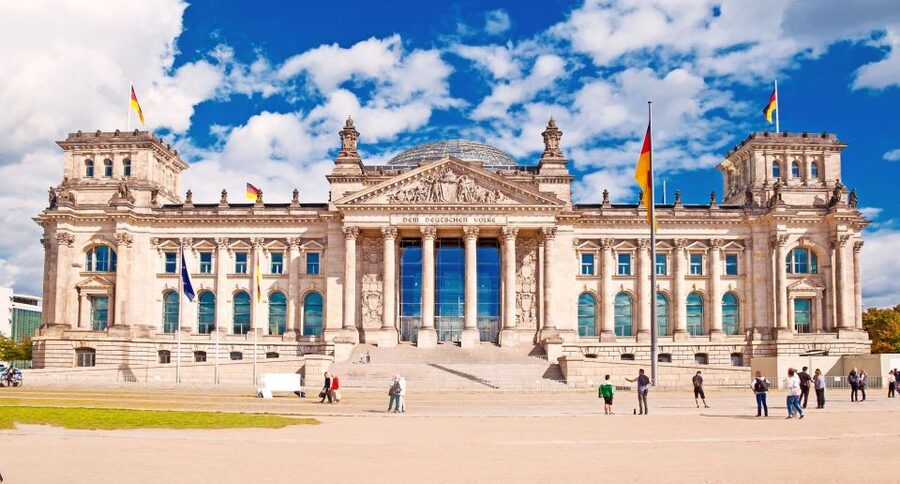
Brandenburg Gate is one of Berlin’s most recognizable monuments. On this tour, you see it through its use by the Nazis as a backdrop for propaganda rallies. That detail changes the way you read the monument. The gate is not only a symbol of Berlin or German unity. It was also used to project political power.
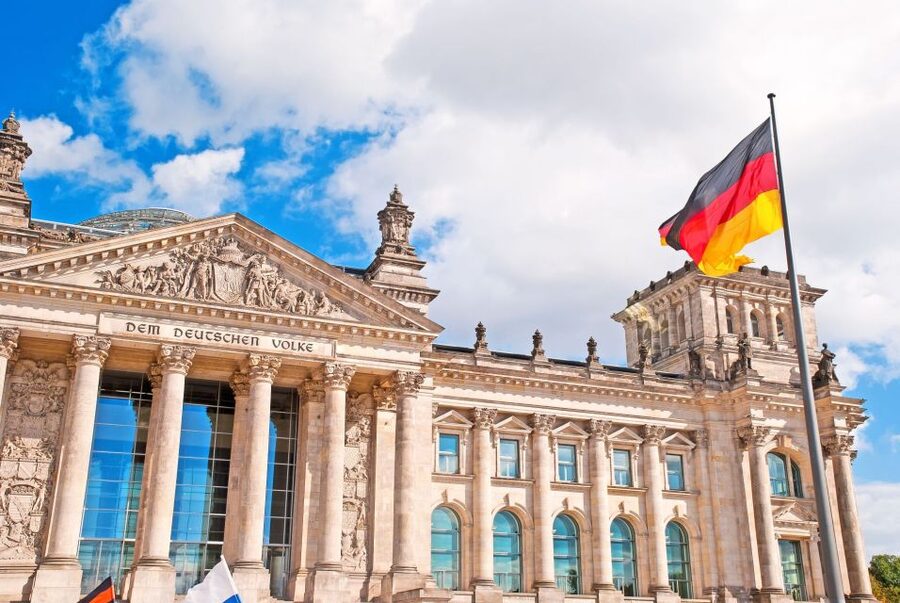
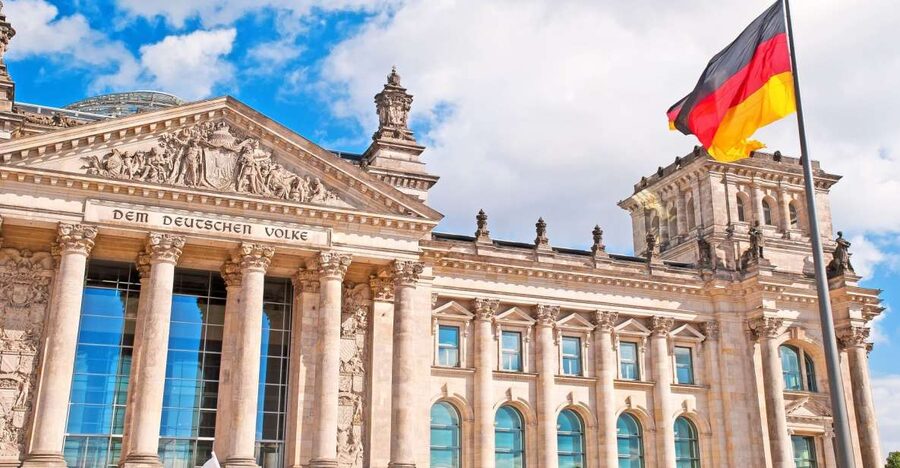
The Reichstag Building adds another key chapter. It was Germany’s parliament and was burned in 1933. The event became a major moment in the Nazi consolidation of power, and your guide places it in the broader story of the regime’s rise.
These are familiar sights, which is both their strength and their weakness. You will probably see them during any first visit to Berlin, but a standard city tour may give you little more than a date and a photograph. Here, the guide ties them to the political changes that destroyed German democracy.
If your interest is mainly architecture, this section may feel brief. The focus is historical, not an interior tour of the Reichstag. The provided route describes seeing the building, not entering it or visiting its dome, so do not book this experience expecting a Reichstag interior visit.
The Soviet War Memorial
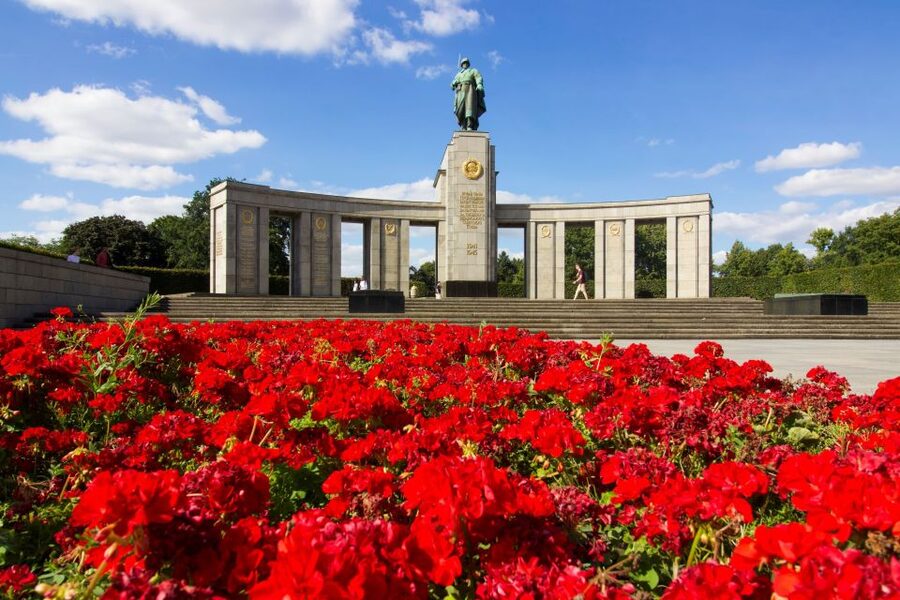
The shorter route ends at the Soviet War Memorial, one of several memorials in Berlin erected by the Soviet Union for its war soldiers. This ending shifts the focus toward the defeat of Nazi Germany and the enormous military cost of the war.
The memorial helps explain how victory was remembered by the Soviet side. It also reinforces the fact that Berlin’s public spaces carry several layers of memory. A site can commemorate liberation for one group while reminding another of occupation, loss, or political change.
Ending here gives the three-hour tour a clear arc: Nazi power, persecution, war, defeat, and remembrance. It does not attempt to cover every wartime location in Berlin. That restraint is helpful. A route that tried to include every bunker, monument, and government building would leave you with a list rather than an understanding.
Why the five-hour option is worth considering
The extended tour adds the Jewish Quarter and the Blindenwerkstatt Museum, also known as Otto Weidt’s workshop. If you have five hours available, this is the option I would examine first.
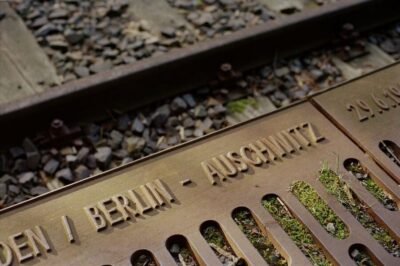
The extra stops move the tour from major state monuments to Jewish life and individual acts of protection. In the Jewish Quarter, you see the New Synagogue, one of the surviving Jewish landmarks in the area. The route also includes Friedrichstrasse and the monument Trains to Life, Trains to Death, which commemorates children murdered during the Holocaust.
That children’s memorial adds a direct emotional focus. The subject is not only the movement of armies or the decisions of officials. It is also the destruction of young lives and families.
The Blindenwerkstatt Museum tells the story of Otto Weidt, who employed mostly blind and deaf Jewish workers in his workshop during the Second World War. This is exactly the kind of smaller human story that can be lost when a tour focuses only on Hitler, generals, and government buildings.
I value this addition because it complicates the story without softening it. You learn about persecution, but also about the choices made by one person trying to protect workers under a murderous regime. The museum gives the five-hour route a more personal finish than the shorter itinerary.
The tradeoff is time and intensity. Five hours on foot, with museum material and memorials dealing with murder and persecution, can be demanding. You may prefer the three-hour version if you want a focused introduction or have other plans later in the day.
Guides, language, and the private format
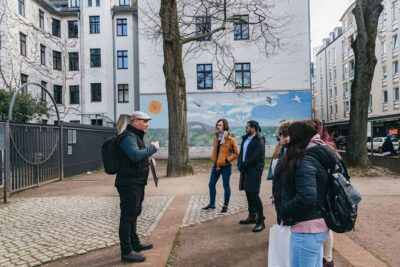
The tour includes a licensed five-star guide in your selected language. Available languages are English, French, Russian, Spanish, Italian, German, and Polish.
Several guides receive especially strong personal praise in the available feedback. Silvia is described as a historian specializing in the Second World War, and her ability to explain events in vivid detail is a major reason to ask about her if she is available. Gunnar is also named as an excellent guide, while Manfred is praised for explaining city history through relaxed conversation.
Guide availability is not guaranteed, so you should not book on the assumption that one particular person will lead your tour. Still, these names give you a useful idea of the experience on offer: historical expertise paired with a conversational style rather than a dry recitation.
A private group also changes the rhythm. You can pause for questions, ask for more background on Jewish history, or request greater attention to military events and Nazi propaganda. You are not locked into the interests of twenty other people.
That advantage has a price. At $219 per person, the tour is not a budget activity. The value improves when your group wants a dedicated guide for several hours and plans to make serious use of the questions-and-answers format. For a solo visitor seeking only the main sights, it may feel expensive.
What the itinerary does well, and where it stops short
The route handles a huge subject by using a few strong anchors. The Topography of Terror explains Nazi institutions. The Holocaust memorial centers victims. Brandenburg Gate and the Reichstag show how familiar civic symbols were used or damaged by the regime. The Soviet memorial brings the war’s end into view.
The extended route adds something the shorter version cannot: Jewish life, the New Synagogue, the children’s memorial, and Otto Weidt’s workshop. Those stops make the five-hour choice more than a longer walk. They give you a broader range of voices and experiences.
Still, this is not a complete study of every aspect of the Third Reich. The supplied route does not promise a visit to Hitler’s bunker, a concentration camp memorial outside Berlin, or the interior of the Reichstag. If one of those is your main goal, you will need a different activity or additional planning.
The tour also cannot make every location equally detailed. Even with five hours, you will be moving between sites. Your guide’s ability to adjust the emphasis is important, so think before you begin about the questions you most want answered.
Price, timing, and practical details
The listed price is $219 per person. Since this is a private group tour, you are paying for a dedicated guide, a tailored pace, and live commentary rather than simply joining a large scheduled walk.
The three-hour version covers the Topography of Terror and the main Old Town war sites and memorials. The five-hour version adds Friedrichstrasse, the Jewish Quarter, Trains to Life, Trains to Death, and the Blindenwerkstatt Museum. Check the selected option carefully, since the Jewish Quarter and workshop are not part of the three-hour tour.
Starting times vary, so you need to check availability for your date. The activity offers free cancellation up to 24 hours before the tour and allows you to reserve now and pay later, which gives you some room if your Berlin schedule is still changing.
Read your email the day before. Important tour information is sent then, and the meeting instructions are easy to miss if you assume the café staff will know what to do.
Who should book this experience
I would choose this tour if you want Berlin’s Nazi and Holocaust history explained as a connected story rather than as isolated stops. It suits first-time visitors who need orientation, as well as returning visitors who want more context for familiar landmarks.
The five-hour option is especially suitable for anyone interested in Jewish history and personal stories of survival. It also works well for families with older children or teenagers who can handle the subject matter, provided you prepare them for the seriousness of the museums and memorials.
The three-hour route is better if your schedule is tight or you want a concentrated introduction. You still get the major historical sites, but you miss the Jewish Quarter and Otto Weidt’s workshop.
I would think twice if you dislike walking, want a light city tour, or are mainly interested in entering buildings rather than understanding their historical setting. The experience is discussion-led and memorial-focused, with a price that reflects its private format.
Should you book it?
Book the five-hour tour if the history of German Jews, Holocaust remembrance, and individual acts of courage matter to you. Otto Weidt’s workshop and the Jewish Quarter make the longer route more personal and more varied.
Choose three hours if you want the main political and wartime story without committing half a day. At $219 per person, compare the cost with your group size and your interest in asking detailed questions. If you value a private guide and can give the subject your full attention, this is a serious, well-shaped way to read Berlin’s most difficult sites.
FAQ
How long is the tour?
The experience is available as a three-hour walking tour or an extended five-hour tour. Check availability for starting times.
What is included in the five-hour tour?
The five-hour option includes the Jewish Quarter and Otto Weidt’s Blindenwerkstatt Museum, along with the listed war sites and memorials.
Is the Jewish Quarter included in the three-hour tour?
No. The Jewish Quarter and Blindenwerkstatt Museum are included only in the five-hour option.
Which languages are available?
Live guiding is available in English, French, Russian, Spanish, Italian, German, and Polish.
Where do I meet the guide?
Meet in front of Typisch Berlin café at Wilhelmstraße 42, 10963 Berlin. Do not enter the café, since its staff are not informed about the tour.
Is this a private tour?
Yes. It is offered for a private group, with the pace and areas of interest adjusted to suit your needs.
What main sights are included?
The route includes the Topography of Terror, Reichstag Building, Potsdamer Platz, Memorial to the Murdered Jews of Europe, and Soviet War Memorial. The exact number of attractions depends on the selected option.
Can I cancel for a full refund?
You can cancel up to 24 hours before the tour for a full refund. The activity also offers a reserve-now, pay-later option.
Just added around Berlin
- Berlin Highlights in One Day★ 5.0 · 3 reviews
- Private Berlin One Day Tour with a Local: See the City Unscripted★ 3.5 · 3 reviews
- Individual city tour Berlin for max. 8 persons★ 5.0 · 3 reviews
- Transfer from Berlin Schönefeld Airport (SXF) to Berlin city Hotels – ROUND TRIP★ 4.0 · 3 reviews
- Berlin: Museum Island Tour★ 5.0 · 3 reviews
- Private Analogue Photography Experience in Berlin★ 5.0 · 3 reviews
- Berlin: Local Food Tour in Secrets Hidden Gems★ 4.0 · 3 reviews
- Berlin & The Third Reich Private Guided Tour★ 5.0 · 3 reviews
Jewish Berlin & Holocaust Memorials, compared.

Path of Resistance: Berlin’s Hidden Holocaust Stories
Read our review →
Private Tour: Jewish Heritage Walking Tour of Berlin
Read our review →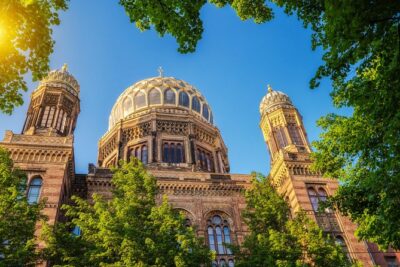
Jewish Berlin: Walking tour The Old Jewish Quarter (private 3 Hours tour)
Read our review →
Path of Resistance: Berlin’s Hidden Holocaust Stories
Read our review →
Browse the lists this tour appears in