
Review · WALKING TOURS
Modern Berlin Private Walking Tour: Diverse, Vibrant and Exciting German Capital
Berlin’s modern story comes alive as you walk from grand Mitte to the former Wall strip at East Side Gallery, then into neighborhoods shaped by artists, immigrants, students, and gentrification. You get more than a checklist of monuments: you see how a divided city keeps changing.
I like the private format, which lets your guide adjust the pace and answer your questions. I also like the mix of historic sites and daily city life, from Berlin Wall murals to courtyards, cafes, galleries, and the Turkish quarter of Kreuzberg.
The main drawback is pace. Five districts in three to four hours means you will sample each area rather than explore any one of them fully. The $179.84 per-person price can also feel high for a walking tour, especially for a small group.
In This Review
- Key Points at a Glance
- Why This Tour Works for Modern Berlin
- Starting in Mitte, Berlin’s Reunited Core
- East Side Gallery and the Wall as Public Art
- Prenzlauer Berg, From Bohemian Streets to Family Berlin
- Kreuzberg, Migration, Activism, and Street Life
- Friedrichshain and the Tour’s Route Detail
- What the Private Format Adds
- Is $179.84 Per Person a Fair Price?
- Who Will Get the Most From This Walk?
- Should You Book Modern Berlin?
- FAQ
- Where does the tour start?
- Is hotel pickup available?
- Where does the tour end?
- How long does the tour last?
- Is the tour private?
- What language is offered?
- Are food and drinks included?
- Can I cancel for a full refund?
Key Points at a Glance
- Five very different Berlin districts: See Mitte, East Side Gallery, Prenzlauer Berg, Kreuzberg, and Friedrichshain in one outing.
- A private English-speaking guide: Your group receives personal attention instead of following a large crowd.
- A useful modern-history focus: The tour explains reunification, gentrification, migration, art, and Berlin’s changing identity.
- Hotel pickup is available: You can arrange pickup from your accommodation or meet at a central location.
- A walking route coaches cannot reach: Expect side streets, courtyards, neighborhood corners, and street-level detail.
- Flexible pacing: Named guides such as Josh, Maria, Joerg, Stefano, and Juan Montiel have led tours with different styles and a willingness to follow group interests.
Why This Tour Works for Modern Berlin
Many first-time Berlin tours concentrate on the Brandenburg Gate, the Reichstag, the Holocaust Memorial, and the Berlin Wall. Those places matter, but they do not fully explain how Berlin feels today.
This tour takes a different angle. It uses several neighborhoods as chapters in the city’s recent story. Mitte shows reunification and renewal. East Side Gallery turns the former Wall into public art. Prenzlauer Berg shows how an inexpensive artistic district can become a polished neighborhood for families and professionals. Kreuzberg brings migration, activism, food, and street art into the picture.
I find that approach useful because Berlin is not a city you understand from monuments alone. Its story is written in restored apartment blocks, creative spaces, international restaurants, former industrial buildings, and streets where old political arguments still shape daily life.
The private setup matters here. You can ask why a particular district changed, how the Wall affected its streets, or where Berlin’s alternative culture fits today. A guide can spend more time on your interests instead of delivering the same speech to a mixed group.
The listed duration is three to four hours. The scheduled neighborhood visits add up to about 160 minutes, so the remaining time allows for walking between areas, introductions, questions, and pauses. You should expect a broad overview, not a slow architectural walk through every district.
More walking tours in Berlin:
- Discover Berlin Half-Day Walking Tour
★ 5.0 · 9,624 reviews - Berlin: Third Reich and Cold War 2 Hour Walking Tour
★ 4.9 · 6,830 reviews - Berlin: Discover Berlin Walking Tour
★ 4.9 · 5,998 reviews
Starting in Mitte, Berlin’s Reunited Core
The usual meeting point is Reichstagufer 17, in central Berlin, though pickup from your accommodation or another central location can be arranged. That flexibility is useful if you are still finding your way around the city, but confirm the exact starting plan when booking.
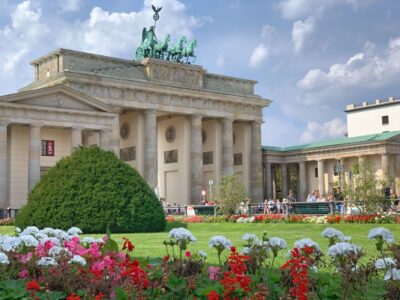
Mitte is the right place to begin. Since reunification in 1990, it has shifted from a divided border zone into the city’s central meeting point. Here, major symbols such as the Brandenburg Gate and Museum Island share space with galleries, cafes, boutiques, creative offices, and newer businesses.
Your guide’s job here is not simply to point out famous buildings. The more useful discussion concerns what happened after the Wall fell. Berlin had to reconnect streets, institutions, and communities that had developed under separate political systems. At the same time, empty or neglected buildings attracted artists and small businesses.
That renewal brought energy, but it also brought higher rents and hard questions about who can still afford to live and work in central Berlin. I appreciate that the tour treats change as a mixed story. Mitte is attractive and easy to visit, yet its polished areas can also feel less experimental than Berlin’s old reputation suggests.
The 30-minute stop is enough for orientation and context. It is not enough for a full visit to Museum Island or any of the major museums, and no museum admission is included. Think of Mitte as the opening frame for the rest of the tour.
East Side Gallery and the Wall as Public Art
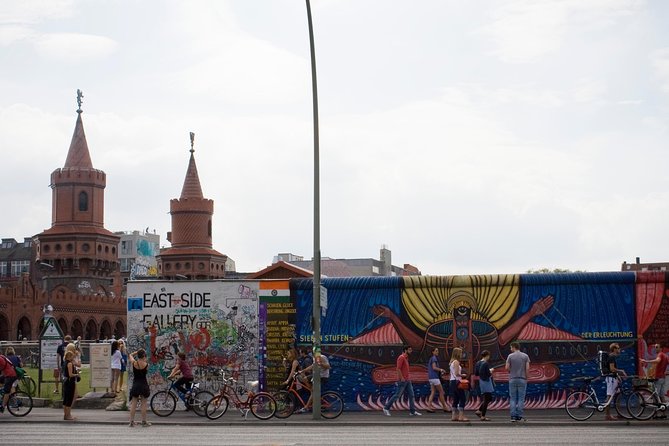
East Side Gallery adds a direct, visual link to Berlin’s divided past. This 1.3-kilometer section of the former Berlin Wall became an open-air gallery in 1990, with artists from many countries painting murals about freedom, peace, change, and unity.
The art makes the history easier to approach. Instead of viewing the Wall only as a cold political barrier, you see how people turned part of it into a public statement after reunification. The colorful paintings contrast sharply with the Wall’s original purpose.
The planned visit lasts about 20 minutes. That is enough to see a section and discuss why the gallery matters, but you will not study every mural along the full length. If you have a favorite painting or want time for photographs, tell your guide early. A private group has more room to pause than a large organized party, but the overall schedule still has several districts to cover.
East Side Gallery is also a good reminder that memorials can change meaning. It began as a celebration of a new political moment, but the paintings have weathered, been repaired, and become part of Berlin’s tourism economy. Your guide can help you consider both the message of the art and the practical challenge of protecting it in a busy city.
Prenzlauer Berg, From Bohemian Streets to Family Berlin
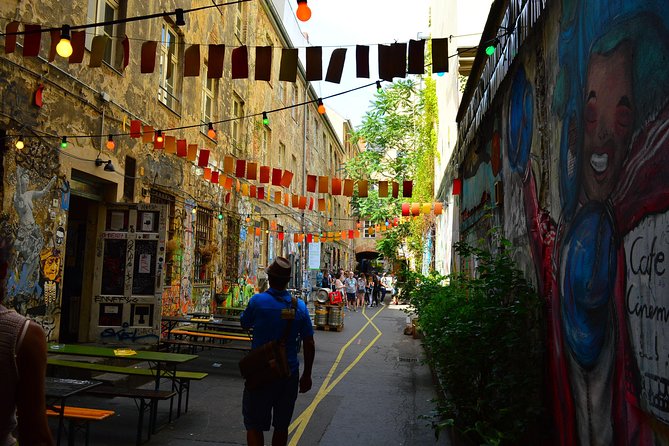
Prenzlauer Berg provides one of the clearest examples of Berlin’s social change. Before and around reunification, relatively low rents drew artists, students, and people involved in alternative culture. After 1990, many historic buildings were restored, and cafes, boutiques, restaurants, and renovated apartments followed.
The district now has a more polished character. Young families and professionals have helped shape its current identity, while galleries, cultural centers, and community spaces keep links to its earlier artistic life.
I would pay attention to the contrast between the buildings and the businesses. The architecture may suggest an older Berlin, while the shops and cafes reflect a newer customer base. That tension is central to the district. Preservation can save beautiful structures, but it can also make a neighborhood more expensive and less open to the people who gave it its original character.
The 40-minute stop is the longest scheduled neighborhood visit. That gives your guide time to explain the district’s changes and show more than one kind of street. You might find this section especially useful if you want to understand gentrification in practical terms rather than as an abstract word.
Still, do not expect a dedicated food stop or shopping break. Food and drinks are not included, and the tour’s purpose is interpretation rather than a cafe crawl. If a quick coffee matters to you, ask whether the pace allows for it.
A few more Berlin tours worth weighing up
- Berlin: Private Reichstag and Glass Dome Tour
★ 4.8 · 2,226 reviews - Berlin Private Complete History All Day Walking Tour
★ 5.0 · 474 reviews - Private Walking Tour Berlin Third Reich Hitler and World War II
★ 5.0 · 360 reviews - Private Berlin: Iconic Sights and Hidden Gems Walking Tour
★ 5.0 · 292 reviews
Kreuzberg, Migration, Activism, and Street Life
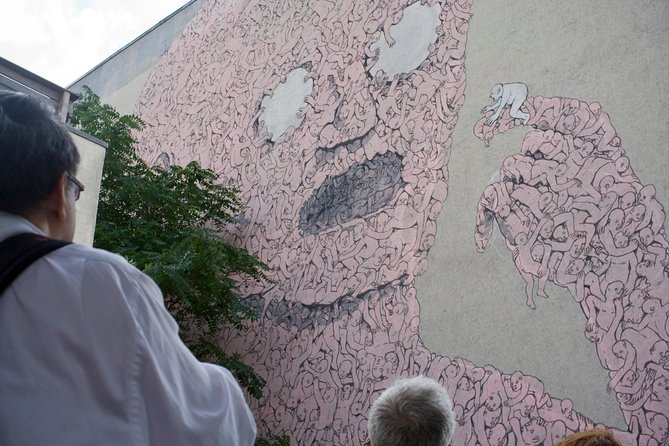
Kreuzberg brings a different tone. Once at the edge of West Berlin, it developed a reputation for alternative culture and became home to immigrants, artists, and activists. Its industrial spaces and older buildings later attracted galleries, cafes, boutiques, and international restaurants.
The district’s identity is tied to its mix of cultures. Street art, music, community events, and international food all help explain why Kreuzberg feels unlike the more formal center. The area is not presented as frozen in its old countercultural role. It has changed, and rising rents and new businesses are part of that change.
One useful detail from the tour’s past experiences is the focus on the Turkish quarter and Hasir, a restaurant associated with the creation of the doner kebab in Berlin. This is the kind of local detail that gives a neighborhood discussion a clear point of reference. It connects migration, entrepreneurship, food, and Berlin’s everyday culture.
The stop is scheduled for about 35 minutes. That lets you take in the district’s general character and hear its social story, but it is not a full food tour. You pay for any meal or drink yourself, and the guide may not be able to make a long restaurant stop while keeping the route on time.
Kreuzberg is likely to be one of the most rewarding sections if you want a less ceremonial view of Berlin. It also asks you to look past simple labels. The district can be creative and welcoming, but it is also shaped by commercial change. A good guide should help you see both sides.
Friedrichshain and the Tour’s Route Detail
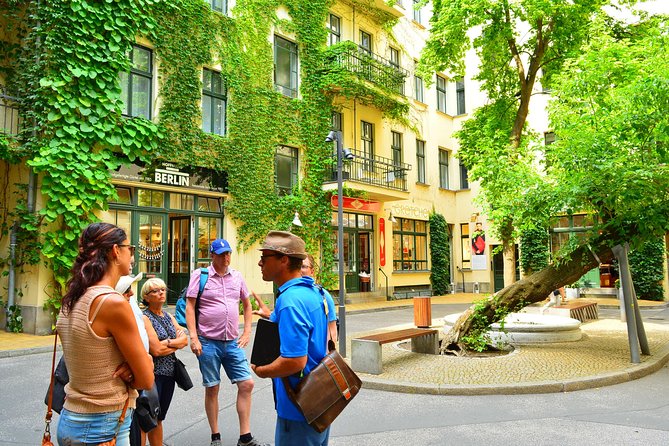
The final listed stop is Friedrichshain, although the supplied description repeats much of the Kreuzberg material. That overlap is worth noting before you book. The route clearly intends to cover another part of Berlin’s eastern, creative city life, but the exact Friedrichshain focus is not spelled out in detail.
Ask your guide at the start how Friedrichshain will be handled. A private tour gives you the best chance to request a clear distinction between the two districts. You might want Kreuzberg’s migration and activist history explained separately from Friedrichshain’s relationship to former East Berlin, music, art, and redevelopment, but the precise stops are not specified.
The listed visit lasts about 35 minutes. Since the experience is designed to cover several districts, you should expect an introduction to Friedrichshain rather than a complete neighborhood walk. This is one place where the private format can improve the experience: you can tell the guide what you have already seen and ask for a more local or less familiar angle.
The route also appears to use the districts as connected examples rather than isolated attractions. That is useful for understanding Berlin as a city in motion, though it means the final section may feel less sharply defined than Mitte or East Side Gallery.
What the Private Format Adds
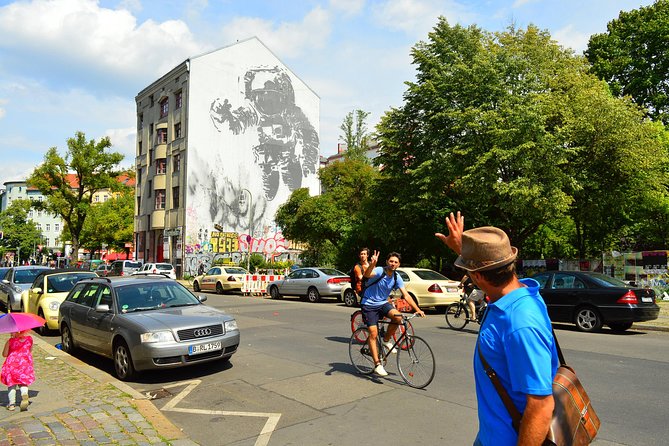
A private tour is more than a smaller group. In Berlin, it can change the quality of the discussion.
The guides associated with this experience include Josh, Maria, Joerg, Stefano, and Juan Montiel. Their reported approaches differ. Josh is described as personable and able to hold the attention of teenagers. Joerg is noted for balancing the group’s intellectual interest with its physical limits. Stefano has provided an alternative route for people who had already seen the classic sights. Juan Montiel is described as open to questions and able to lead visitors through Mitte courtyards and Kreuzberg.
Those details point to the main benefit: you can shape the conversation. If you are traveling with a family, the guide can adjust the rhythm. If you have already visited the usual monuments, you can request more neighborhood life. If Berlin’s political history interests you, you can spend more time on the Wall and reunification.
The experience is offered in English. Service animals are allowed, most people can participate, and the meeting point is near public transportation. It operates in all weather, so comfortable shoes and suitable clothing are important. Berlin rain can make a long walking route feel much longer.
Hotel pickup is included, but the activity ends back at the meeting point. Pickup may save time at the beginning, yet it does not turn the tour into a vehicle-based sightseeing trip. You are still choosing this experience for walking and street-level access.
Is $179.84 Per Person a Fair Price?
At $179.84 per person, this is not a budget walking tour. The value depends heavily on the size of your private group and how much you want personal attention.
For one or two people, the cost is difficult to compare with a low-cost group walk. You are paying for a private guide, hotel pickup, flexible discussion, and a route that links several districts. If your group includes four or more people, the cost may feel more reasonable, especially if group discounts apply.
I would consider the price fair when you want interpretation rather than basic directions. The guide’s context can help you connect places that might otherwise seem unrelated. You also avoid spending separate days figuring out how to reach Mitte, East Side Gallery, Prenzlauer Berg, Kreuzberg, and Friedrichshain on your own.
The value is weaker if you prefer long stops, museum interiors, food tastings, or time to browse shops. All listed stops are free, and food and drinks are extra. You are mainly paying for access to a local guide’s time and judgment.
The tour is often reserved well ahead, with an average booking lead time of about 61 days. That suggests you should plan early if you need a specific date or departure time, particularly during busy periods.
Who Will Get the Most From This Walk?
I would recommend this tour to first-time visitors who want a broad introduction to Berlin’s current identity. It is also a strong choice for repeat visitors who have already seen the Brandenburg Gate and other standard sights and now want neighborhoods.
Families may appreciate the private pace. One guide has successfully kept teenagers interested, and private questions are easier when children or young adults lose focus. The route still covers several hours on foot, so make sure your group is comfortable with sustained walking.
This tour also suits anyone curious about urban change. You will hear about reunification, gentrification, migration, artistic communities, and the way public art can reshape a painful site. That is more useful than a simple list of dates.
I would hesitate to book it if you want a relaxed stroll through one district. The route is ambitious. You may spend enough time in each area to understand its character, but not enough to shop, eat, enter museums, or linger over photographs.
Free cancellation is available if you cancel at least 24 hours before the start time. Changes made inside that window are not accepted, and late cancellations are not refunded. Confirmation is normally issued at booking, though bookings made within two days of departure may take up to 48 hours and depend on availability.
Should You Book Modern Berlin?
Book it if you want Berlin explained through its neighborhoods, not just its famous buildings. The strongest features are the private format, the local perspective, the Wall art, and the clear focus on how Berlin changed after 1990.
Before paying, confirm the pickup plan, walking expectations, departure time, and the exact Friedrichshain section. I would also ask how the guide will divide Kreuzberg and Friedrichshain, since the supplied descriptions overlap.
For a small group, the price is a serious consideration. For a family or larger party that values a private guide, it can be a practical way to cover a lot of ground without joining a crowded coach or a fixed group. You will finish with a useful map of Berlin’s modern character, even if you still need to return later for a slower look at the districts you like best.
FAQ
Where does the tour start?
The standard meeting point is Reichstagufer 17, 10117 Berlin, Germany.
Is hotel pickup available?
Yes. You can arrange pickup from your accommodation or meet the guide somewhere central.
Where does the tour end?
The activity ends back at the meeting point.
How long does the tour last?
The tour lasts approximately three to four hours.
Is the tour private?
Yes. Only your group participates in the private activity.
What language is offered?
The tour is offered in English.
Are food and drinks included?
No. Food and drinks are not included in the price.
Can I cancel for a full refund?
Yes, if you cancel at least 24 hours before the experience start time. Cancellations made less than 24 hours before the start are not refunded, and changes inside that period are not accepted.
Just added around Berlin
- Berlin Highlights in One Day★ 5.0 · 3 reviews
- Private Berlin One Day Tour with a Local: See the City Unscripted★ 3.5 · 3 reviews
- Individual city tour Berlin for max. 8 persons★ 5.0 · 3 reviews
- Transfer from Berlin Schönefeld Airport (SXF) to Berlin city Hotels – ROUND TRIP★ 4.0 · 3 reviews
- Berlin: Museum Island Tour★ 5.0 · 3 reviews
- Private Analogue Photography Experience in Berlin★ 5.0 · 3 reviews
- Berlin: Local Food Tour in Secrets Hidden Gems★ 4.0 · 3 reviews
- Berlin & The Third Reich Private Guided Tour★ 5.0 · 3 reviews
Walking Tours, compared.



Berlin’s Best: 2 Hour Walking Tour Third Reich and the Cold War
Read our review →

Third Reich Berlin: Hitler and WWII Walking Tour
Read our review →

Browse the lists this tour appears in