
Review · THIRD REICH & WWII SITES
Private Berlin WWII and Cold War History Tour with Local Expert Guide
Berlin’s past is packed into a surprisingly walkable stretch of central streets. This private tour links the Palace of Tears, Hitler’s bunker site, the Holocaust Memorial, and Checkpoint Charlie into one long, story-driven introduction to the city.
I like the private format, since guides such as Dimitri, Eleni, Lucian, and Simon have adjusted routes, added breaks, and answered plenty of questions. I also like the simple currywurst stop, which gives the history a welcome everyday Berlin pause. The catch is the amount of walking: four hours can stretch to five or more, and cold weather makes the route much harder.
In This Review
- Key points to know before booking
- Why this walk works as a first look at Berlin
- Starting at Oranienburger Strasse
- The New Synagogue and Berlin’s Jewish past
- The Palace of Tears and the personal cost of division
- Reichstag, Brandenburg Gate, and the central power axis
- Hitler’s bunker site and the limits of what remains
- Currywurst on Wilhelmstrasse
- Checkpoint Charlie and the Cold War as theater
- Bebelplatz and the memory of book burning
- Museum Island and the Missing House
- Pace, distance, and the reality of a four-hour walk
- What $129 means in practical value
- Who should book this Berlin history walk?
- Should you book it?
- FAQ
- How long does the tour last?
- Where does the tour start?
- Where does the tour finish?
- Is this a private tour?
- Is the tour offered in English?
- Is currywurst included?
- Which major sights are included?
- Does the tour include museum admission?
- Can the itinerary be changed?
- How much walking should I expect?
- Can I cancel for a refund?
Key points to know before booking
- You cover a remarkable number of major sights: Brandenburg Gate, the Reichstag, the Holocaust Memorial, Checkpoint Charlie, Bebelplatz, and Museum Island all fit into the route.
- The Palace of Tears gives the Cold War story a human scale: This former border station focuses on families and individuals crossing between East and West Berlin.
- The tour is private and adjustable: Your guide can slow down, add breaks, or shape the emphasis around Nazi history, the Cold War, architecture, or first-time Berlin essentials.
- Currywurst is included: You get a classic Berlin snack during the walking day, while extra food and drinks cost more.
- The route favors outdoor history: Museum Island and several landmarks are visited as places and settings, but museum admission is not listed as part of the experience.
- Wear proper walking shoes: The tour requires moderate fitness, and several people found the pace comfortable only because their guides allowed regular pauses.
Why this walk works as a first look at Berlin
Berlin can be difficult to read on your own. A grand square may have been the site of Nazi propaganda, a quiet street may once have been cut by the Wall, and a modern office building may conceal the location of a former ministry or detention center.
This tour helps connect those layers. Instead of seeing Brandenburg Gate, Checkpoint Charlie, and Museum Island as separate photo stops, you move through them as parts of a city shaped by dictatorship, war, division, and reunification.
The private setting matters. You are not trying to hear a guide over a large group, and you can ask why a particular building matters or request more time at a place that catches your attention. Guides have adjusted tours for first-time visitors, changed the pace for someone with walking trouble, and offered advice about restaurants, train routes, timetables, and what to do after the tour.
The guide assigned to you may vary. Dimitri and Dmitrios are praised for detailed explanations and patience, while Eleni is noted for making the day personal and unhurried. Lucian receives strong marks for his pleasant manner and willingness to stay longer when the discussion ran over. Simon has shaped the route well for first visits.
The experience is sold as roughly four hours, but plan for a full half-day. One tour lasted about five and a half hours, and the number of stops makes that possible. If you have a train to catch or a timed museum reservation, leave a generous buffer.
More Cold War Berlin:
- Berlin: Third Reich and Cold War 2 Hour Walking Tour
★ 4.9 · 6,830 reviews - Berlin’s Best: 2 Hour Walking Tour Third Reich and the Cold War
★ 5.0 · 5,486 reviews - Cold War, Berlin Wall, Spies and the East Side Gallery
★ 5.0 · 1,024 reviews
Starting at Oranienburger Strasse
You meet your guide at Oranienburger Strasse 28 to 30, near public transportation. This is a useful starting place because the street sits close to several important central Berlin sights and gives you an immediate look at the city’s Jewish history and changing architecture.
The tour begins at a flexible pace. That does not mean a slow stroll with no structure. It means your guide can judge how much time your group wants for photos, questions, coffee, or a deeper discussion at a particular site.
Oranienburger Strasse itself is a good place to begin because it feels like a working city street rather than a formal monument zone. You are quickly reminded that Berlin’s major historical stories unfolded in ordinary neighborhoods, not just at famous landmarks.
The New Synagogue and Berlin’s Jewish past
The New Synagogue, home to the Centrum Judaicum, is one of the first major sights. Its striking Moorish-style architecture makes an immediate impression, especially from the street, where the building’s dome and ornate facade offer one of the tour’s best photo opportunities.
Your guide presents the synagogue as more than an architectural stop. It is tied to Berlin’s Jewish community, the destruction and persecution of the Nazi period, and the city’s effort to connect remembrance with the future.
The stop is especially useful if you have limited time in Berlin and want historical context before reaching the Holocaust Memorial. The focus here is on the building and its meaning. Do not assume the tour includes a full museum visit inside, since admission tickets are not listed.
The Palace of Tears and the personal cost of division
The Palace of Tears is one of the strongest parts of the tour. Its official name, Tränenpalast, refers to the emotional goodbyes that took place here when people crossed from East Berlin into the western sectors.
Inside, the preserved setting has an unmistakably dated feel. Floor tiles, a wall clock, and the 1960s interior design make the place feel less like a polished monument and more like a former working border station.
This is where the Cold War becomes personal. Your guide explains how Berlin’s border system affected families, residents, and people attempting to leave Soviet-occupied East Berlin for the Allied-controlled western side.
I find this stop more affecting than a simple explanation of the Berlin Wall. You begin to understand that the division was enforced through paperwork, questioning, surveillance, and forced separations, not just concrete and barbed wire.
The Palace of Tears is also a practical stop because much of the visit is indoors. That matters on a cold Berlin day. The tour itself remains largely outdoors, so this short indoor section offers a welcome break.
More Third Reich sites in Berlin:
- Berlin: Berlin Story Bunker Entry Ticket
★ 4.6 · 6,759 reviews - Third Reich Berlin: Hitler and WWII Walking Tour
★ 5.0 · 3,301 reviews - Berlin: Third Reich, Hitler, and WWII Walking Tour
★ 4.9 · 1,133 reviews - Berlin Third Reich Sites: Half-Day Walking Tour
★ 5.0 · 835 reviews
Reichstag, Brandenburg Gate, and the central power axis
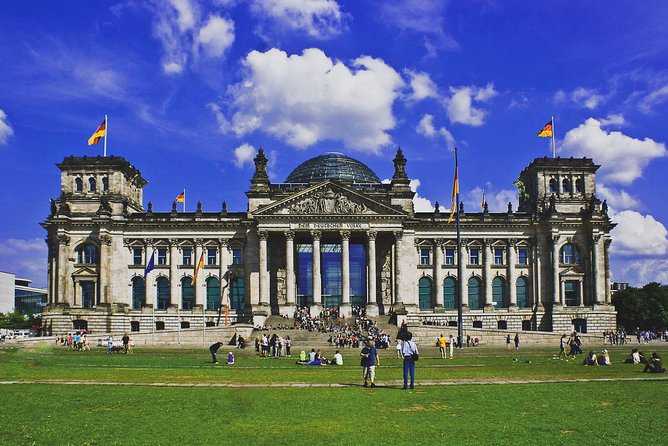
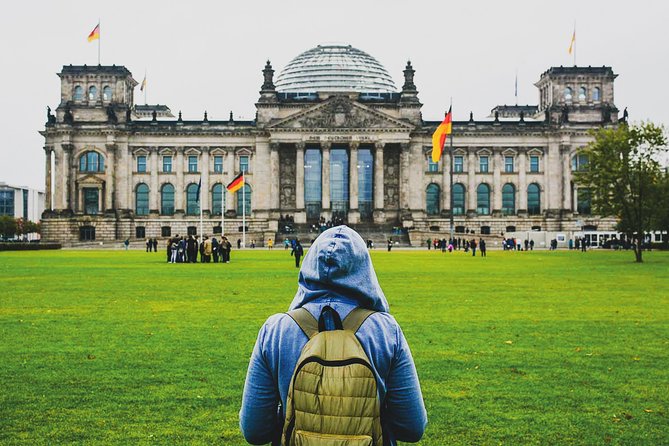
From there, the route moves through the monumental heart of Berlin. The Reichstag Building gives you a look at the city’s political history and its mixture of older architecture with modern Germany.
The building is a photo stop and an opportunity to discuss Berlin’s changing government, but this walking tour does not include a dome visit. If the glass dome is on your must-see list, you will need to arrange that separately.
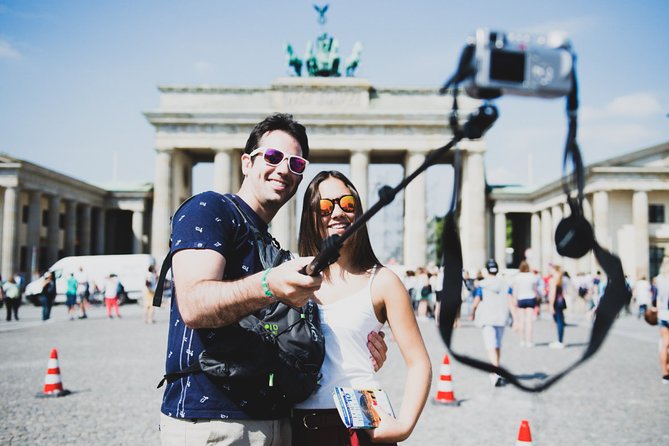
Brandenburg Gate is the city’s signature landmark and an essential stop for a first visit. Its columns and chariot are instantly recognizable, but the gate gains much more meaning when your guide explains how it passed through Prussian, Nazi, divided, and reunified Berlin.
This is a busy photo area, so your guide’s historical explanation may compete with crowds and city noise. Still, the location is too important to skip. It works as a visual marker for the city’s political changes.
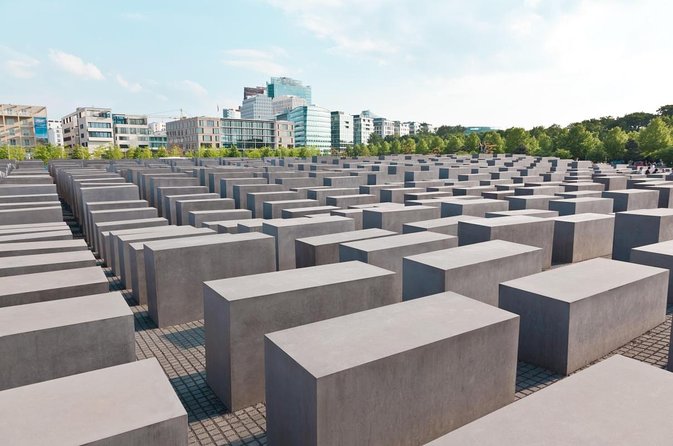
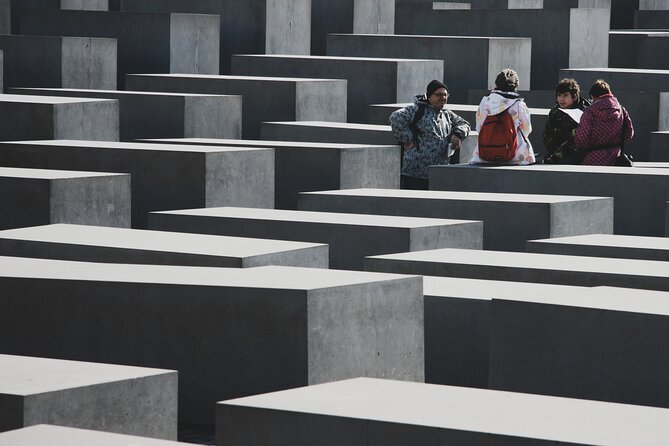
The route then brings you to the Memorial to the Murdered Jews of Europe. The field of gray concrete stelae is intentionally unsettling. Walk through it rather than viewing it only from the edge, and you will feel how the changing height and narrow passages alter your sense of space.
The memorial deserves quiet attention. It is not a backdrop for a rushed photo, and the tour’s value here depends on allowing your guide to explain the site without turning it into a checklist stop.
Hitler’s bunker site and the limits of what remains
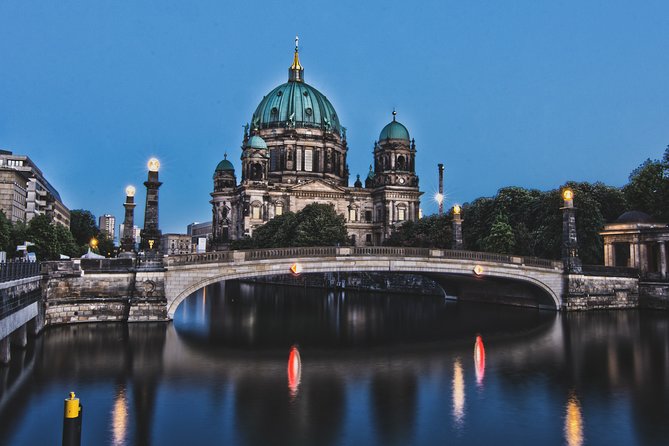
The Führerbunker is a historically important location, but it is not a preserved underground attraction. The bunker was destroyed, and the site is marked in an ordinary urban setting rather than presented as a dramatic museum.
That contrast is useful. Berlin has chosen not to turn the location into a shrine or spectacle. Your guide explains its role in the final days of Hitler’s life and places it within the wider story of Nazi rule and the war’s end.
Expect an exterior explanation, not a walk through Hitler’s personal rooms. The stop is brief, and its power comes from the gap between the location’s historical importance and its unremarkable appearance today.
You then move along Wilhelmstrasse, once a major center of government ministries. The route uses this area to connect political power, wartime decisions, and the city’s later redevelopment.
Currywurst on Wilhelmstrasse
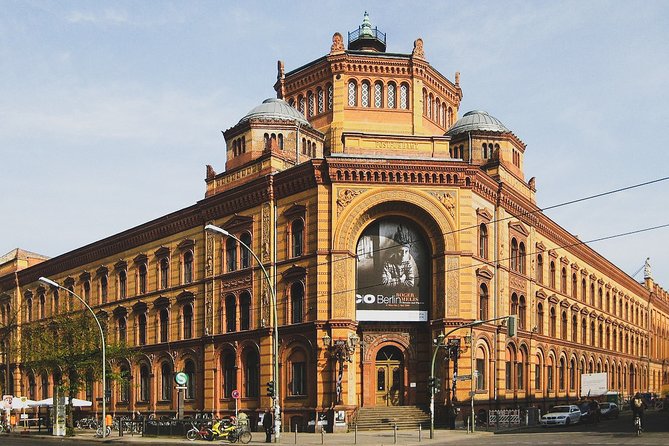
At about the middle of the walk, you stop for currywurst, Berlin’s famous sausage served with curry sauce. The snack is included, while additional food and drinks are not.
This is a small detail, but it improves the rhythm of the tour. Four hours of standing and walking can wear you down, and a quick local bite gives you a chance to rest while staying with the group.
Do not expect a full restaurant meal. Think of currywurst as a traditional Berlin snack and a practical energy stop. You may want to buy a drink or coffee separately, especially if the weather is cold.
Checkpoint Charlie and the Cold War as theater
Checkpoint Charlie was the best-known crossing between East and West Berlin. Today, the setting is much more developed and commercial than it was during the division, but the location still carries strong symbolic weight.
Your guide helps separate the historical border crossing from the modern photo scene. The famous guardhouse and sign are tied to tense confrontations, escapes, military presence, and the daily reality of a divided city.
This stop can feel less atmospheric than the Palace of Tears because the surrounding area has changed so much. That is not a reason to skip it. It is a chance to discuss how Berlin presents difficult history in a city where redevelopment often sits directly on top of former border zones.
The private format helps here. You can ask about escape attempts, the border system, or the difference between the original checkpoint and what you see today. A large group would make that exchange harder.
Bebelplatz and the memory of book burning
Bebelplatz is one of Berlin’s most handsome squares, lined by notable buildings and shaped by the city’s formal architectural tradition. It also carries a grim association with the Nazi book burning of 1933.
Your guide explains how the square became linked to that public act of censorship and intimidation. The setting creates a sharp contrast: elegant architecture surrounding a reminder of how culture and free thought were attacked.
This is one of the tour’s better examples of Berlin’s layered character. You are not visiting a separate museum exhibit. You are standing in a public place where architecture, political power, and memory overlap.
Museum Island and the Missing House
Museum Island provides a change of tone. The UNESCO-listed ensemble brings together five major museums and some of Berlin’s most imposing riverside architecture.
The tour introduces the island and its place in Berlin’s cultural life, but museum entry is not included. If you want to spend time inside the Pergamon Museum, Neues Museum, or another institution, schedule that for another part of your trip.
The route also connects Museum Island with the story of the Nazi book burning, which gives the cultural district a darker historical layer. Your guide can help you understand how Berlin’s museums fit into the city’s broader political story.
Later, in the Mitte district, you see less obvious places such as the Missing House on Große Hamburger Strasse. This kind of stop is valuable because it shifts attention away from famous monuments and toward absences, traces, and ordinary addresses shaped by war and persecution.
Heckmann Höfe offers a more picturesque finish. The courtyards provide a pleasant contrast to the solemn memorials and political landmarks earlier in the day. They also show a quieter side of central Berlin, with lanes and spaces that are easy to miss if you move only between headline attractions.
Pace, distance, and the reality of a four-hour walk
The route covers a lot. That is its main strength and its main challenge.
You should have moderate physical fitness and be ready to walk for several hours. Guides have offered rest stops and adjusted the pace for people who needed more time, but this is not a short hop between monuments.
Comfortable shoes are essential. In winter, add a warm coat, gloves, and protection from cold wind. One group enjoyed the tour on an icy December morning because the guide kept the pace comfortable, but another found a nighttime outing freezing. Earlier in the day is the safer choice if you want better visibility and less discomfort.
The route may last longer than advertised when questions, photos, breaks, or customization are involved. That can be a benefit if you want a personal history lesson, but it may frustrate you if you prefer a tightly timed sightseeing circuit.
What $129 means in practical value
At $129 per person, this is not the cheapest way to see Berlin’s landmarks. You are paying for a private English-speaking guide, a custom route, the currywurst, and the ability to shape the conversation around your interests.
The value improves with two or more people. A private tour lets your group ask direct questions and move at its own pace, while group discounts may reduce the per-person cost. It is particularly useful for a family or small group that wants an introduction without spending hours researching the city’s historical sites.
The price is harder to justify if you only want quick photos of Brandenburg Gate and Checkpoint Charlie. You can reach those places independently. The fee makes more sense if you want the connections between them, help with orientation, and advice about what to see afterward.
All listed fees and taxes are included, along with the traditional snack. Extra drinks and food cost more. Since the route includes outdoor sites rather than a set of paid museum entries, the main purchase is your guide’s time and interpretation.
The experience has a 4.8 rating from 29 reviews, with 97 percent recommending it. There is one serious service failure in the record: a guide failed to appear, later said he had forgotten the booking, and the company reported that the guide was removed and the customer received a full refund. That incident is not something to ignore, but it appears separate from the many strong accounts of guides arriving prepared, adapting the route, and giving extra time.
Who should book this Berlin history walk?
You are a strong match if this is your first visit to Berlin and you want to understand the city before choosing which museums and memorials deserve more time.
It also suits you if WWII and Cold War history are your main interests, especially if you prefer asking questions rather than listening to a fixed script. The private format is helpful for families, couples, and small groups with different walking speeds.
You may want another option if you dislike long walks, want extensive indoor museum time, or prefer a short sightseeing tour with transportation between stops. The route is ambitious, and its success depends on your willingness to spend much of the day on foot.
When booking, use the customization option clearly. Tell the provider if you want extra attention to Nazi history, the Berlin Wall, Jewish Berlin, architecture, or first-time orientation. If a particular guide is available by request, names such as Dimitri, Eleni, Lucian, or Simon have been especially well received, but guide assignment is not guaranteed.
Should you book it?
Book this tour if you want a broad, personal introduction to Berlin’s WWII and Cold War landmarks, with a local guide who can adjust the pace and explain the links between places. The Palace of Tears, the bunker site, Brandenburg Gate, and Checkpoint Charlie create a strong historical arc, while currywurst and the Mitte courtyards keep the day from becoming relentlessly heavy.
Skip it if you want a museum-focused experience or cannot comfortably walk for four hours. For most first-time visitors who value context more than collecting quick snapshots, the private format makes the $129 price reasonable, especially when shared among a small group.
FAQ
How long does the tour last?
The advertised duration is approximately four hours. Some tours may run longer when you stop for questions, photos, breaks, or customized visits.
Where does the tour start?
The meeting point is Oranienburger Strasse 28 to 30, 10117 Berlin, Germany.
Where does the tour finish?
The activity ends back at the starting point.
Is this a private tour?
Yes. Only your group participates in the activity.
Is the tour offered in English?
Yes. English is the listed language.
Is currywurst included?
Yes. A German traditional snack, currywurst, is included. Extra food and drinks are not included.
Which major sights are included?
The route includes the New Synagogue, Palace of Tears, Reichstag Building, Brandenburg Gate, Holocaust Memorial, Führerbunker site, Checkpoint Charlie, Bebelplatz, Museum Island, Wilhelmstrasse, and selected Mitte sites.
Does the tour include museum admission?
Museum admission is not listed as included. Museum Island is included as a sightseeing stop, but tickets for individual museums are not specified as part of the experience.
Can the itinerary be changed?
Yes. The tour is customizable to your interests and preferences.
How much walking should I expect?
You should expect several hours of walking and have a moderate level of physical fitness. Guides can provide breaks and adjust the pace, but this is an extended walking tour.
Can I cancel for a refund?
You can cancel at least 24 hours before the local start time for a full refund. Cancellations or changes made less than 24 hours before the start time are not accepted for a refund.
More History Walks in Berlin
- Berlin: Natural History Museum Entrance Ticket
★ 4.6 · 3,382 reviews - Berlin: World Heritage Cruise to Potsdam
★ 4.5 · 1,435 reviews - Berlin Historical Highlights Walking Tour
★ 4.9 · 657 reviews - Berlin Private Complete History All Day Walking Tour
★ 5.0 · 474 reviews
Just added around Berlin
- Berlin Highlights in One Day★ 5.0 · 3 reviews
- Private Berlin One Day Tour with a Local: See the City Unscripted★ 3.5 · 3 reviews
- Individual city tour Berlin for max. 8 persons★ 5.0 · 3 reviews
- Transfer from Berlin Schönefeld Airport (SXF) to Berlin city Hotels – ROUND TRIP★ 4.0 · 3 reviews
- Berlin: Museum Island Tour★ 5.0 · 3 reviews
- Private Analogue Photography Experience in Berlin★ 5.0 · 3 reviews
- Berlin: Local Food Tour in Secrets Hidden Gems★ 4.0 · 3 reviews
- Berlin & The Third Reich Private Guided Tour★ 5.0 · 3 reviews
Third Reich & WWII Sites, compared.



Berlin’s Best: 2 Hour Walking Tour Third Reich and the Cold War
Read our review →
Third Reich Berlin: Hitler and WWII Walking Tour
Read our review →

Berlin Third Reich Sites: Half-Day Walking Tour
Read our review →
Guided Bike Tour of the Berlin Wall and Third Reich
Read our review →
Hitler’s Germany: Berlin During the Third Reich & WWII
Read our review →Browse the lists this tour appears in