
Review · WALKING TOURS
Private walking Tour: Berlin Architecture Tour
Berlin tells its political story through buildings. On this private architecture tour, you move from grand neoclassical museums and domed cathedrals to East German apartment blocks, postwar cultural buildings, and the glass towers of Potsdamer Platz. The sharpest lesson is how Berlin’s old division still shows in its streets.
I like the private format, which lets you ask for a focus on design, urban planning, wartime damage, or the Cold War. I also like the hotel pickup and the choice of walking or biking, especially since the route covers a lot of ground. The main consideration is price: at $191.87 per person, this makes the most sense for people who care deeply about architecture, history, or design, and for groups that can share the private-guide cost.
In This Review
- Key points to know before booking
- Berlin architecture as a map of political power
- Museum Island: neoclassical Berlin in concentrated form
- Gendarmenmarkt and the art of the formal square
- Friedrichstrasse and the rebuilding of central Berlin
- Kulturforum and the expressive Philharmonie
- The Reichstag: old political language, new transparency
- Potsdamer Platz: Berlin’s biggest urban reset
- Pariser Platz and the return of the capital
- Kreuzberg and Friedrichshain: architecture beyond the monuments
- Hackescher Markt and the courtyards behind the street
- What the four-hour timing really means
- Who will get the most from this tour
- Should you book the Berlin Architecture Tour?
- FAQ
- How long does the Berlin Architecture Tour last?
- Is this a private tour?
- Is hotel pickup included?
- Can I choose the sights I want to see?
- Is the tour offered in English?
- Can I take the tour by bike instead of walking?
- Does the price include food and drinks?
- Are admission tickets included?
- What is the cancellation policy?
Key points to know before booking
- A four-hour private route links Berlin’s major architectural districts, rather than focusing on one neighborhood.
- Museum Island and Gendarmenmarkt provide the historical foundation, with neoclassical, Baroque, and restored museum buildings.
- The Philharmonie and Kulturforum show West Berlin’s postwar answer to the Wall, using bold modern design and cultural institutions.
- Potsdamer Platz reveals Berlin’s dramatic rebirth, from wartime ruins and Cold War division to high-rise redevelopment.
- Kreuzberg and Friedrichshain add everyday city life, with Altbau buildings, socialist-era structures, the Oberbaum Bridge, and the East Side Gallery.
- Guides such as Sara, Thomas, Tom, Daniel, Heiko, Tarek, and Ariel have led this tour, with particular praise for clear explanations, historical context, and flexibility.
Berlin architecture as a map of political power
This is not simply a parade of handsome façades. Berlin’s buildings explain who controlled the city, what each government wanted to project, and how architects tried to repair a broken capital.
You will compare communist-era apartment blocks in the former East with the modern office buildings and cultural projects of the former West. That contrast gives the tour its purpose. A building becomes more interesting when you know why it was built, what it replaced, and which political idea it was meant to express.
Your guide meets you in your central Berlin hotel lobby, then shapes the route around your interests. Past participants have specifically praised guides including Sara, an architect who led a group of American interior designers, and Thomas, Tom, Daniel, Heiko, Tarek Ibrahim, and Ariel. The strongest pattern is clear: the guide matters greatly here. You want someone who can explain design without turning the morning into a lecture.
The tour is offered in English, and you can choose to go on foot or by bike. The itinerary lists ten substantial areas, so four hours will require a brisk pace and short visits. Some stops may be viewed from outside, and the exact order can change when you request particular sights.
More walking tours in Berlin:
- Discover Berlin Half-Day Walking Tour
★ 5.0 · 9,624 reviews - Berlin: Third Reich and Cold War 2 Hour Walking Tour
★ 4.9 · 6,830 reviews - Berlin: Discover Berlin Walking Tour
★ 4.9 · 5,998 reviews
Museum Island: neoclassical Berlin in concentrated form
Museum Island is an ideal opening because several major architectural periods sit close together on the Spree. You begin with the Altes Museum, whose broad portico and rows of columns give it the calm, formal look of classical antiquity. The building makes a useful introduction to the 19th-century idea of a museum as a public temple of culture.
The Pergamon Museum adds another monumental façade, while the Bode Museum closes the island’s western tip with its dome and curved riverfront form. The Neues Museum is especially useful for understanding Berlin’s approach to restoration. Wartime damage was not simply hidden, and the restored building combines surviving historic elements with newer work.
The itinerary allows about 20 minutes here. That is enough for an exterior overview and photographs, but not enough to visit the museum collections. This is an architecture tour, not a museum admission tour, so plan separate time if you want to see the interiors.
The Berliner Dom, also on the island, receives its own short stop. Its huge dome, symmetrical façade, stone decoration, and grand interior represent a very different Berlin from the modern buildings you will see later. The tour allows around 15 minutes, again making it a visual and historical visit rather than a full cathedral tour.
Gendarmenmarkt and the art of the formal square
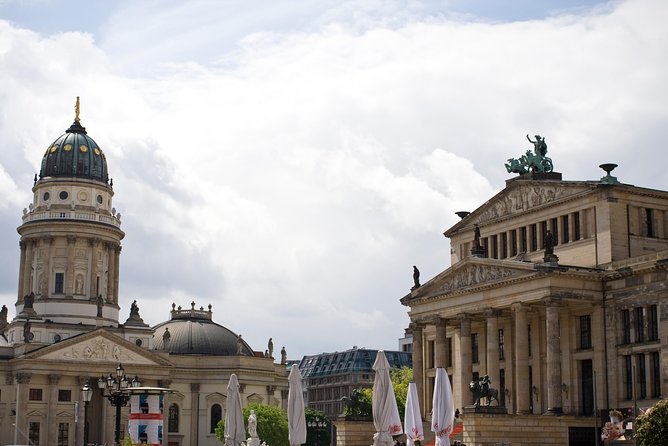
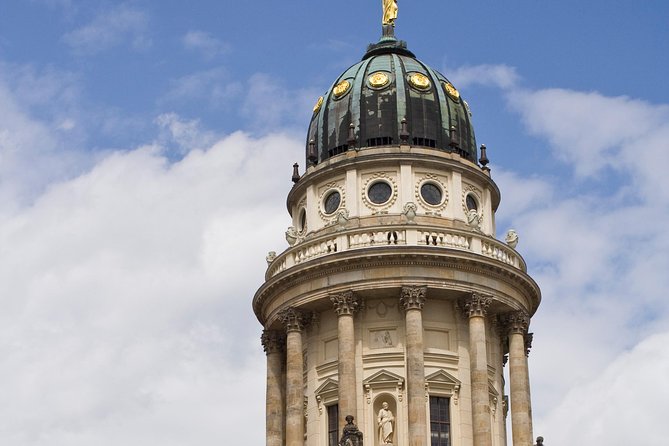
Gendarmenmarkt is one of Berlin’s best places to see architecture working as a group. The French Cathedral, German Cathedral, and Schinkel’s Konzerthaus frame the square in a carefully balanced arrangement, with Friedrich Schiller’s statue at the center.
Your guide can explain the difference between the two domed cathedrals and the concert hall’s classical design. The square is valuable because it shows how a city can use symmetry, scale, and repeated forms to create civic grandeur.
You get about 15 minutes here, so use the time well. Look upward at the domes, then back toward the Konzerthaus to see how its columns and central position organize the space. Gendarmenmarkt is also one of the easiest places on the route for group photographs.
Friedrichstrasse and the rebuilding of central Berlin
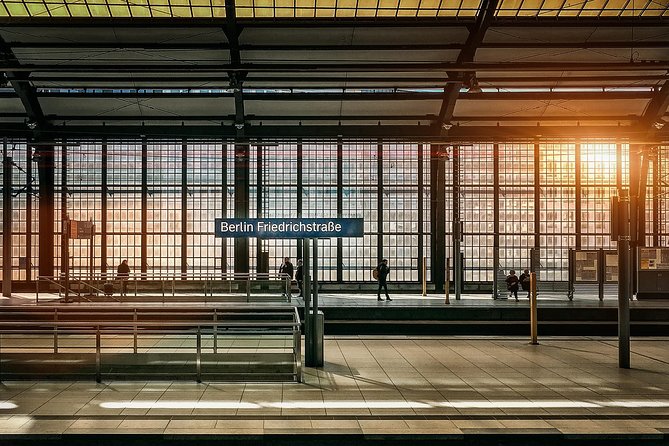
Friedrichstrasse brings the story forward to the city’s commercial center. It combines traces of the Golden Twenties with newer offices, cafés, shops, restaurants, boutiques, and department stores. Galeries Lafayette is a notable modern retail presence along the street.
This is where the tour turns from individual monuments to urban renewal. Your guide can point out how central Berlin was rebuilt and repackaged after reunification, and how the street’s current mix of shopping and business uses relates to older city traditions.
The attraction here is not one perfect building. It is the tension between historic references and new construction. You see a street trying to recover its old role while serving a changed city.
A few more Berlin tours worth weighing up
- Berlin: Private Reichstag and Glass Dome Tour
★ 4.8 · 2,226 reviews - Berlin Private Complete History All Day Walking Tour
★ 5.0 · 474 reviews - Private Walking Tour Berlin Third Reich Hitler and World War II
★ 5.0 · 360 reviews - Private Berlin: Iconic Sights and Hidden Gems Walking Tour
★ 5.0 · 292 reviews
Kulturforum and the expressive Philharmonie
The Kulturforum grew along the edge of West Berlin in the 1950s and 1960s, after important cultural institutions were cut off behind the Berlin Wall. Museums, concert halls, libraries, and institutes were gathered here as a deliberate cultural answer to East Berlin’s Museum Island.
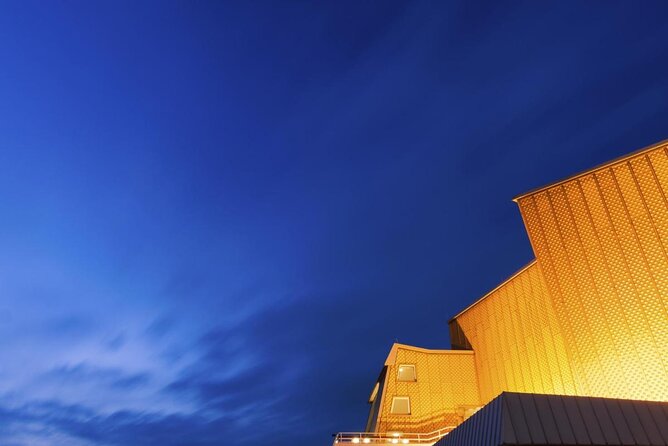
The Berliner Philharmonie is the visual star. Its tent-like, asymmetrical exterior rejects the usual rectangular concert-hall shape. The bold form reflects the optimism of postwar West Berlin and the wish to create a new kind of public culture.
You will have about 15 minutes for the Philharmonie. This is a good place to take photographs, especially if unusual modern architecture interests you. The tour focuses on the building’s exterior and its design ideas. It does not include a concert, and the listed admission is free because the stop is not presented as a ticketed performance visit.
The Kulturforum can be particularly useful for design professionals, architecture students, and anyone who wants more than postcard views. A guide who understands how buildings work can explain why the Philharmonie’s interior arrangement and exterior form were so influential.
The Reichstag: old political language, new transparency
The Reichstag offers one of Berlin’s clearest architectural pairings. The original building has a formal 19th-century façade with a grand portico. Its glass dome, designed by Norman Foster during the post-reunification renovation, changes the message completely.
The dome symbolizes transparency and democracy, while also creating a dramatic contrast with the historic shell below. Reflections, daylight, and the rising interior path make the modern addition easy to discuss in terms of both politics and engineering.
The itinerary allows roughly 10 minutes here. That is a quick stop, so you should not assume you will enter the dome or spend time taking in the city views from inside. Use this portion for an exterior explanation and photographs unless your customized arrangements say otherwise.
Potsdamer Platz: Berlin’s biggest urban reset
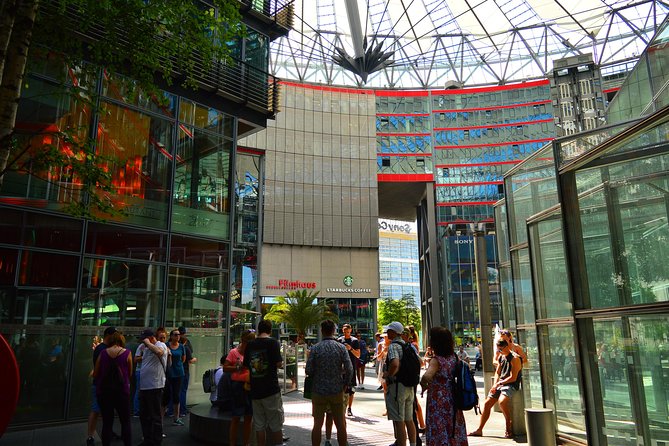
Potsdamer Platz is where Berlin’s recent past becomes easiest to read. Before World War II, it was a major traffic and commercial center. War damage and the Cold War left it divided and largely empty, with the Berlin Wall cutting through the area.
Today, large office towers and public spaces fill the gap. The Sony Center’s sweeping glass roof gives the complex a recognizable center, while the DB Tower adds a sleek glass presence to the skyline. Panoramapunkt offers another way to view the city, though the tour information does not include admission.
This stop is scheduled for about 20 minutes. That is enough to understand the broad redevelopment scheme, compare the buildings, and hear how the former wasteland was turned into a new business district. It is not enough to inspect every tower or visit every attraction.
I find Potsdamer Platz most useful when you resist judging it only as beautiful or ugly. It is a grand experiment in rebuilding a missing piece of the city. Your guide can help you consider how commercial development, public space, memory, and national symbolism were balanced.
Pariser Platz and the return of the capital
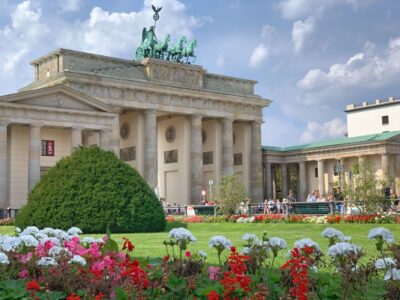
Pariser Platz gives you another collision of old and new. The Brandenburg Gate dominates the square with its neoclassical columns and famous triumphal form. Around it are the Hotel Adlon, French Embassy, American Embassy, Academy of Arts, and the DZ Bank building by Frank Gehry.
Gehry’s work is especially helpful here because it refuses to imitate the gate. The sculptural glass and steel design adds a modern counterpoint to the square’s traditional façades. This is a good place to ask your guide how Berlin sets rules for new buildings beside major historic monuments.
The tour allows around 20 minutes. You should have time for photographs and a clear explanation of how Pariser Platz changed from a divided border area into one of reunified Berlin’s symbolic public rooms.
Kreuzberg and Friedrichshain: architecture beyond the monuments
Kreuzberg changes the mood. Here, the architectural mix includes 19th-century Altbau apartment buildings, industrial conversions, newer urban projects, and the late 19th-century Oberbaum Bridge. The bridge’s red brick, towers, and Gothic-inspired arches make it one of the route’s strongest photo subjects.
The neighborhood also helps correct a common misunderstanding about Berlin architecture. The city is not only monumental boulevards and state buildings. Its character also comes from ordinary apartment blocks, altered industrial spaces, street-level shops, and layers of use.
You get about 30 minutes in Kreuzberg, then another 30 minutes in Friedrichshain. That longer allocation makes sense because both districts reward walking and observation. In Friedrichshain, you will see restored prewar Altbau buildings alongside socialist-era structures and newer construction.
The East Side Gallery adds a political and artistic layer. This surviving section of the Berlin Wall carries colorful murals by artists from around the world. It is not a conventional architecture sight, but it shows how a barrier became a public artwork and a piece of the city’s daily life.
Because the route can be done by bike, these eastern districts may be easier to cover on two wheels. If you prefer to stop often for photographs or ask detailed questions, walking may be the better choice. If your priority is seeing more of the city in four hours, ask about biking when you book.
Hackescher Markt and the courtyards behind the street
Hackescher Höfe provides one of the tour’s most intimate architectural stops. The complex was built in 1906 by August Endell and contains eight linked courtyards. Ceramic tiles, ironwork, patterned brick, and curving Art Nouveau details give each courtyard its own character.
The complex shows how beauty and practical city life can share the same address. What first appears to be a decorative shopping area also reflects an early 20th-century approach to mixed urban use. You can look closely at the materials and repeating motifs instead of simply photographing the main entrance.
About 20 minutes is planned here. That gives you time to pass through the courtyards and hear how the design differs from the more formal buildings on Museum Island or Gendarmenmarkt.
What the four-hour timing really means
The route covers a remarkable amount of Berlin, but you should set realistic expectations. Ten areas in four hours means short stops, brisk movement, and a focus on explanation rather than extended visits inside buildings.
The hotel pickup and drop-off simplify the beginning and end of the experience. Food and drinks are not included, so plan a meal before or after the tour. The itinerary also lists public transportation nearby, though the tour itself is presented as walking or biking with hotel transfers.
A private tour is especially useful if your group includes people with different interests. You can ask for more time on modern architecture, a stronger Cold War focus, or extra attention to historic restoration. Past guides have adjusted timing and routes to fit specific needs, including walking a group onward to a lunch reservation after the scheduled tour.
The $191.87 per-person price is high for a four-hour city walk. The value improves when you are traveling as a private group, want hotel pickup, or need a guide who can connect architecture with Berlin’s political story. It is less attractive if you only want a quick list of famous buildings or plan to enter several museums, since admission and food are not included.
Who will get the most from this tour
I would recommend this experience most strongly to:
- Architecture, design, and urban-planning enthusiasts
- First-time Berlin visitors who want a broad orientation
- Families or private groups who prefer a flexible route
- Visitors interested in the physical differences between East and West Berlin
- Photographers looking for varied historic and modern settings
- People who enjoy history but do not want a standard museum-only tour
You do not need formal architecture training. One of the tour’s strengths is the way buildings open into stories about war, division, rebuilding, culture, and democracy. Still, if your main aim is nightlife, food, or long museum visits, another Berlin experience may suit you better.
The tour is available in English. Most people can participate, and service animals are allowed. Since the route is private, ask about any specific needs or desired sights before setting out.
Should you book the Berlin Architecture Tour?
Book it if you want Berlin explained through its buildings, not just photographed. The best parts are the contrast between Museum Island and the Kulturforum, the old and new faces of the Reichstag, the redevelopment of Potsdamer Platz, and the everyday architecture of Kreuzberg and Friedrichshain.
I would book early, especially since it is commonly reserved well ahead of the date. Request a guide whose interests match yours if possible. Sara may be a strong fit for design-focused groups, while the feedback about Thomas, Tom, Daniel, Heiko, Tarek Ibrahim, and Ariel points to a team with strong historical and architectural range.
Skip it if the $191.87 price feels steep for a quick overview, or if you want substantial interior visits. For the right audience, though, this is a useful first-day orientation that can help you decide where to return during the rest of your Berlin stay. Free cancellation is available up to 24 hours before the start time, which gives you some flexibility while planning.
FAQ
How long does the Berlin Architecture Tour last?
The tour lasts approximately four hours.
Is this a private tour?
Yes. Only your group participates, and the experience includes a private guide.
Is hotel pickup included?
Yes. Pickup and drop-off at your central Berlin hotel are included.
Can I choose the sights I want to see?
Yes. The tour is customized, so you should discuss specific attractions or interests with the guide.
Is the tour offered in English?
Yes. English is the stated tour language.
Can I take the tour by bike instead of walking?
Yes. The experience can be done on foot or by bike.
Does the price include food and drinks?
No. Food and drinks are not included.
Are admission tickets included?
The listed stops show free admission, but the experience is primarily an architectural viewing and walking tour. The information provided does not include paid museum or attraction entry.
What is the cancellation policy?
You can cancel at least 24 hours before the start time for a full refund. Cancellations or changes made less than 24 hours before the start time are not accepted for a refund.
Just added around Berlin
- Berlin Highlights in One Day★ 5.0 · 3 reviews
- Private Berlin One Day Tour with a Local: See the City Unscripted★ 3.5 · 3 reviews
- Individual city tour Berlin for max. 8 persons★ 5.0 · 3 reviews
- Transfer from Berlin Schönefeld Airport (SXF) to Berlin city Hotels – ROUND TRIP★ 4.0 · 3 reviews
- Berlin: Museum Island Tour★ 5.0 · 3 reviews
- Private Analogue Photography Experience in Berlin★ 5.0 · 3 reviews
- Berlin: Local Food Tour in Secrets Hidden Gems★ 4.0 · 3 reviews
- Berlin & The Third Reich Private Guided Tour★ 5.0 · 3 reviews
Walking Tours, compared.



Berlin’s Best: 2 Hour Walking Tour Third Reich and the Cold War
Read our review →

Third Reich Berlin: Hitler and WWII Walking Tour
Read our review →

Browse the lists this tour appears in