
Review · THIRD REICH & WWII SITES
Berlin Cold War & World War II Third Reich Walking Tour
Berlin’s past is not tucked inside one museum. It sits in bombed walls, watchtowers, bunker remains, border crossings, and broad government spaces. This tour connects those pieces, moving from the Reichstag and Hitler’s final bunker area to the Berlin Wall and East Side Gallery.
I like the wide time span, which helps you see how Nazi dictatorship, wartime destruction, Soviet occupation, and Cold War division are linked. I also like the chance to ask questions as you go. Guides Miguel and Arthur are praised for clear explanations, patience, humor, and useful tips for restaurants, bars, and books.
The main caution is the pace and timing. The tour is advertised at about six hours, while some descriptions from past departures put it closer to two and a half or three and a half hours. The route also covers a lot of ground, so wear good shoes and confirm the expected duration before booking.
In This Review
- Key points to know before you book
- Why this tour works for first-time Berlin visitors
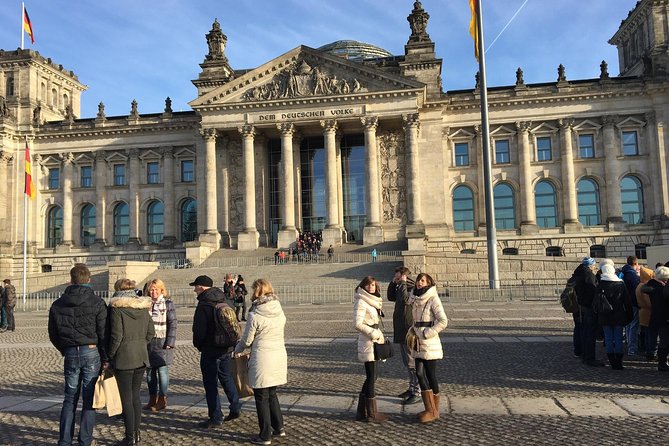
- Starting at the Reichstag and the center of power
- The war years at Berlin-Karlshorst
- Humboldthain Flak Tower and the Battle of Berlin
- Hitler’s bunker area and the problem of historical memory
- Palace of Tears and the machinery of division
- Berlin Wall Memorial and visible border scars
- Teufelsberg and offbeat Wall-related sights
- East Side Gallery and the Wall as a public canvas
- The DDR Watch Tower and the final Cold War lessons
- Guide quality and the value of asking questions
- Price, timing, and what to bring
- Who should book this Berlin history walk?
- Should you book it?
- FAQ
- Where does the Berlin Cold War and World War II tour start?
- What time does the tour begin?
- Where does the tour finish?
- How long does the tour last?
- What is included in the price?
- Are food and drinks included?
- What should I wear?
Key points to know before you book
- Hitler to the Berlin Wall: The route links the Third Reich, World War II, the Battle of Berlin, communism, and reunification.
- A guide-led history lesson: Miguel and Arthur are noted for patient answers, humor, and strong command of the subject.
- Ten major stops: You see the Reichstag, Berlin Wall Memorial, East Side Gallery, Palace of Tears, flak tower, and other sites.
- Mostly outdoor history: The tour focuses on places and memorials across the city, not a string of paid museum visits.
- Bring walking gear: Comfortable shoes, drinks, snacks, and rain protection matter because food and beverages are not included.
- Good value at $35.64: The low price makes sense for a first look at Berlin, especially if you want historical orientation from a local guide.
Why this tour works for first-time Berlin visitors
Berlin can be confusing at first. Important sites are spread across the city, and the remains of the Nazi and communist eras are often modest rather than dramatic. You may walk past a strip of pavement, a quiet memorial, or a fragment of wall without knowing why it matters.
A good guide gives those places a voice. This experience is designed to explain the links between them, rather than treating each sight as an isolated photo stop. You get a broad account of Hitler’s rise, the war, the Soviet capture of Berlin, the division of Germany, the construction of the Berlin Wall, and the events that led to its fall.
That broad approach is the tour’s main strength. You will not receive a long academic lecture at every stop, but you can build a usable mental map of Berlin’s twentieth-century past. If you are visiting for only a short time, this can help you decide which museums and memorials deserve a longer visit later.
The route also has a human side. Guides tell stories about wartime events, escape attempts, forced conscription, border crossings, and daily life in East Berlin. Those details can make a bare wall remnant or guard tower feel less abstract.
You should expect a group experience rather than a private lesson. The listed maximum is 100 people, which is a large possible group for a walking tour. A smaller departure may feel more personal, but you should be prepared for some listening from the edge of a crowd and limited one-to-one time.
More Cold War Berlin:
- Berlin: Third Reich and Cold War 2 Hour Walking Tour
★ 4.9 · 6,830 reviews - Berlin’s Best: 2 Hour Walking Tour Third Reich and the Cold War
★ 5.0 · 5,486 reviews - Cold War, Berlin Wall, Spies and the East Side Gallery
★ 5.0 · 1,024 reviews
Starting at the Reichstag and the center of power
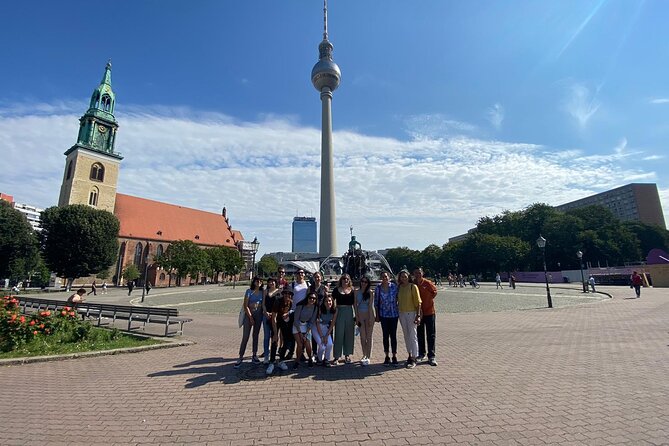
The meeting point is outside Generator Berlin Alexanderplatz, at Otto-Braun-Straße 65, with a 12:00 pm start. The tour returns to this meeting point at the end.
The Reichstag is the natural opening chapter. Today it represents Germany’s parliament, but the building also helps frame the political upheaval that destroyed the old order and allowed Hitler’s dictatorship to take hold. Your guide can place the building within Berlin’s changing political center and explain the events connected to the Nazi period and the war.
You spend about 30 minutes here, admission free. That does not mean you enter every building or receive an indoor museum visit. The value is in hearing the setting explained while you are standing among the city’s major civic landmarks.
This first stop should help you get your bearings. Pay attention to how the guide connects architecture, government, and memory. Berlin often puts polished modern buildings beside traces of catastrophe, and that contrast is part of the city’s story.
The war years at Berlin-Karlshorst
The Museum Berlin-Karlshorst is listed as a 30-minute stop, also with no admission ticket included. It is tied closely to the end of World War II and the German surrender. The site gives the guide a chance to explain how the war ended in Berlin and why the surrender remains important to the city’s memory.
You may find this part especially useful if you know the general outline of the war but have trouble matching events to actual places. One past participant described that challenge well: the surrender is widely remembered, but locating the physical setting of those events can be difficult without guidance.
Do not assume that 30 minutes means a full museum visit. The tour information says admission is free, but the included item is the local guide, not a separate museum program. Ask your guide how much time is planned inside or outside if the museum itself is important to you.
Humboldthain Flak Tower and the Battle of Berlin
At Humboldthain, the focus turns to the physical remains of war. The flak tower is one of the places where Berlin’s wartime defenses and destruction can be discussed in a real setting. The guide points out details that you might otherwise walk past.
This is a useful reminder that Berlin’s wartime scars are not always marked by grand monuments. Some survive as fragments, altered structures, or traces within ordinary parts of the city. A guide can help you recognize them.
The stop lasts about 30 minutes. The pace is described as leisurely, with opportunities to pause for drinks along the route, but you should still plan for a long day outside. Since snacks and beverages are not included, carry your own water and something to eat.
Prenzlauer Berg adds another view of the Battle of Berlin. Here, the guide discusses battlefields and remaining scars from the fighting. The district is known today for ordinary city life, which makes the wartime stories harder to picture. That contrast can be more powerful than a formal memorial alone.
More Third Reich sites in Berlin:
- Berlin: Berlin Story Bunker Entry Ticket
★ 4.6 · 6,759 reviews - Third Reich Berlin: Hitler and WWII Walking Tour
★ 5.0 · 3,301 reviews - Berlin: Third Reich, Hitler, and WWII Walking Tour
★ 4.9 · 1,133 reviews - Berlin Third Reich Sites: Half-Day Walking Tour
★ 5.0 · 835 reviews
Hitler’s bunker area and the problem of historical memory
The Berlin Story Bunker stop focuses on the place associated with Hitler’s notorious underground lair. This is sensitive ground, and the best part of the visit is not the bunker image itself. It is the chance to understand how Berlin handles a site linked to dictatorship without turning it into a shrine.
The listing describes stories and legends at this stop, so expect some attention to popular tales as well as established events. Use your guide’s explanations to separate documented history from urban folklore. Guides who welcome follow-up questions are particularly helpful here, and Miguel is praised for answering questions and adding context.
You spend about 30 minutes at the stop, with no admission ticket included. If you want an extensive indoor exhibition about the bunker, this tour is not a substitute for a dedicated museum visit. It gives you orientation and context, then keeps moving.
That distinction matters. The tour’s job is to connect many locations in one day. It cannot give every subject the space of a specialist museum or private historian.
Palace of Tears and the machinery of division

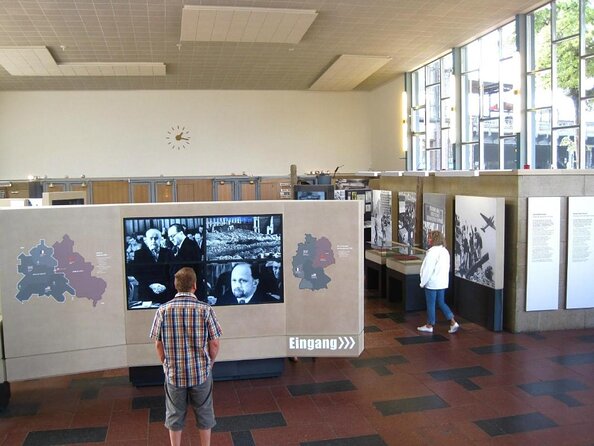
The Palace of Tears shifts the story from Nazi Germany to the Cold War. This former border crossing became known for tearful goodbyes when people from East Berlin or East Germany had to part from relatives and friends permitted to leave.
The stop lasts about 20 minutes. That is short, but the place is well suited to a guide-led explanation because its meaning comes from how the border worked. You can learn about crossing points, escape attempts, and the rules that shaped daily life in divided Berlin.
The most valuable question to ask here is not only where the border stood, but how it affected ordinary people. The tour aims to explain communism-era Berlin through personal stories and famous incidents, rather than treating the Wall as a simple slab of concrete.
Berlin Wall Memorial and visible border scars
At the Berlin Wall Memorial, you see sections and reminders of the former barrier. This is one of the strongest stops for understanding that the Wall was not only a political symbol. It was a working border system, with surveillance, restricted movement, and serious risks for anyone trying to cross.
Your guide explains escape points and stories of both fear and success. Those accounts can turn the Wall from a familiar postcard image into a system that divided streets, families, workplaces, and neighborhoods.
Allow about 30 minutes here. You may want longer if you plan to study every marker and memorial detail, but the tour’s purpose is to place this site within the larger Cold War story. I would note anything that catches your interest and return later if your schedule allows.
This is also a good point to ask questions about the difference between surviving sections, reconstructed memorial areas, and places where the Wall has disappeared. The city’s border traces are uneven, so context helps you read them.
Teufelsberg and offbeat Wall-related sights
Teufelsberg is listed as another 30-minute stop. The tour description connects it with major Wall-related landmarks, guard towers, the East Side Gallery, and less familiar sites away from the usual route.
Because the description groups several kinds of Cold War remains into this part of the tour, ask your guide what you will actually see on your departure. The exact mix may depend on the route and timing. The appeal is the attempt to move beyond Berlin’s best-known Wall photographs and point out details that are easy to miss.
This stop may suit you if you want more than the standard central memorial circuit. It also reinforces a useful lesson: the Wall was not limited to one famous stretch. Its former path and supporting structures affected a broad part of Berlin.
East Side Gallery and the Wall as a public canvas
The East Side Gallery is the tour’s most recognizable Wall stop. Artists painted the surviving section after the political division ended, turning a former instrument of control into a public collection of murals.
The stop is listed at 20 minutes. That gives you enough time for a quick look and an explanation of why the site matters, but not necessarily enough time to study every painting. If the murals are a main reason for booking, plan to return on your own.
The guide can also explain the difference between the Wall’s original purpose and its later meaning. One side once represented separation and state control. The painted remains now carry messages about freedom, memory, hope, and political change.
This is one of the tour’s clearest visual transitions. Earlier stops focus on destruction and fear. Here, the same physical barrier becomes a place for public expression.
The DDR Watch Tower and the final Cold War lessons
The DDR Watch Tower brings the Cold War story down to a single piece of border equipment. Your guide explains where the Wall once ran and discusses escape attempts, forced conscription, and the daily pressure created by the East German state.
A 20-minute stop is enough for a focused explanation, especially if the guide uses real incidents to show how the border operated. It is less about grand political speeches and more about what happened to people caught inside that system.
This final section should leave you with a clearer sense of why the Wall’s fall mattered. The tour does not treat 1989 as an isolated celebration. It links that moment to decades of division and to the personal risks faced by people who tried to cross before the border opened.
Guide quality and the value of asking questions
The guide can make or break a history walk. Here, Miguel receives repeated praise for his passion, humor, hospitality, and command of the sites. Arthur is also singled out for a strong sense of humor and clear explanations.
I would use the question time. Several positive accounts point to the freedom to ask follow-up questions as a major benefit. That matters because this route covers a lot of material quickly, and your own questions can steer the discussion toward the subjects you care about most.
The guide’s style appears conversational rather than purely scripted. You may hear stories about famous events, people, music, architecture, urban legends, and real incidents. That variety can keep a long walk lively, though it also means the exact experience may change from one departure to another.
One rating was more reserved, describing the tour as a high-level overview without much detail on any single subject. That is a fair warning. If you already know Berlin’s history well, you may want a specialist tour focused only on the Nazi period, the Wall, or Cold War escape stories.
Price, timing, and what to bring
At $35.64 per person, this is a reasonable price for a guided introduction covering ten historical stops. You are paying for the guide’s explanation and route planning, not for a series of paid museum admissions. Since the stops are listed with free admission, there are no stated entry fees added to the price.
The value is best if you want a broad first pass through Berlin. A private guide would cost more, while an unguided visit would require more preparation and navigation. The tradeoff is that you may spend only 20 or 30 minutes at places where you later wish you had more time.
The stated duration is about six hours, but past descriptions place some departures at roughly two and a half to three and a half hours. That is a major planning detail. Contact the provider or confirm the schedule at booking so you know if you are setting aside half a day or most of an afternoon.
Wear comfortable walking shoes. Bring water, snacks, and an umbrella or rain jacket, since drinks and snacks are not included and the tour operates in all weather. A moderate level of physical fitness is recommended.
The meeting point at Generator Berlin Alexanderplatz is easy to reach according to the available tour information, and the activity ends back there. The maximum group size is 100, so ask where to meet the guide and how the group will be identified before the 12:00 pm start.
Free cancellation is available if you cancel at least 24 hours before the start time. Changes or cancellations made inside that window are not accepted for a refund.
Who should book this Berlin history walk?
I would recommend it most to first-time visitors, students, families with older children, and anyone who wants a clear framework before visiting Berlin’s museums. It also suits you if World War II or the Cold War is a personal interest and you like learning through real places.
A student preparing for a Cold War history course could get a lot from the route, especially by asking questions at the Wall Memorial and Palace of Tears. Couples and friends may also appreciate the social format, since the tour leaves room for conversation and shared discovery.
I would be more cautious if you have limited mobility, dislike long walks, or want extensive time inside museums. The route is broad and outdoor-focused. It may also disappoint serious history specialists who want detailed discussion of one period instead of a fast connection between many.
Should you book it?
Book this tour if you want Berlin’s major twentieth-century themes explained in one outing, with real sites, personal stories, and a guide who can handle questions. At $35.64, it offers solid value as an orientation, especially if you are short on time.
Skip it if you want a slow museum visit or a highly focused academic tour. Before paying, confirm the actual length of your departure, then bring good shoes, weather gear, and an appetite for questions. The more you engage with the guide, the more useful this wide-ranging walk is likely to be.
FAQ
Where does the Berlin Cold War and World War II tour start?
The tour starts at Generator Berlin Alexanderplatz, Otto-Braun-Straße 65, 10178 Berlin, Germany.
What time does the tour begin?
The scheduled start time is 12:00 pm.
Where does the tour finish?
The activity ends back at the meeting point.
How long does the tour last?
The tour is advertised as approximately six hours. Some past descriptions place the duration at about two and a half to three and a half hours, so confirm the expected timing before booking.
What is included in the price?
A local guide is included. The listed price is $35.64 per person.
Are food and drinks included?
No. Beverages and snacks are not included, so bring your own or plan to stop along the way.
What should I wear?
The tour operates in all weather conditions. Wear comfortable walking shoes and dress appropriately for the forecast. A moderate level of physical fitness is recommended.
More Walking Tours in Berlin
- Discover Berlin Half-Day Walking Tour
★ 5.0 · 9,624 reviews - Berlin: Discover Berlin Walking Tour
★ 4.9 · 5,998 reviews - Berlin: Hidden Backyards Guided Walking Tour
★ 4.8 · 5,360 reviews - Berlin: Alternative Berlin Walking Tour
★ 4.6 · 1,204 reviews
Just added around Berlin
- Berlin Highlights in One Day★ 5.0 · 3 reviews
- Private Berlin One Day Tour with a Local: See the City Unscripted★ 3.5 · 3 reviews
- Individual city tour Berlin for max. 8 persons★ 5.0 · 3 reviews
- Transfer from Berlin Schönefeld Airport (SXF) to Berlin city Hotels – ROUND TRIP★ 4.0 · 3 reviews
- Berlin: Museum Island Tour★ 5.0 · 3 reviews
- Private Analogue Photography Experience in Berlin★ 5.0 · 3 reviews
- Berlin: Local Food Tour in Secrets Hidden Gems★ 4.0 · 3 reviews
- Berlin & The Third Reich Private Guided Tour★ 5.0 · 3 reviews
Third Reich & WWII Sites, compared.



Berlin’s Best: 2 Hour Walking Tour Third Reich and the Cold War
Read our review →
Third Reich Berlin: Hitler and WWII Walking Tour
Read our review →

Berlin Third Reich Sites: Half-Day Walking Tour
Read our review →
Guided Bike Tour of the Berlin Wall and Third Reich
Read our review →
Hitler’s Germany: Berlin During the Third Reich & WWII
Read our review →Browse the lists this tour appears in